


Georgian Apothecary Vessel
A georgian apothecary vessel brings the heavy metal and delftware of eighteenth-century medicine straight to a modern desk or shelf.
Georgian Apothecary Vessel
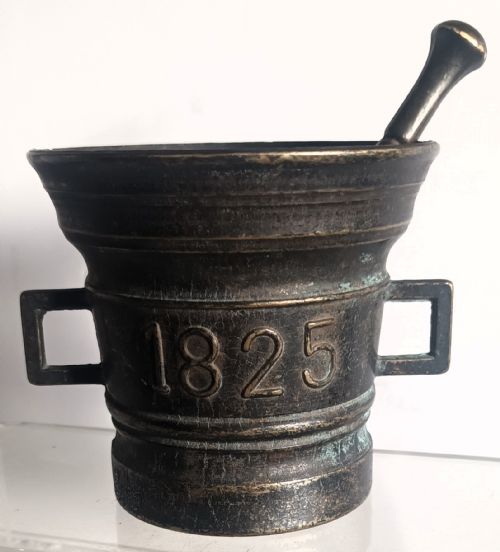
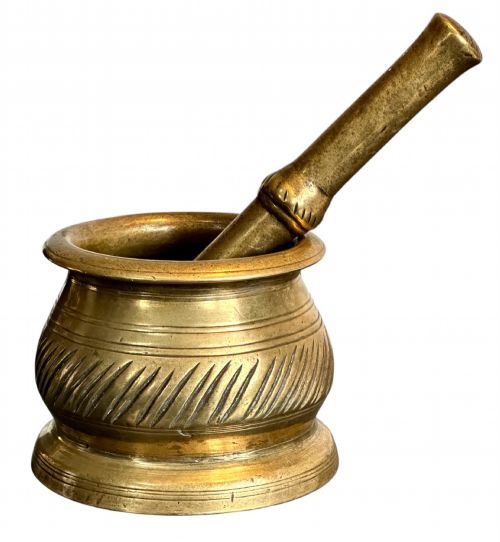
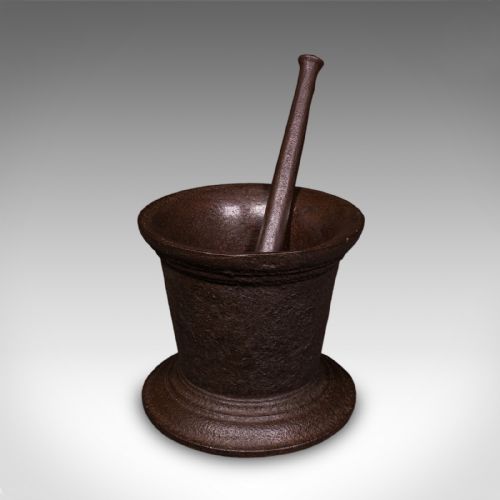
When you search for a georgian apothecary vessel, you encounter the heavy utilitarian equipment of historic dispensaries and medicine chests. These survivors include brass, bronze, and iron mortars with their matching pestles, alongside tin-glazed earthenware drug jars and lead crystal glass.
The forms span domestic medicine tools to massive dye maker workshops, reflecting practical utility across the seventeenth, eighteenth, and nineteenth centuries. You are most likely to meet cast metal mortars paired with pestles, or blue-and-white delft drug jars bearing painted labels.
Originating primarily from English workshops, these pieces carry the marks of daily preparation of remedies and compounds. Each vessel reveals the physical weight of historic trade, from small bedside jars to heavy bronze grinders.
How they were made
Metal vessels such as mortars were cast in heavy brass or bronze, utilising moulds that left textured surfaces and tool marks from finishing. These pieces gained their substantial heft through solid metal casting designed to withstand heavy daily pounding.
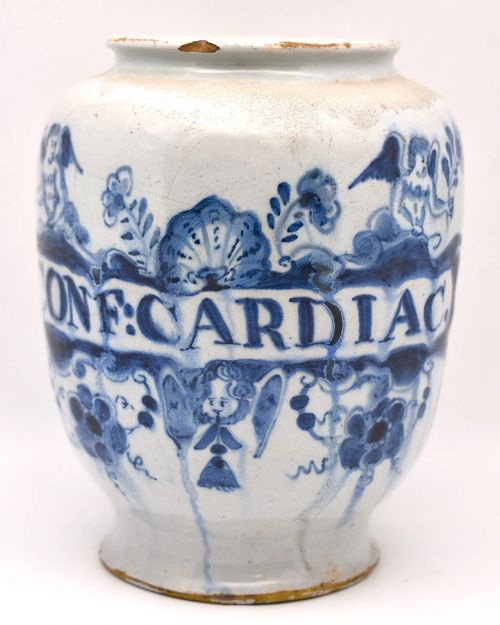
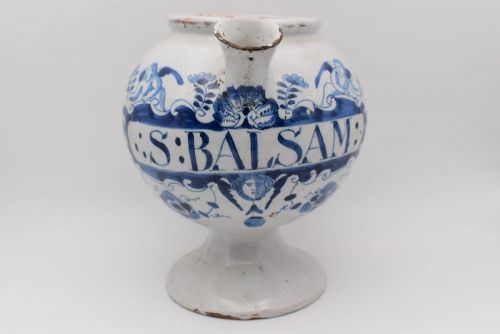
Ceramic drug jars were formed in earthenware and coated in tin glaze, providing a smooth white background for hand-painted cobalt oxide inscriptions. Artisans painted apothecary names and decorative motifs directly onto the wet glaze before a final firing.
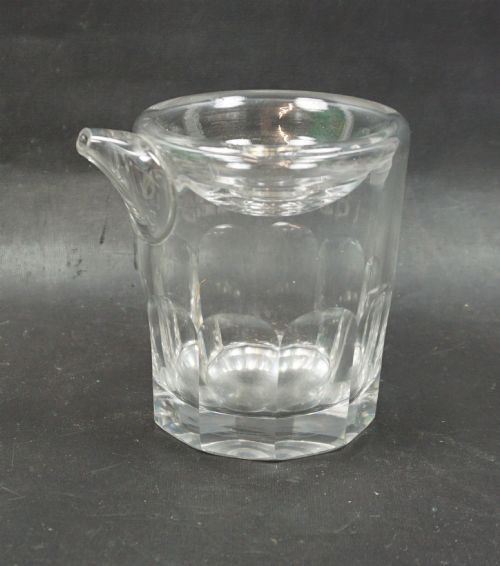
Glassware items, including crystal feeding cups and apothecary glassware, were blown and cut by hand. This produced thick-walled vessels with characteristic optical quirks and hand-cut facets.
Listings feature materials spanning bronze, brass, lead crystal glass, tin-glazed earthenware, and cobalt oxide across the seventeenth, eighteenth, and nineteenth centuries.
What varies in quality
The quality of a georgian apothecary vessel rests on the crispness of its cast details and the legibility of its painted or engraved inscriptions. Metal mortars with clean, sharp moulding lines and well-matched pestles stand apart from heavily worn or later mismatched pairs.
For delftware drug jars, the quality depends on the precision of the cobalt painting and the retention of the original glazed surface. Jars featuring clear apothecary lettering and decorative cartouches show superior craftsmanship compared to plain or heavily faded examples.
The Georgian Apothecary Vessel Glossary
- Mortar and pestle
- A heavy bowl and club-shaped tool used for crushing and grinding substances. The mortar provides the solid basin while the pestle exerts the downward force.
- Drug jar
- A ceramic vessel designed to hold medicinal ingredients, dry powders, or wet preparations. These containers typically feature painted labels to identify the contents.
- Tin-glazed earthenware
- Pottery covered with a white tin-opacified glaze that creates an opaque surface suitable for painting. This technique forms the basis of English delftware production.
- Cobalt oxide
- A metallic pigment used to produce deep blue coloration in ceramics and glass. Painters utilised this oxide for lettering and decoration on drug jars.
Georgian Apothecary Vessel: Frequently Asked Questions
What were apothecary vessels used for?
These vessels were employed in pharmacies, dispensaries, and households to crush, grind, and store medicinal ingredients, herbs, and chemical compounds. Mortars took the physical impact of compounding dry drugs or mixing pastes, while jars kept preparations dry and organised.
Heavier industrial examples even served trades like dye making, where raw materials needed consistent reduction before processing. Every piece fulfilled a rigorous functional role in historic preparation.
How do I date a bronze mortar?
Dating relies on the alloy composition, casting marks, profile shape, and any owner initials or dates cast directly into the metal. Earlier seventeenth-century pieces often display simpler, thicker rims and rougher casting textures than later nineteenth-century examples.
Comparing the accompanying pestle helps confirm authenticity, as original pairings share the same metal patina and wear patterns. Tool marks left by the original founders provide further clues to the manufacturing era.
Are delft drug jars waterproof?
The tin glaze on earthenware jars provides a functional seal for dry ingredients and many prepared substances. However, centuries of age can create minor crazing in the glaze surface.
For this reason, collectors treat them primarily as display objects rather than functional containers for modern liquids. Gentle cleaning with a dry or barely damp cloth preserves the historic glaze.
How should I clean a bronze mortar?
Bronze and brass mortars develop a natural, dark oxidation over centuries that collectors prefer to leave undisturbed. Heavy scrubbing or modern metal polishes strip away this historical patina and reduce the character of the piece.
A soft brush removes dust from corners and recesses without altering the metal surface. Preserving the original tactile finish maintains both the appearance and the historical integrity.