


Bronze Apothecary Grinder
These heavy bronze apothecary grinder pieces combine utility and history, offering functional vessels for domestic or apothecary use through the centuries.
Bronze Apothecary Grinder
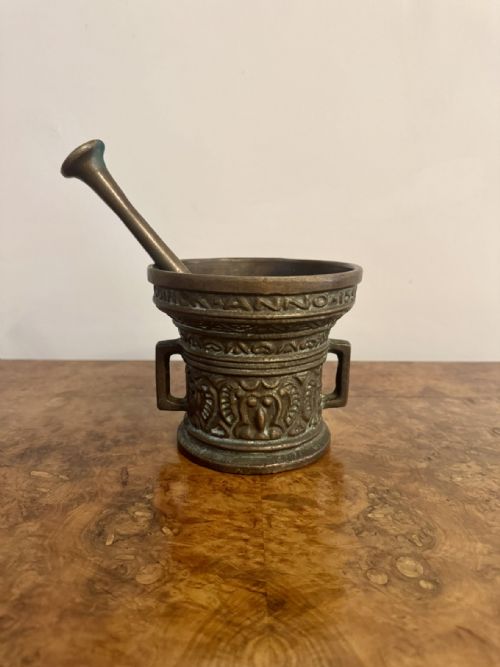
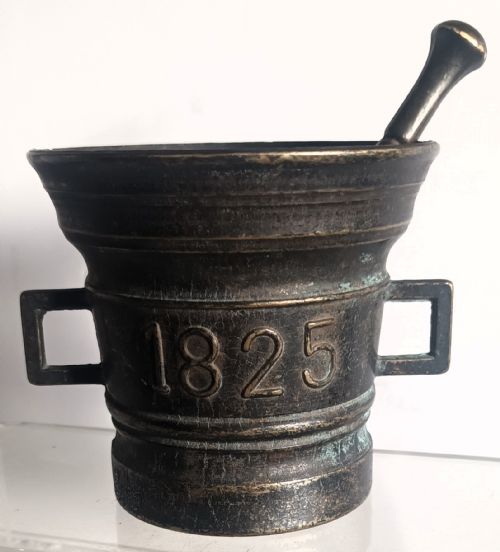
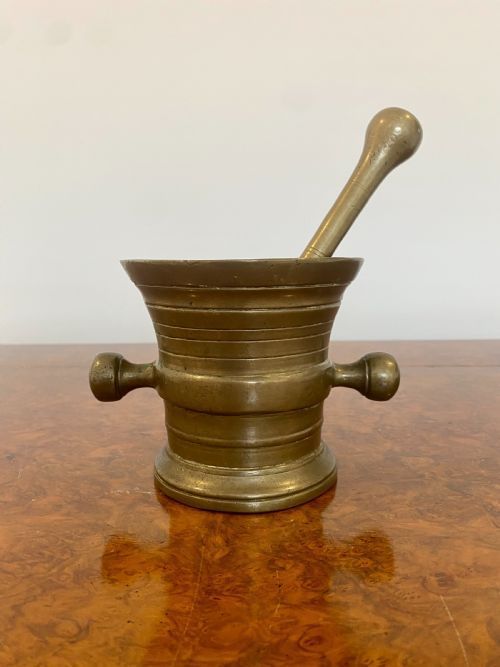
A bronze apothecary grinder consists of a solid bowl paired with a heavy pestle, designed for crushing and mixing various substances. When searching for a bronze apothecary grinder, buyers encounter sturdy mortar and pestle sets spanning from the seventeenth century through to the Victorian era. The selection ranges from plain kitchen implements to decorative examples influenced by Gothic Revival and Renaissance Revival styles.
Most items on this page date from the seventeenth, eighteenth, and nineteenth centuries, including Georgian and Dutch Baroque forms. English and Dutch origins predominate, reflecting the historical distribution of metalware manufacturing. Buyers are most likely to meet solid bronze, cast bronze, and bell metal constructions in these traditional shapes.
How they were made
These items rely on traditional metal casting methods using bronze, cast bronze, and bell metal alloys. The vessels are formed through casting, resulting in thick walls capable of withstanding heavy impact during grinding.
Surface detailing such as Tudor rose motifs or ribbed panels are cast directly into the metal rather than applied separately. Pestles are shaped to match the interior contour of the corresponding mortar for efficient crushing.
Some pestles are so unusually shaped they look like miniature clubs meant for battling tiny kitchen ghosts.
What varies in quality
Quality depends upon the precision of the casting and the thickness of the metal walls. Heavier examples display a more substantial presence and a well-balanced pestle proportioned correctly to the mortar bowl.
Design complexity also differentiates the pieces, ranging from utilitarian kitchen forms to decorative revival styles incorporating specific motifs like the Tudor rose. The clarity of cast ornamentation and the uniformity of the metal alloy determine the distinction between basic utility wares and finer historical pieces.
The Bronze Apothecary Grinder Glossary
- Bell metal
- A hard alloy used for casting bells and heavy mortars, typically containing copper and tin. This specific composition produces a resonant tone when struck.
- Mortar and pestle
- A pair consisting of a bowl and a blunt tool used to grind and mix substances. The mortar takes the impact while the pestle does the crushing.
- Georgian
- A style period spanning the reigns of the first four Georges, known for classical proportions and restrained ornament. Metalware from this era balances robust utility with refined symmetry.
- Dutch Baroque
- An artistic style originating in the Netherlands characterised by dramatic forms and robust proportions. Dutch mortars from this tradition show distinct regional casting characteristics.
Bronze Apothecary Grinder: Frequently Asked Questions
What were bronze apothecary grinders used for?
These vessels served chemists, apothecaries, and households for crushing herbs, minerals, and medical ingredients. The heavy metal construction allowed users to pulverise stubborn materials efficiently without damaging the bowl.
Over time, many migrated from working dispensaries into domestic kitchens for general food preparation. Their durable nature ensured survival across multiple centuries of daily use.
How do I date a bronze mortar?
Dating relies on examining the overall form, surface decoration, and stylistic markers such as Tudor rose motifs or revival details. Seventeenth-century examples often display distinct regional casting traits compared to later Georgian or Victorian iterations.
Matching pestle shapes and manufacturing wear patterns also provide clues to age. Documentation and stylistic comparison remain the primary methods for establishing a period.
How do I clean an old bronze grinder?
Maintenance generally involves gentle dusting and preserving the natural historic patina accumulated over centuries. Aggressive polishing removes the aged surface that collectors value.
Active dirt can be removed with a soft, dry cloth or mild soap if strictly necessary. Keeping the metal dry prevents further oxidation.
Can I still use these for cooking?
While structurally sound due to solid cast bronze construction, historic items are frequently retained as decorative objects or collections. Using them depends on the cleanliness of the interior and the absence of harmful historical residues.
Many buyers prefer to display them as historical metalware rather than putting them back into active culinary service. Assessing the interior surface determines whether modern utility is appropriate.