
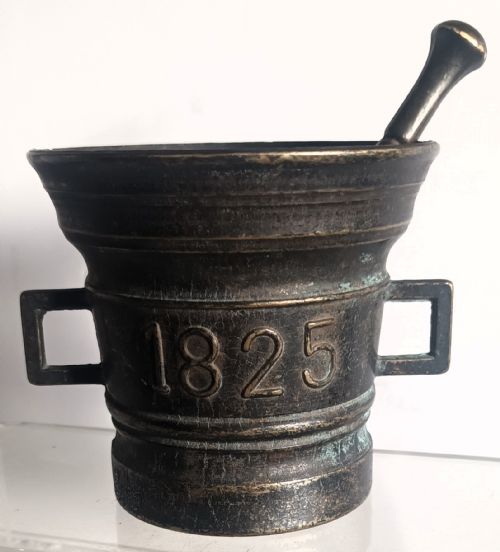


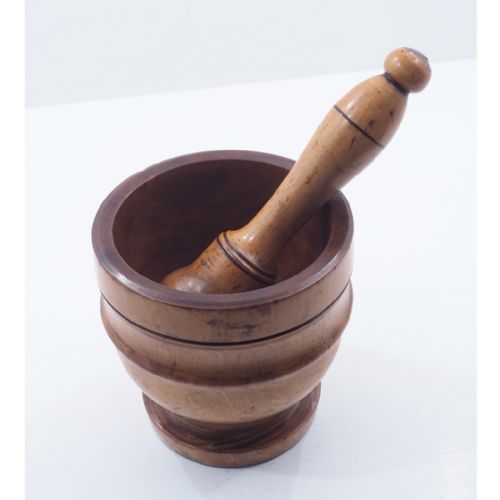


Apothecary Spice Grinder
These apothecary spice grinder pieces are heavy metal and turned wood vessels used for reducing herbs, resins and roots to powder.
Apothecary Spice Grinder
When you search for an apothecary spice grinder, you encounter heavy kitchen and dispensary vessels intended for crushing and grinding dry ingredients. The forms on this page span several centuries, including seventeenth-century metalware, eighteenth-century examples, and later iterations.
The objects take the form of mortar and pestle sets, combining a deep bowl with a matching grinding club. Most items you meet belong to the nineteenth or eighteenth centuries, alongside earlier seventeenth-century survivals and twentieth-century pieces.
Origins stretch across English workshops, Dutch foundries, and broader European makers. You find rustic turned wood items sitting alongside substantial bronze and bell metal apothecary tools.
How They Were Made
Makers utilised durable metals such as bronze, brass, and bell metal, cast in moulds to create thick, resonant walls capable of withstanding heavy impact. These metal vessels often display surface textures from the casting process or decorative bands applied by the founder.
Wooden examples utilise dense timbers including olive wood, beech, and lignum vitae, shaped on a lathe to create smooth turned surfaces and balanced pestles. Treen spice grinders rely entirely on the natural density and grain of the wood rather than applied finishes.
The page includes items dated from the seventeenth century through to the Edwardian era and 1930.
What Varies in Quality
The distinction between ordinary and superior pieces rests on the weight of the metal and the crispness of any cast decoration, such as Tudor rose motifs or moulding lines. Thicker walls and well-balanced pestles indicate careful foundry work rather than hasty production.
For wooden pieces, quality is determined by the selection of dense, richly figured timber and the precision of the turning. A well-proportioned bowl with its original matching pestle holds greater integrity than mismatched or heavily worn sets.
The Apothecary Spice Grinder Glossary
- Mortar and Pestle
- The combined grinding bowl and handheld club used together for pulverising dry substances. The mortar takes the impact while the pestle exerts the crushing force.
- Bell Metal
- An alloy of copper and tin traditionally used for casting bells, prized by makers for its strength and resonant acoustic qualities. It appears frequently in early mortar production.
- Lignum Vitae
- A dense, heavy exotic wood utilised for turned items that require high durability and resistance to wear. Its natural oils make it exceptionally tough.
Apothecary Spice Grinder: Frequently Asked Questions
How do I date a bronze mortar?
Dating relies on the overall profile, the presence of specific cast decoration such as Tudor roses, and the texture of the metal surface.
Earlier seventeenth-century examples often feature bolder mouldings and rougher casting characteristics than later Georgian or Victorian pieces.
Were these used for food or medicine?
These vessels served dual purposes in kitchens, apothecaries, and chemists' shops for preparing both culinary spices and medicinal compounds.
Their heavy construction allowed them to grind tough roots, resins, and dried seeds with equal efficiency.
Can I still use a vintage mortar?
Many metal and hardwood examples remain physically robust enough for light culinary grinding tasks.
However, collectors often prefer to display them as decorative objects to preserve their historical patina and surface finish.
What is the difference between brass and bronze?
Bronze is primarily an alloy of copper and tin, whereas brass combines copper with zinc.
In these listings, bronze generally appears on earlier, heavier pieces, while brighter brass becomes more common in later periods.