


18th Century Pestle Mortar
These heavy utilitarian implements are 18th century pestle mortar sets, combining honest function with tactile presence for any collector of historic kitchenware.
18th Century Pestle Mortar
An 18th century pestle mortar set comprises a sturdy grinding bowl paired with its matching hand-held crusher, forged or turned for domestic and apothecary use. These functional vessels span the Georgian era and earlier periods, reflecting the daily labour of preparing food, medicines, and herbs.
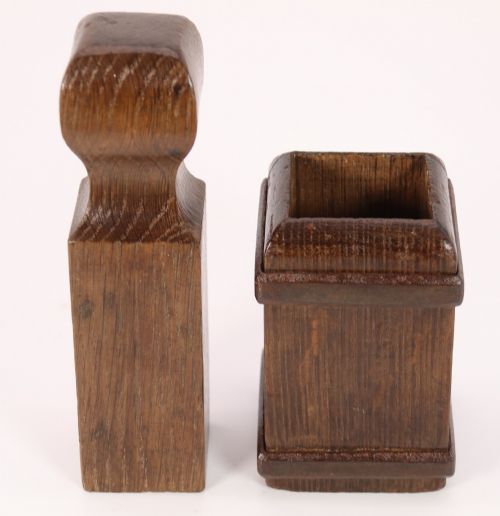
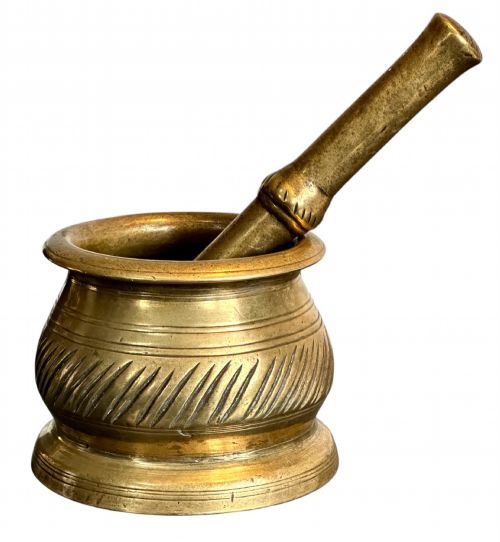
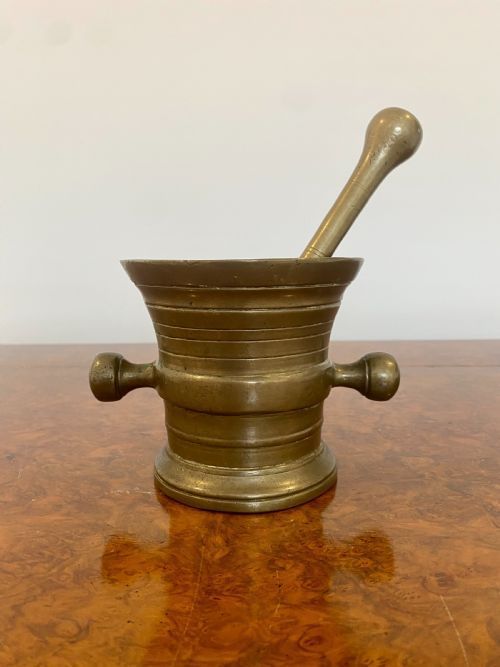
Metal examples dominate the available selection, predominantly cast in bronze, brass, or bell metal with satisfying heft. Alternatively, timber versions fashioned from oak, walnut, lignum vitae, and treen offer a warmer tactile quality derived from turned hardwood.
Most items originate from English workshops and apothecary practices, ranging from simple country primitive pieces to substantial handled vessels. Buyers encounter both single domestic grinders and larger apothecary aids designed for heavy medicinal preparation.
Materials and construction methods
Metal vessels take shape through casting, utilising bronze, brass, or bell metal poured into moulds to create thick, resonant walls capable of enduring heavy strikes. Wrought iron mounts and handles appear on specific utilitarian iterations to reinforce wooden elements.
Wooden vessels rely on woodturning techniques, shaping dense hardwoods such as oak, walnut, and lignum vitae on a lathe to produce symmetrical bowls and matching pestles. Skilled turners selected tight-grained timber to prevent splitting during the rigorous pounding of dry ingredients.
The selection includes domestic kitchen items and professional apothecary aids.
Judging quality and character
Quality rests in the proportional balance of the bowl and the matching integrity of the pestle, alongside the depth of the casting or the crispness of the woodturning. Metal examples show distinction in the clarity of surface wear and the satisfying resonance of the alloy.
Provenance and material choice elevate particular specimens, with dense lignum vitae or early bell metal examples demonstrating superior durability and age-related patina. Pieces retaining their original pairing show greater cohesion than mismatched later replacements.
The 18th Century Pestle Mortar Glossary
- Bell metal
- An alloy of copper and tin traditionally used for casting bells, prized in mortars for its dense structure and resonant acoustic properties.
- Treen
- Small handmade wooden household objects and utensils, often turned on a lathe from dense hardwoods.
- Lignum vitae
- A very hard, heavy timber derived from trees of the genus Guaiacum, frequently utilised for durable pestles and mortars due to its natural oils.
- Apothecary
- A historical practitioner who prepared and sold medicines and drugs, utilising sturdy metal and wooden mortars for compounding remedies.
18th Century Pestle Mortar: Frequently Asked Questions
How were these used?
These vessels served to crush, grind, and mix dried herbs, spices, and medicinal ingredients into powders or pastes using the heavy pestle.
Households and apothecaries relied on them daily before the advent of factory-ground ingredients.
Are bronze and brass different?
Bronze is an alloy primarily of copper and tin, whereas brass is composed of copper and zinc, resulting in distinct colour tones.
Both metals were chosen for their strength and resistance to cracking under repetitive downward force.
How do I care for wood?
Wooden vessels require gentle cleaning with dry or barely damp cloths and occasional treatment with natural food-safe oils to prevent drying.
Keeping them away from direct heat sources protects the historic timber from splitting.
Can I date a piece accurately?
Dating relies on material characteristics, tool marks, and stylistic indicators such as flared rims or specific alloy compositions.
Most pieces span the seventeenth, eighteenth, and early nineteenth centuries based on these physical traits.