



Vintage Brass Herb Grinder
A vintage brass herb grinder is a heavy metal grinding bowl with a matching pestle, prized for kitchen display and historical utility.
Vintage Brass Herb Grinder
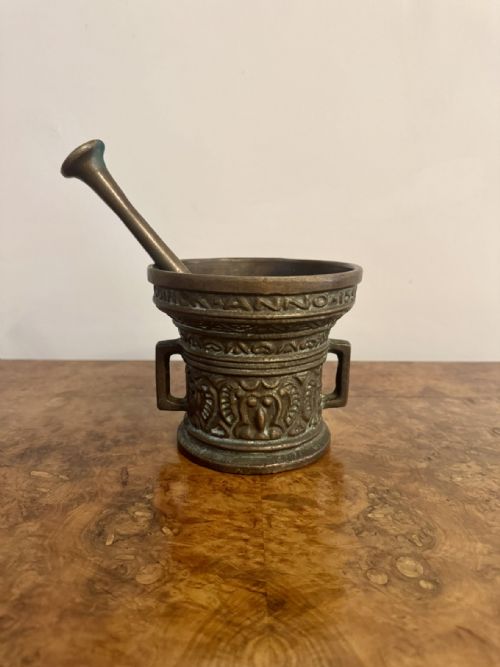
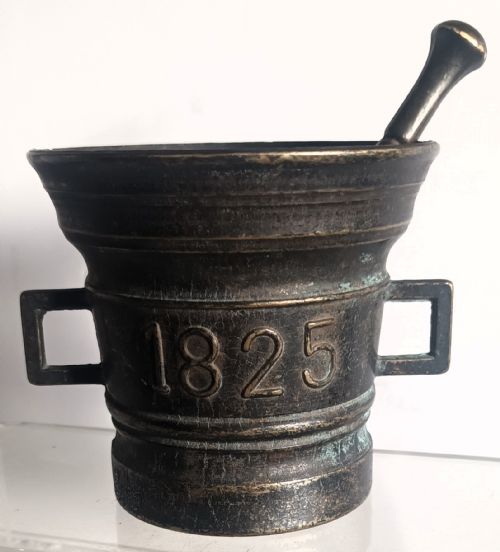
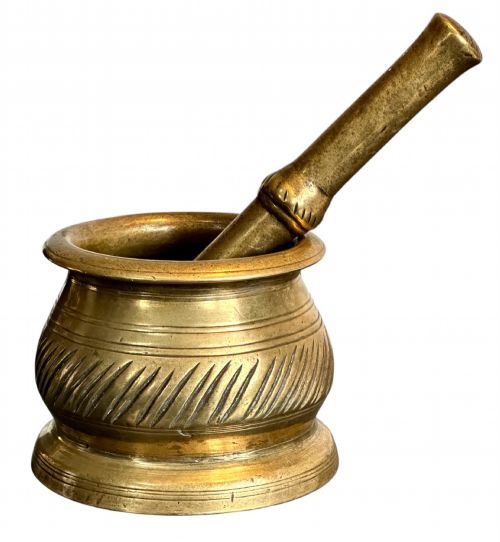
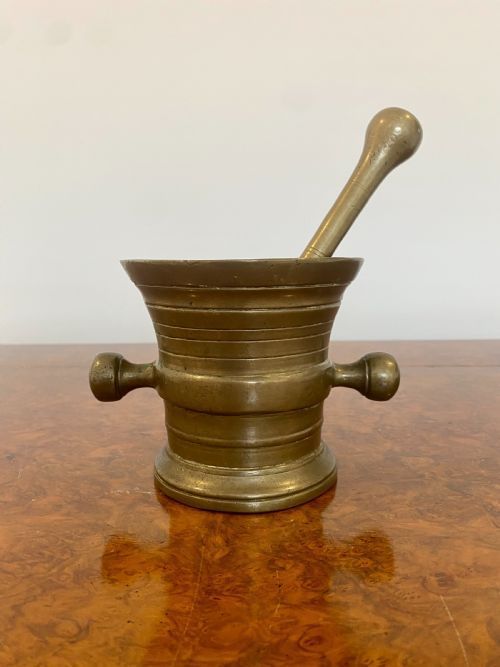
When you search for a vintage brass herb grinder, you are looking at heavy metal vessels designed for pounding ingredients, most frequently encountered as antique mortar and pestle sets from the seventeenth, eighteenth, and nineteenth centuries.
The versions you are most likely to meet on this page span Georgian, Victorian, and Renaissance Revival styles, alongside Dutch Baroque and Indo-Persian examples.
These items originate from periods when kitchens and apothecary shops relied on manual grinding tools for herbs, spices, and medicines.
How they were made
These pieces are constructed primarily from cast brass and bronze, utilising traditional metal-foundry techniques that produce thick, substantial walls.
Makers shaped the vessels by casting the metal into moulds, often incorporating decorative rims, flared bases, and moulded handles directly into the body.
The matching pestles are shaped from solid metal bars to provide the necessary weight for crushing materials against the interior base of the mortar.
Some heavy bronze bowls still retain faint traces of old apothecary powders stuck firmly in the bottom corners.
What varies in quality
Quality separates through the crispness of the casting detail and the proportion of the vessel, with superior examples displaying sharp decorative motifs and well-balanced forms.
The presence of a matching period pestle significantly influences the completeness and integrity of the set.
Surface finish also matters, as natural patination and age-related wear distinguish authentic early metalwork from later reproductions.
The Vintage Brass Herb Grinder Glossary
- Pestle
- The heavy, club-shaped handheld tool used for pounding and grinding inside the mortar. It is matched in metal type to the bowl.
- Apothecary
- A historical practitioner who prepared and sold medicines and drugs. Items from this context often show utilitarian wear from chemists' shops.
- Patina
- The surface sheen and coloration developed through age, handling, and oxidation. It indicates the historical depth of the metal.
Vintage Brass Herb Grinder: Frequently Asked Questions
What are these mortars made of?
The listings show items made from brass, bronze, cast brass, and cast bronze.
These durable metal alloys provided the necessary strength for heavy kitchen and apothecary grinding tasks.
How old are these grinders?
The pieces span several centuries, including seventeenth, eighteenth, and nineteenth-century examples.
Specific periods represented include Georgian, Victorian, and Dutch Baroque eras.
Were these used for herbs?
These vessels served kitchens, chemists, and apothecaries for crushing herbs, spices, and medical ingredients.
The heavy pestle allowed users to grind dry and wet substances efficiently.
How do I identify a Georgian mortar?
Georgian pieces align with the eighteenth-century styles shown in the listings, often displaying specific decorative turning or simpler utilitarian profiles.
Comparing the rim shape and metal finish helps distinguish them from Victorian or seventeenth-century examples.