


Georgian Pestle and Mortar
A georgian pestle and mortar is a heavy functional grinding vessel in bronze, brass, iron, or hardwood from the eighteenth or nineteenth century.
Georgian Pestle and Mortar
A georgian pestle and mortar represents a sturdy utilitarian kitchen and apothecary implement designed for crushing herbs, spices, and medical ingredients. These pieces span the eighteenth and nineteenth centuries, taking the form of heavy metal bowls accompanied by solid striking rods.
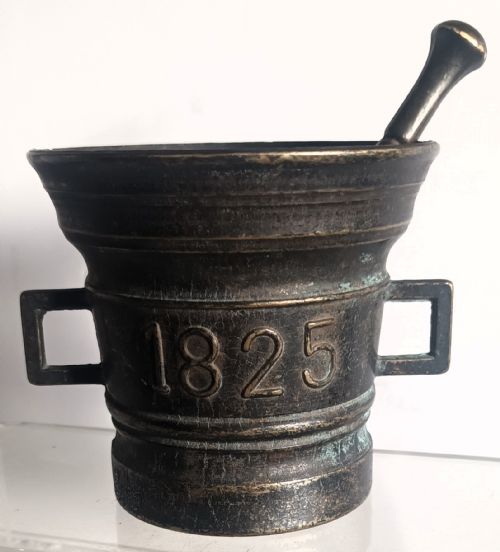
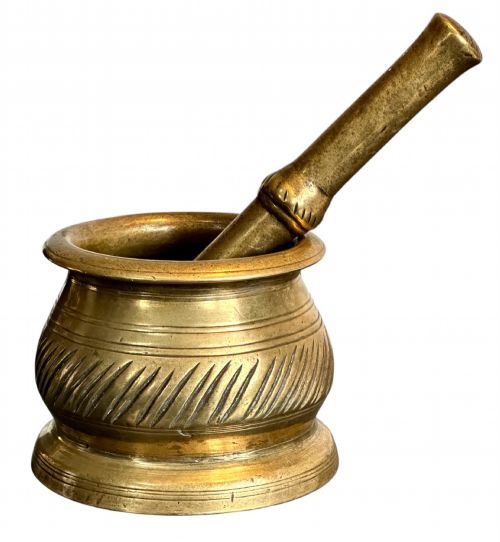
You are most likely to encounter bronze examples attributed to the Georgian period alongside nineteenth-century brass or treen variants. Forms range from domestic kitchen sizes to massive dye maker implements and apothecary sets.
Originating predominantly from English workshops, these items served practical roles in chemistry, food preparation, and industrial trades. Surviving examples demonstrate the robust construction required for daily grinding work over centuries.
How they were made
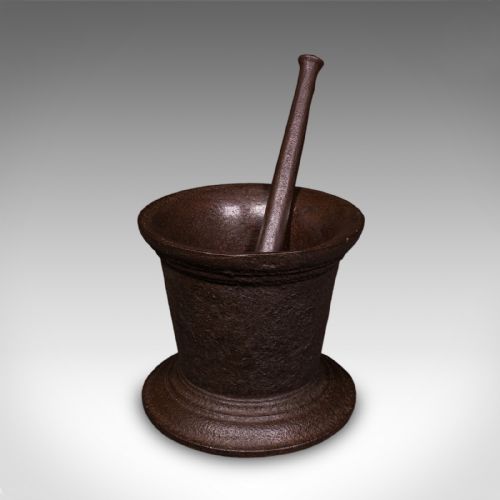
Metal vessels like those in bronze, brass, cast iron, and bell metal were produced through foundry casting. Molten metal poured into moulds created thick walls capable of withstanding heavy impact.
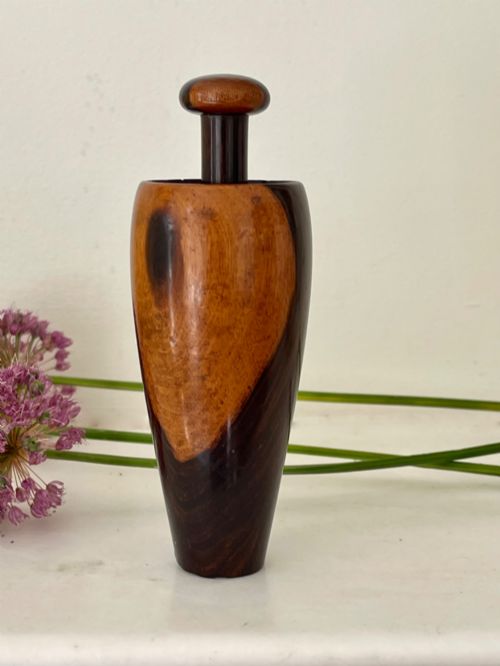
Wooden and treen pieces relied on lathe turning from dense hardwoods. Craftsmen shaped these organic materials to create smooth internal grinding surfaces and balanced pestles.
Listings feature bronze, brass, hardwood, wood, cast iron, iron, and bell metal across the Georgian, Victorian, and seventeenth-century periods.
What varies in quality
Scale and heft determine the practical utility and presence of each piece, ranging from domestic kitchen tools to monumental industrial workshop equipment. Metal composition also differs between standard bronze, bell metal, and cast iron.
The survival of a matching pestle alongside the mortar elevates the completeness of the set. Surface patination and the clarity of cast details distinguish ordinary utility items from finer examples.
The Georgian Pestle and Mortar Glossary
- Bronze
- A copper alloy combining tin that forms heavy, sonorous casting metal for kitchen and apothecary vessels. It provides the durability needed for repeated crushing.
- Bell metal
- A specific high-tin bronze alloy traditionally utilised for casting bells, known for its resonant qualities and smooth surface finish.
- Treen
- Small handmade wooden domestic objects and utensils produced by turning or carving. These items showcase traditional woodcraft techniques.
- Apothecary
- A historical practitioner who prepared and sold medicines and drugs. Their workspace utilised sturdy mortars for compounding ingredients.
Georgian Pestle and Mortar: Frequently Asked Questions
What were these mortars used for?
These vessels functioned as primary tools for grinding dry ingredients, herbs, and medical compounds in kitchens, apothecaries, and industrial workshops.
The heavy weight of both the bowl and the pestle allowed users to crush tough substances down into fine powders or pastes.
How do I date a mortar?
Dating relies on identifying the material, manufacturing technique, and stylistic markers recorded in the evidence from the seventeenth to the nineteenth century.
Earlier pieces often display the distinct metal composition of bell metal or bronze, while later nineteenth-century examples frequently utilise brass or cast iron.
Are pestles always original to the mortar?
Many surviving sets bring together a mortar and pestle that were paired together later in their working lives due to the practical risk of losing the striking rod.
Matching materials and patination help indicate whether the components share a consistent period of use.
How do I clean a metal mortar?
Preserving the historic surface requires gentle dusting and avoiding harsh modern chemical polishes that strip away age patination.
Bronze and brass naturally develop a dark oxidised skin over centuries of handling and exposure.