


Cast Brass Mortar Pestle
These cast brass mortar pestle sets are heavy kitchen and apothecary implements that bring centuries of tactile utility to a modern shelf.
Cast Brass Mortar Pestle
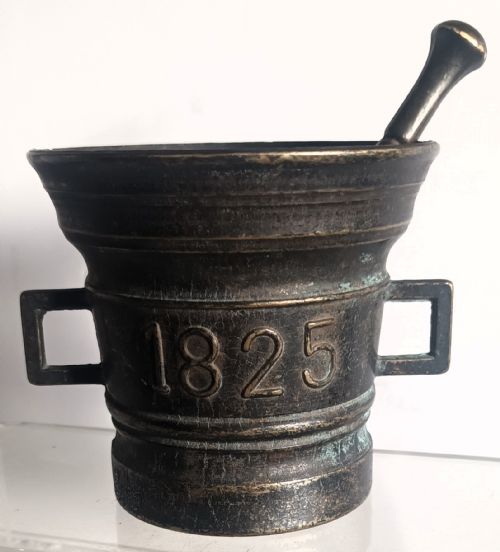
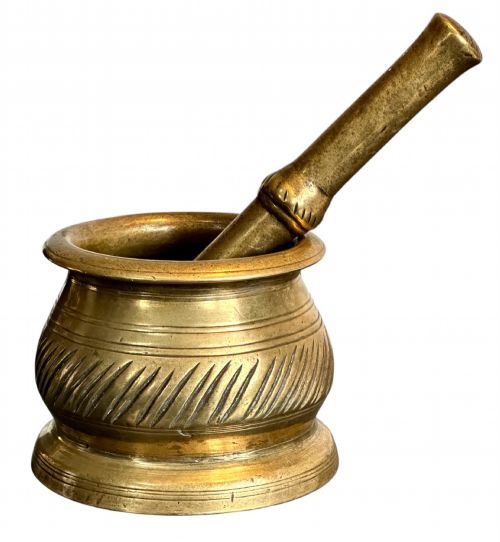
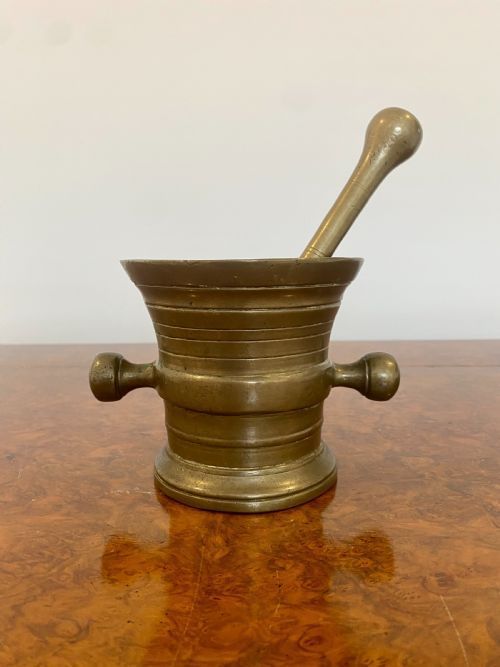
A cast brass mortar pestle is a heavy utilitarian implement designed for grinding and crushing herbs, spices, and medicines. When you search for this phrase, you encounter robust kitchen and chemist tools spanning from the seventeenth century through the nineteenth century.
The pieces on this page lean heavily toward English origins, encompassing Georgian, Victorian, and earlier seventeenth-century examples. You frequently meet bronze compositions alongside brass, reflecting the overlapping terminology and alloy practices of earlier centuries.
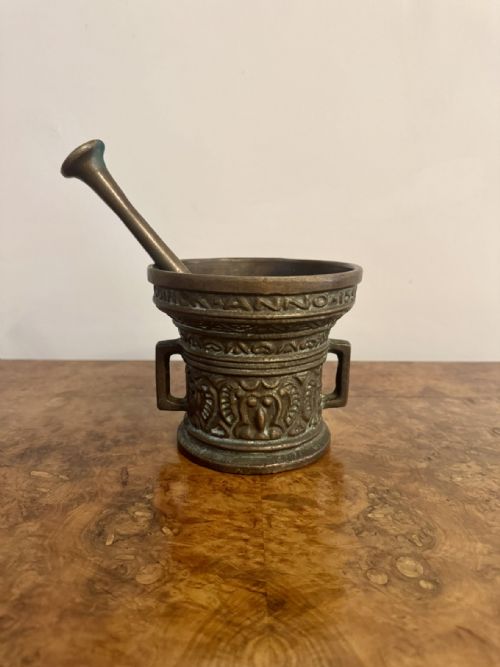
Forms range from simple domestic kitchen mortars to elaborate apothecary vessels featuring decorative ribs, moulded rims, and Tudor rose motifs. Most listings pair the mortar with a matching pestle, though occasionally a mortar survives with an unusual or later pestle partner.
Materials and casting methods
These vessels are produced through traditional metal casting, using brass or bell metal poured into moulds to achieve thick, resilient walls capable of withstanding heavy impact. The resulting metal exhibits a dense, solid weight designed to stay firmly in place during vigorous grinding.
Surface textures often retain the subtle evidence of sand casting or lathe finishing, showing tool marks and natural patinas built up over generations of use. Alloys vary slightly in copper and zinc content, producing tones that range from bright golden brass to deeper, warmer bronze hues.
Distinguishing quality and proportion
Quality in these implements rests upon the crispness of the cast detail, the thickness of the vessel walls, and the harmonious proportion between the mortar and its pestle. Earlier seventeenth-century and Tudor-influenced examples often display sharper decorative banding and more substantial heft.
Surface preservation and original patination dictate much of the character, with untouched aged surfaces outranking over-polished metal. The presence of a matching period pestle that shares the exact alloy and wear pattern elevates the desirability of the set.
The Cast Brass Mortar Pestle Glossary
- Pestle
- The heavy, club-shaped hand tool used for pounding and grinding materials inside the mortar.
- Bell metal
- A hard alloy of copper and tin traditionally used for bells, frequently utilised for these heavy grinding vessels due to its resonance and strength.
- Apothecary
- A historical practitioner who prepared and sold medicines, often using heavy mortars to compound remedies for patients.
- Tudor rose
- The traditional floral heraldic emblem of England, frequently cast as a decorative motif on seventeenth-century metalwork.
Cast Brass Mortar Pestle: Frequently Asked Questions
What were these mortars actually used for?
These vessels served as essential kitchen and apothecary tools for crushing dried herbs, grinding spices, and compounding medicinal powders.
Their heavy walls prevented cracking under the forceful impact of the pestle, making them indispensable for daily domestic and professional preparation.
How do I clean a brass mortar?
Gentle dusting with a soft cloth preserves the historic patina that collectors value on older metal surfaces.
Avoid harsh chemical dips or aggressive metal polishes that strip away centuries of character and leave the brass unnaturally bright.
Are the pestles always original to the mortars?
Many sets survive intact with their original matching pestles, sharing identical alloy composition and wear characteristics.
Because pestles were easily misplaced or broken over centuries of heavy use, some pairings unite a period mortar with a compatible pestle from a similar era.
How can I tell a seventeenth-century piece apart?
Seventeenth-century examples often display distinct architectural mouldings, thicker cast walls, and specific decorative stamps like the Tudor rose.
Later Victorian and nineteenth-century pieces tend to feature cleaner, more standardised turnings and smoother exterior finishes associated with industrial production.