



Georgian Adjustable Table
These clever pieces of furniture offer multiple heights and angles to suit the user, matching the exact purpose of a georgian adjustable table.
Georgian Adjustable Table
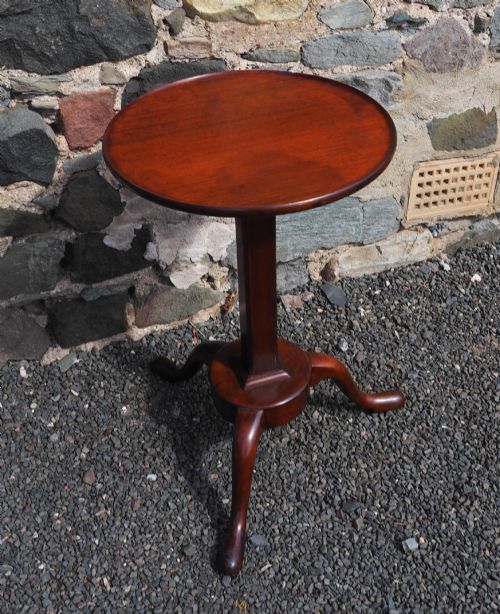
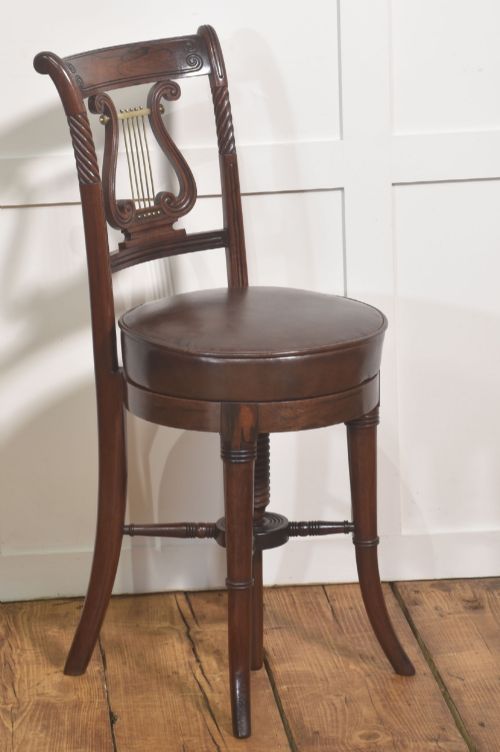
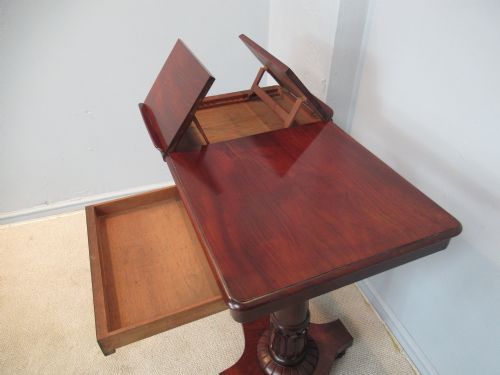
A georgian adjustable table is designed to adapt its height, angle, or position for reading, writing, drafting, or lighting needs. The forms span reading tables, architect desks, music stands, and candlestands originating from the 18th and 19th centuries.
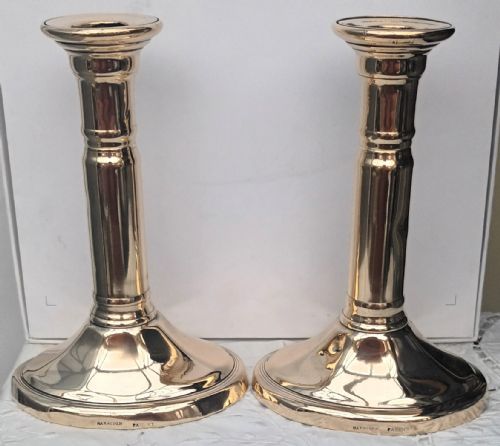
The versions most commonly met on this page include mahogany reading tables and architect desks, alongside brass and Sheffield plate telescopic candlestands. These items appear across George II, George III, Regency, and later periods.
Makers and craftsmen utilised mechanical ingenuity to create functional pieces that served scholars, draughtsmen, and readers in libraries and studies. Each surviving example demonstrates how period households accommodated specific tasks with specialised furniture.
Materials and construction
Mahogany serves as the primary timber for tables, desks, and stands, often complemented by walnut, yew wood, burr maple, and rosewood. Craftsmen selected dense hardwoods to support moving mechanisms and folding reading surfaces without warping.
Brass and Sheffield plate provide the essential mechanical components for telescopic candlestands and extending reading slopes. Boxwood inlay, leather inserts, and glass mirrors frequently finish the decorative and functional surfaces of desks and dressing tables.
Some adjustable stands doubled as music desks, keeping a copper candlestick handy for late-night compositions.
What separates the best pieces
The sophistication of the internal mechanism dictates the standard of an adjustable piece, separating simple folding boards from complex ratchet and screw systems. Smooth operation of brass ratchets, telescopic stems, and pivoting brackets shows the skill of the original workshop.
Timber selection and secondary woods influence the standing of a piece, particularly when figured mahogany or burr maple displays exceptional grain pattern. Cabinetmaking precision in the joints and the preservation of original hardware determine the overall merit of surviving examples.
Gillows of Lancaster
The Georgian Adjustable Table Glossary
- Telescopic
- Describing a mechanism where one tube slides inside another to adjust height, commonly found on brass candlestands.
- Ratchet
- A notched metal rack that engages with a catch to hold a reading slope or desk top at a chosen angle.
- Architects desk
- A specialised form featuring a rising centre section and adjustable supports designed for drawing and drafting plans.
- Sheffield plate
- A material made by fusing a thin sheet of silver to a copper base, utilised for candlesticks and hardware.
- Candlestand
- A tall, slender table or stand intended to hold a candle or lamp close to a reader or worker.
Georgian Adjustable Table: Frequently Asked Questions
How do I adjust the height?
Many tables and stands utilise a ratcheted support or a brass thumb screw to lock the moving section in place. Turning or lifting the component allows the user to select the desired height or angle.
Care should be taken to support the weight of the top while operating internal wooden or brass mechanisms to prevent undue strain on vintage joints.
Where were these used?
These pieces suited libraries, studies, and drawing rooms where occupants read, wrote, or drafted architectural plans. Candlestands placed illumination directly beside a chair or desk.
Their flexible design allowed them to move easily to different corners of a room depending on the natural light available.
How do I date a piece?
Dating relies on timber choices, leg styles such as spade feet or reeded legs, and the sophistication of the brass or iron hardware. Georgian and Regency pieces show specific cabinetmaking traits distinct from later Victorian reproductions.
Comparing construction methods with documented workshop practices helps narrow down the decade of manufacture.
Are original mechanisms delicate?
Original brass ratchets and wooden screws were built for daily use, but centuries of wear mean they require gentle handling. Forcing a stuck mechanism can damage the surrounding timber.
Lubricating dry metal parts with appropriate conservation products helps preserve the working parts for continued use.