





George IV Chairs
George iv chairs bring substantial timber frames and confident proportions into a room, offering robust seating built during the early nineteenth century.
George IV Chairs
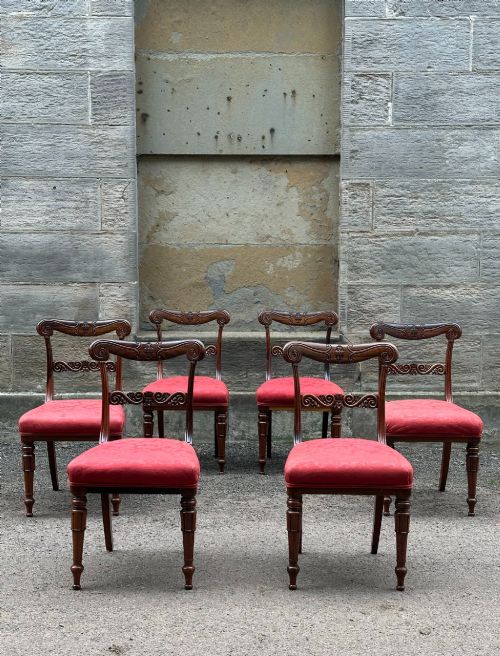
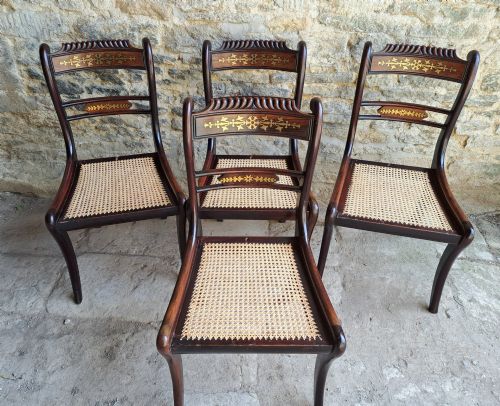
George iv chairs encompass a distinct group of seating furniture produced during the early nineteenth century, bridging Georgian traditions and the bolder Regency style. Buyers searching for george iv chairs frequently encounter formal dining sets, library armchairs, and hall chairs designed with carved or brass-inlaid details.
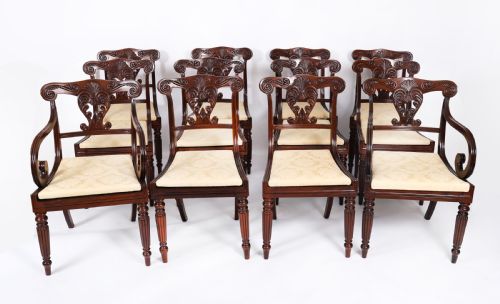
The inventory on this page relies heavily on matching sets of dining chairs alongside larger library armchairs and hall chairs. Single pieces and pairs appear regularly, particularly in mahogany and rosewood, reflecting the domestic requirements of nineteenth-century interiors.
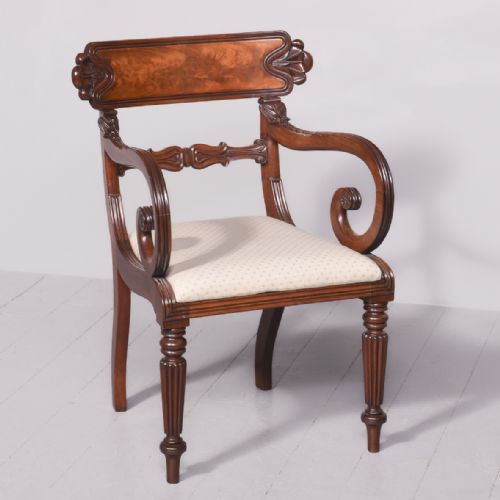
Forms span from bar back dining chairs with sabre legs to bergère armchairs and patent reclining designs. Hall chairs with armorials or carved heraldic motifs represent a specialised branch of this seating tradition.
What varies in quality
Quality rests primarily on the selection of timber and the crispness of the carved ornament found on the crest rails and legs. Pieces attributed to prominent makers exhibit superior joinery and more refined proportions than standard commercial production.
The integrity of the original show wood, the presence of matching sets rather than assembled groupings, and the sophistication of brass inlay or leather work dictate the standing of individual examples within the period.
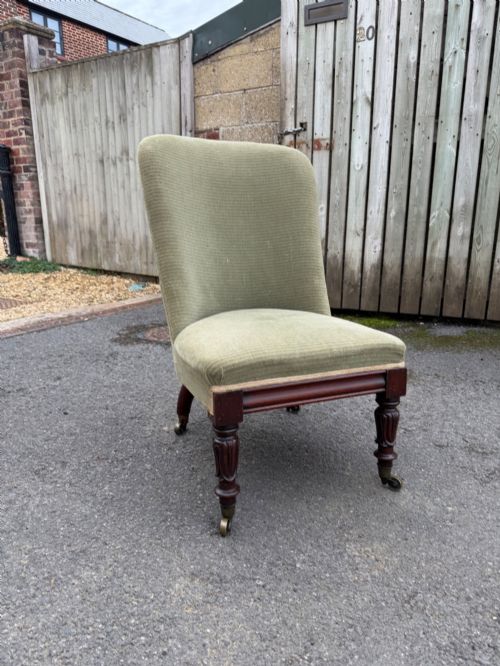
Object forms span dining chairs, armchairs, hall chairs, slipper chairs, and child's Windsor armchairs.
Gillows of Lancaster·Robert Daws·James Mein of Kelso·Seddon and Co
The George IV Chairs Glossary
- Bergère
- An enclosed upholstered armchair with exposed wooden framing around the back and sides. Cane panels frequently fill the sides of these comfortable seats.
- Sabre leg
- A concave curving leg that tapers toward the foot, commonly seen on dining and side chairs of this era. This form derives from classical Greek klismos furniture.
- Bar back
- A horizontal wooden slat across the upper back of a chair, often curved to fit the spine. These slats form the defining feature of many dining sets.
- Library chair
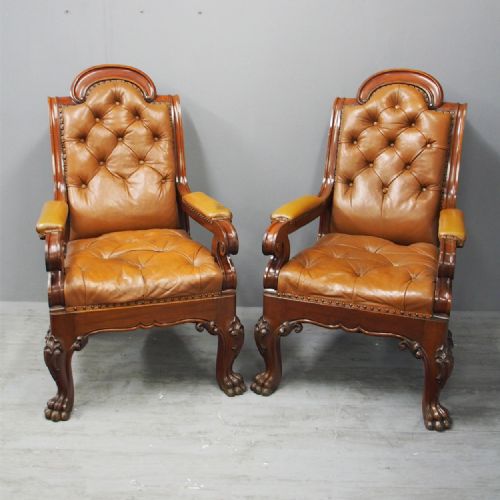
- A substantial armchair designed for reading rooms, often featuring upholstered arm pads and deep seating. Some incorporate patent reclining mechanisms.
- Hall chair
- A rigid wooden seat intended for entrance halls, frequently displaying carved armorials or painted crests. These items prioritise display and heraldic identity over comfort.
- Gonzalo alves
- A dense exotic timber used for cabinetwork and seating frames, prized for its distinctive contrasting grain pattern. It appears on select side chairs.
George IV Chairs: Frequently Asked Questions
What defines george iv chairs?
George iv chairs belong to the early nineteenth century, spanning the Regency and Georgian eras. They are characterised by robust mahogany or rosewood frames, classical influences, and solid construction.
Dining chairs, library armchairs, and hall chairs dominate this category. Cabinetmakers employed rich timber, brass inlay, and upholstered elements to create formal seating.
How do you spot a library chair?
Library chairs are larger, deeply upholstered armchairs built for reading rooms and studies. They often feature padded arms and heavy wooden frames.
Some examples include patent reclining mechanisms or curved 'curule' supports. These chairs were engineered for extended periods of sitting in gentlemen's libraries.
Were hall chairs meant for sitting?
Hall chairs served primarily as decorative furniture in entrance halls rather than for prolonged comfort. They featured solid wooden seats and carved armorials or heraldic shields.
Visitors used them briefly while waiting, and the carved backs displayed the family crest or lineage of the household.
How do these differ from regency chairs?
George iv chairs sit chronologically within the broader Regency period and the reign of George iv. Many share stylistic traits such as sabre legs and bar backs.
Pieces specifically assigned to the George iv era often display heavier proportions and distinct early nineteenth-century carving compared to lighter late eighteenth-century designs.