




Antique Mahogany Dining Suite
An antique mahogany dining suite brings enduring timber character to the room, offering matched sets of chairs built to gather people together.
What these pieces are
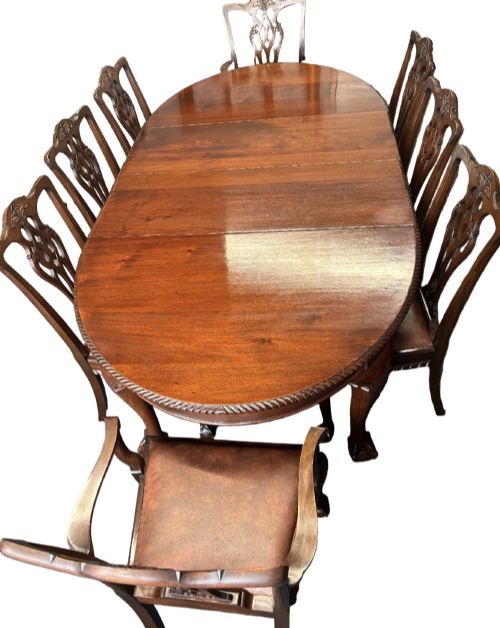
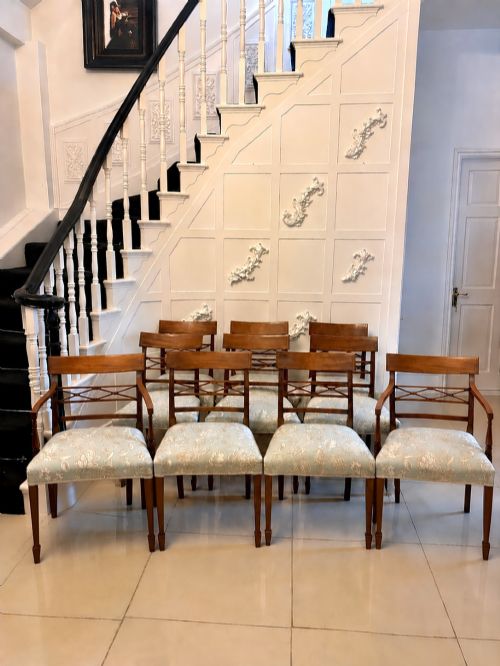
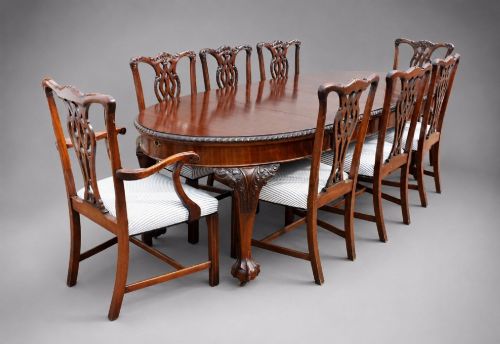
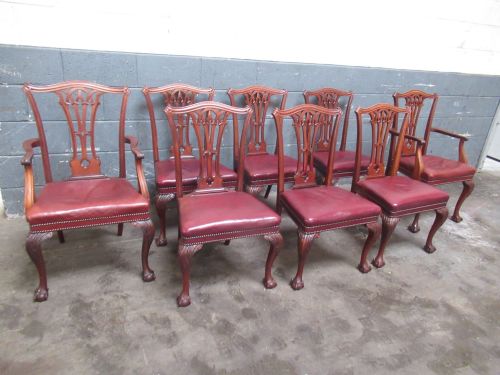
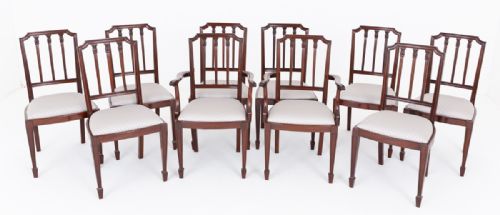
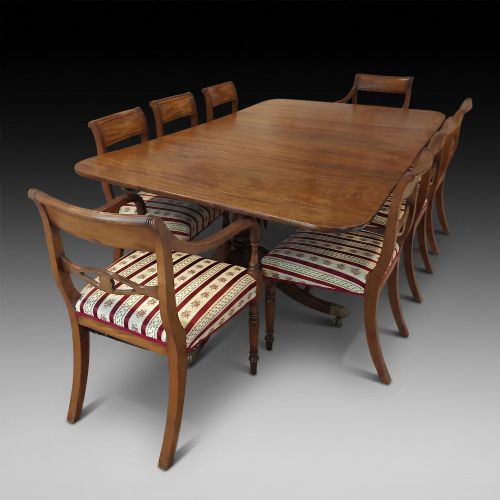
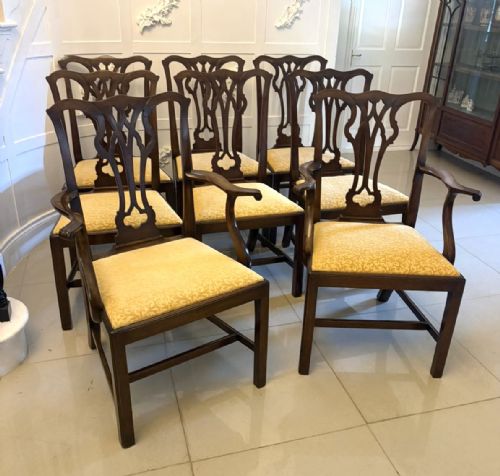
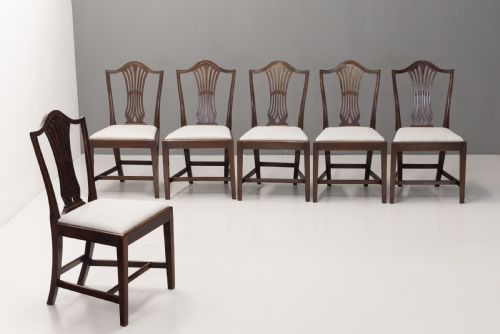
An antique mahogany dining suite on this page consists primarily of matching sets of dining chairs rather than complete rooms of tables and sideboards. These groups range from six to ten chairs, often divided into standard dining seats and larger carver armchairs for the heads of the table.
The selections span distinct periods, running from Georgian and George IV origins through Victorian examples and later Chippendale and Hepplewhite revival sets produced around nineteen hundred and nineteen twenty. Buyers encounter varying scale and detailing depending on whether the suite dates from the primary crafting period or later revivals.
How they were made
Makers utilised solid mahogany and supporting timbers, shaping frames through traditional joinery to support daily use around the dining table. Seats incorporate various materials including leather, textile, and upholstery fabric to provide comfort.
Metal elements such as brass appear alongside timber frames, while revival periods applied historic styles like Chippendale and Hepplewhite through careful hand shaping and period-informed joinery.
Retail Price Guide 2026
Typical UK retail prices for mahogany dining suite, calculated from the Sellingantiques database of over a million retail prices indexed since 2003. This retail price guide relies exclusively on Sellingantiques data; no external sources or auction records are used, so the figures do not describe the wider market.
Ten chairs require substantial elbow room around the table, proving that historic hosts took serious joy in throwing large dinner parties.
What varies in quality
Quality rests in the depth of timber grain, the crispness of carved details on revival or period frames, and the integrity of the original construction. Sets that retain uniform colour across every chair command greater attention than mismatched groups assembled later.
The cohesion of a large set, particularly sets numbering eight or ten pieces, dictates the standing of the suite. Original Georgian proportion differs visibly from twentieth century revival interpretations, each carrying its own standard of execution.
Spillman and Co
The Antique Mahogany Dining Suite Glossary
- Carver
- A dining chair featuring arms, traditionally placed at the head of the table. These often accompanied sets of side chairs.
- Mahogany
- A durable tropical timber valued for its rich colour and stability in furniture construction. It forms the primary material for these dining suites.
- Chippendale style
- A design aesthetic reflecting eighteenth century chair backs and carved splats, frequently revisited in later revival suites. It borrows from Thomas Chippendale's published patterns.
- Hepplewhite style
- A lighter furniture design tradition characterised by shield-back chairs and tapered legs. This style appears in both original and revival dining seating.
- Georgian
- The period spanning the reigns of the first four Georges, known for refined proportions and classical restraint in furniture. Original pieces from this era form the foundation of antique dining sets.
Frequently Asked Questions
How many chairs come in a typical suite?
Listings generally provide sets ranging from six to ten chairs. Larger sets often include a mix of standard chairs and carver armchairs.
Buyers find these configurations suitable for traditional dining spaces needing matching seating capacity.
What is the difference between Georgian and revival sets?
Georgian sets date from the eighteenth or early nineteenth century and carry the wear of actual period use. Revival sets, created around nineteen hundred or nineteen twenty, replicate earlier Chippendale and Hepplewhite styles.
Both categories utilise mahogany timber, though construction methods reflect the specific era of manufacture.
Do these suites include dining tables?
Current selections focus exclusively on matching sets of dining chairs rather than complete room suites containing tables. These seating groups serve as the primary components of an antique mahogany dining suite.
Collectors pair these chairs with independent tables of matching timber and period.
What seat materials should I expect?
Chairs feature a range of covering materials including leather, textile, and traditional upholstery fabric. These surfaces support the wooden frames of the dining chairs.
Upholstery condition varies across different periods and may reflect later re-covering work.