



Armorial Wooden Chairs
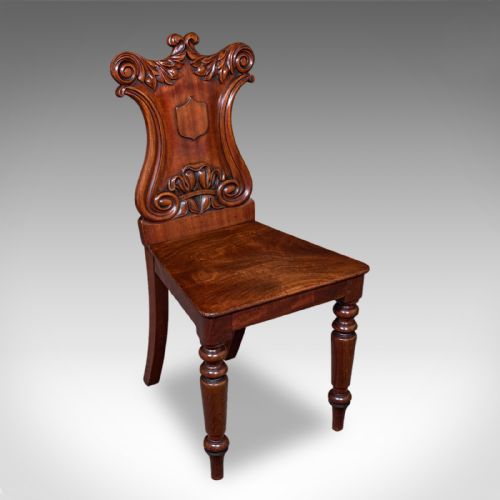
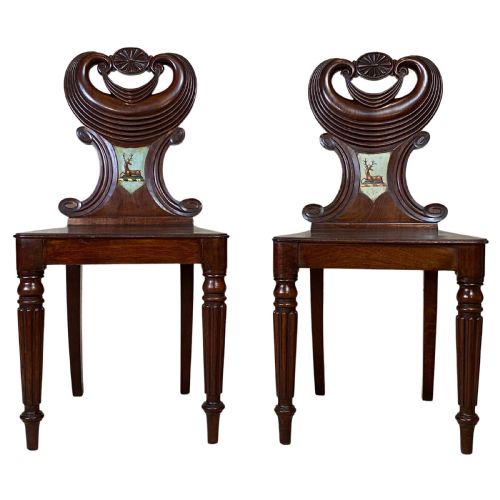
Armorial wooden chairs bring heraldic carved distinction to an interior, blending sturdy mahogany timber with painted or sculpted family crests.
Armorial Wooden Chairs
When you search for armorial wooden chairs, you encounter substantial seating featuring carved crests, shields, and heraldic motifs upon solid timber frames. These pieces originate across the eighteenth and nineteenth centuries, spanning Georgian, Regency, George IV, and Victorian periods.
The versions you meet most frequently on this page are hall chairs built from mahogany, often designed with solid wooden seats and carved armorial back panels. You also find occasional armchairs, settees, and benches carrying similar heraldic insignia.
Originating largely from English workshops and Scottish houses, these furnishings served grand receptions and entrance halls. They combine utility with displays of lineage and family identity.
Materials and construction
Cabinetmakers utilised dense timbers such as mahogany and walnut to construct these sturdy frames, ensuring the wood could support deep relief carving. Artisans carved crests and heraldic symbols directly into wooden back panels or applied painted finishes.
Joinery methods relied on solid wood construction, sometimes enhanced with brass details or cane work. Craftsmen shaped chair backs into shell motifs or shield forms to display the armorial bearings prominently.
Some chairs feature a hippocampus, proving that antique furniture occasionally needs the upper body of a horse and the tail of a fish.
Distinctions in quality
The depth and crispness of the carved armorial bearings separate standard pieces from superior examples. Sharp detail in the hippocampus or heraldic crest indicates skilled hand carving rather than mechanical production.
The choice of timber grain and the structural integrity of the solid wooden seat influence the standing of the chair. Maker attribution, such as work linked to Gillows, elevates the historical interest of the seating.
Gillows
The Armorial Wooden Chairs Glossary
- Armorial
- Bearing a coat of arms or heraldic insignia. These symbols denote family lineage and identity.
- Hall Chair
- A rigid wooden seat intended for an entrance hall rather than comfortable lounging. They usually feature solid timber seats and carved backs.
- Hippocampus
- A mythological creature with the upper body of a horse and the lower tail of a fish. This motif appears frequently in carved heraldic crests.
- Mahogany
- A durable, reddish-brown tropical hardwood favoured by period cabinetmakers. It takes fine detail during carving.
Armorial Wooden Chairs: Frequently Asked Questions
Where were these chairs placed?
These pieces sat in grand hallways, reception rooms, and corridors of country houses and town residences. They functioned as rigid, impressive seating for visitors and staff.
Their solid wooden construction ensured durability in high-traffic entry spaces where coats and hats were stored.
How do I identify a Regency period piece?
Regency examples often display classical architectural influences, elegant proportions, and precise carved details in mahogany. They date from the early nineteenth century.
Look for refined back panels shaped as shields or shells, sometimes bearing attribution to known cabinetmakers like Gillows.
Are these chairs comfortable for daily use?
They were built for formal display and upright posture rather than relaxed lounging. The seats are typically solid carved wood without upholstery.
For daily use, they serve well as accent seats or hallway furniture rather than primary living room seating.