

Carved Crest Chair
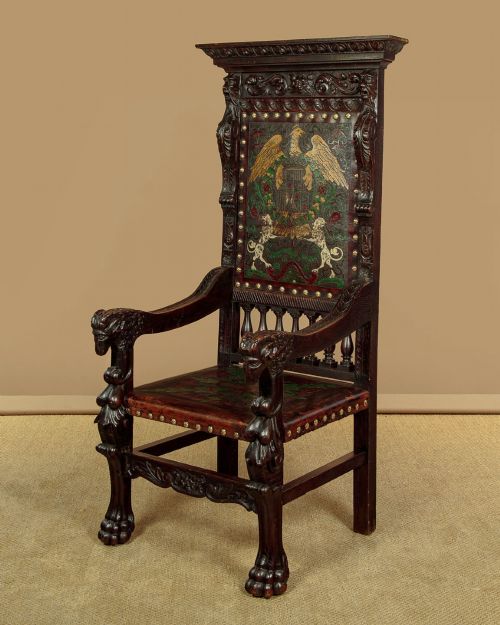
A carved crest chair carries the weight of heraldry and fine woodworking, offering an assertive presence for halls, libraries and dining rooms.
Carved Crest Chair
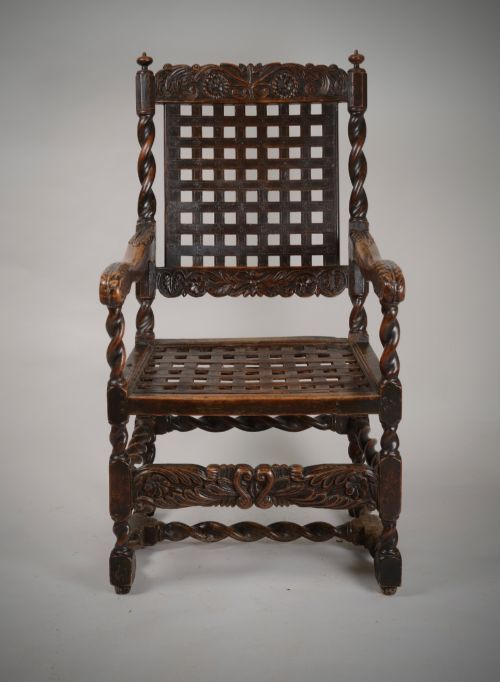
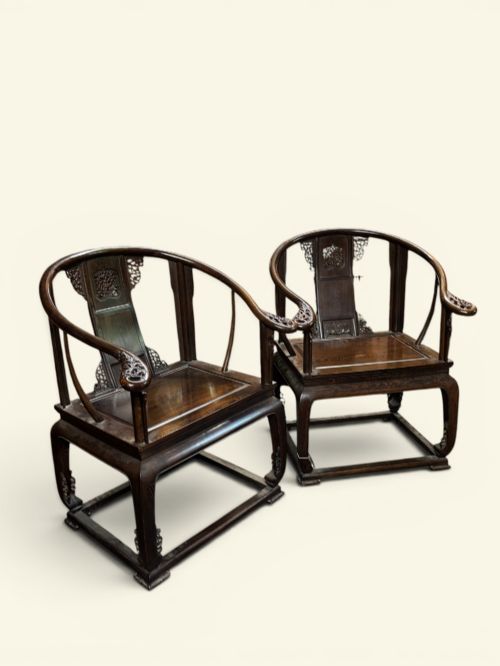
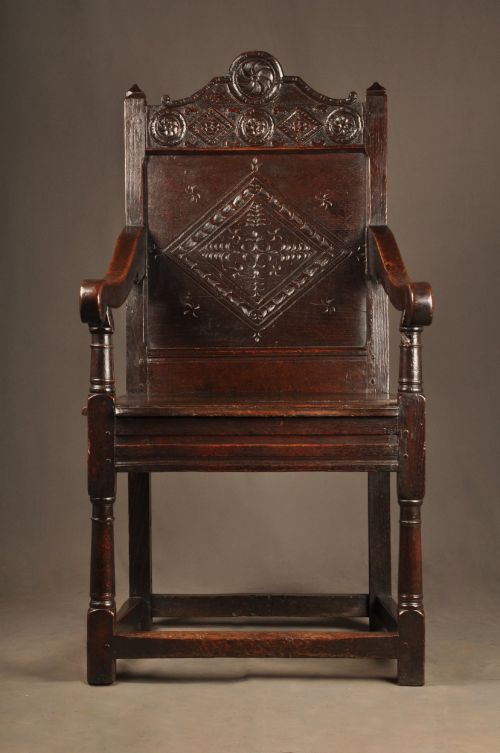
A carved crest chair brings sculptural woodwork and heraldic detail into domestic spaces, drawing on a long tradition of decorative top rails. When searching for a carved crest chair, buyers encounter forms ranging from imposing seventeenth-century wainscot and panel-back seats to slender nineteenth-century hall chairs and dining sets.
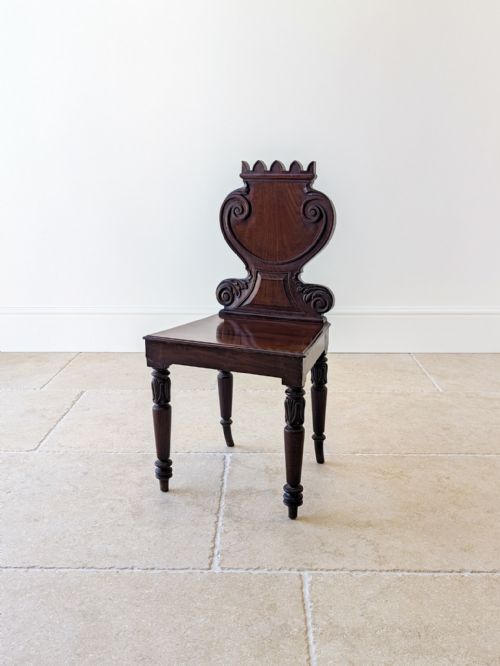
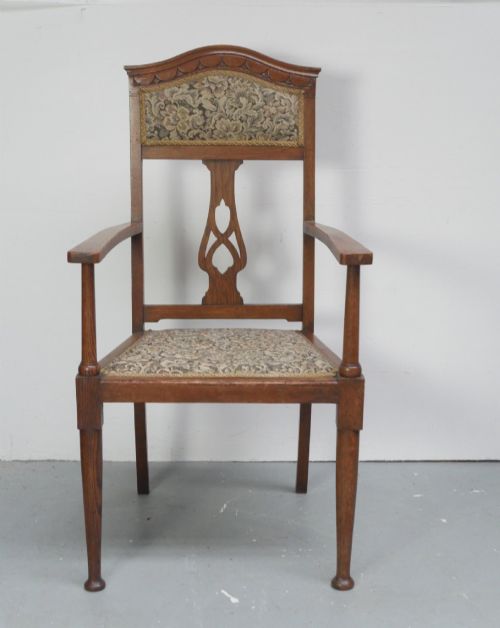
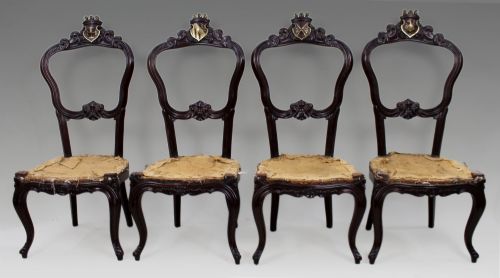
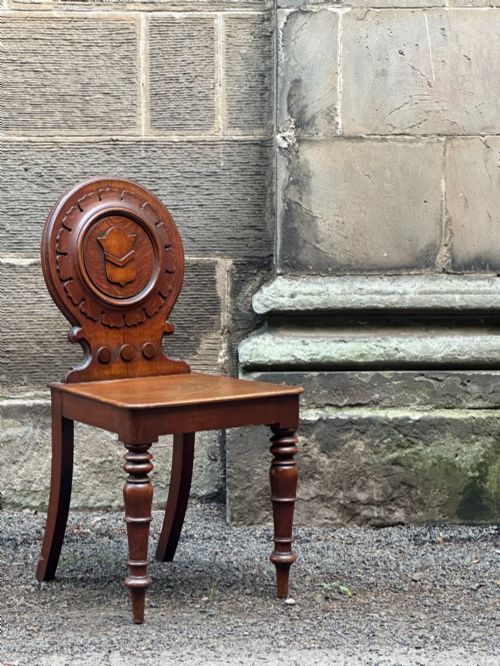
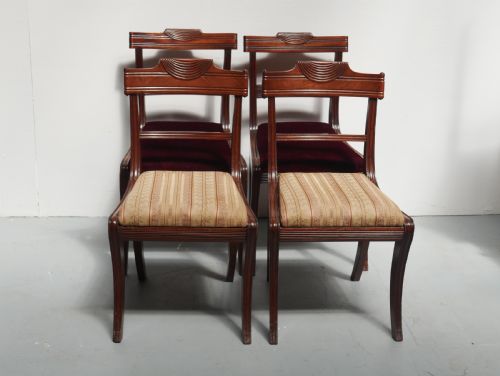
The pieces appearing on this page span several centuries, moving from early oak joinery through Georgian mahogany designs to Victorian revivals and Edwardian suites. Among these, the rigid wooden hall chair with a shield-backed crest and the sturdy oak armchair remain the most frequently met varieties.
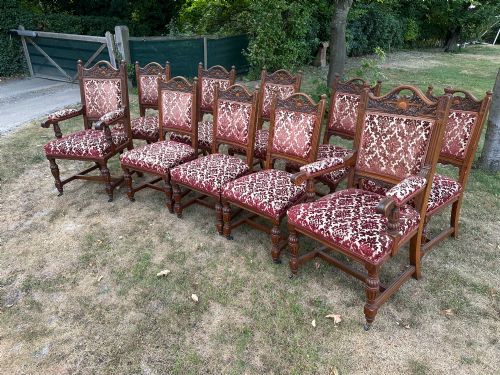
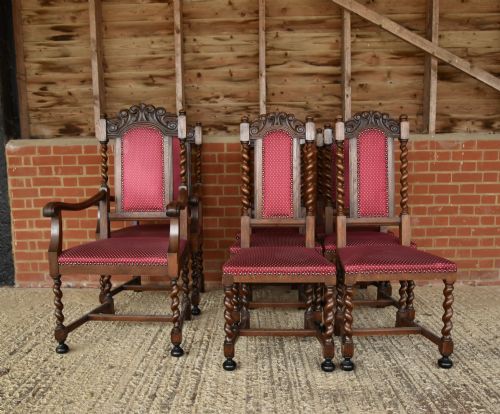
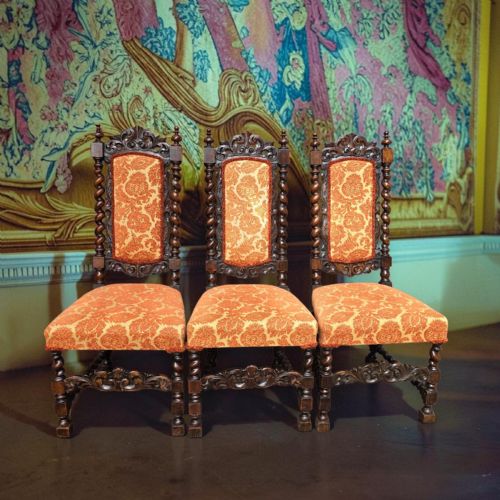
Makers utilised diverse regional styles, producing everything from country house armorials to restrained Georgian side chairs and heavy barley-twist dining sets. Selecting the right example depends on whether the interior calls for the dark warmth of early joined oak or the polished grain of later mahogany and rosewood.
Materials and Construction
Carpenters and joiners built these seats primarily in solid oak and mahogany, supplementing them with walnut, rosewood, and occasionally chestnut. Early examples rely on heavy joined oak construction with pegged mortise and tenon joints, while later nineteenth-century pieces employ turned elements like barley twists alongside steam-bent components.
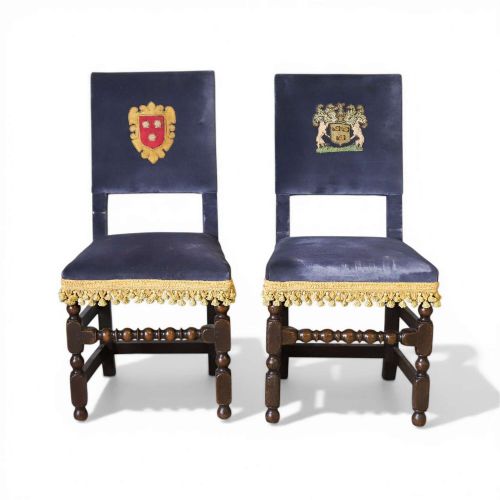
Carving defines the upper rail, incorporating pierced crests, heraldic shields, and scrolling foliage executed directly into the structural timber. Upholstery materials such as velvet, painted leather, and woven fabrics were added to padded seats and backs, secured with brass tacks.
Assessing Quality and Execution
The division between standard output and superior work rests on the depth and crispness of the carved cresting rail. Sharply chiselled relief work on the top rail indicates a confident hand, whereas softer, rounded edges point to hurried production or later recutting.
Structural integrity also separates the grades, visible in the tightness of the joints and the choice of timber figure. Dense, well-figured mahogany or quarter-sawn oak with original pegging sustains a chair through centuries of use without losing its rigidity.
Gillows·Waring and Gillow
The Carved Crest Chair Glossary
- Crest
- The uppermost horizontal rail of a chair back, frequently shaped, pierced, or carved with heraldry. This member catches the eye first and gives the form its name.
- Wainscot chair
- A heavy wooden armchair of seventeenth-century construction, panelled and joined like wall panelling. These pieces were status items in early homes.
- Armorial
- Bearing a heraldic coat of arms or shield crest. Such chairs often record specific family lineages.
- Backstool
- An early term for an upholstered chair without arms, serving as a precursor to the modern dining chair. They appear frequently in seventeenth-century inventories.
- Klismos
- A classical chair shape with curved, sweeping legs and a concave back rail, revived during the nineteenth century. The design imitates ancient Greek pottery depictions.
Carved Crest Chair: Frequently Asked Questions
How were carved crest chairs used?
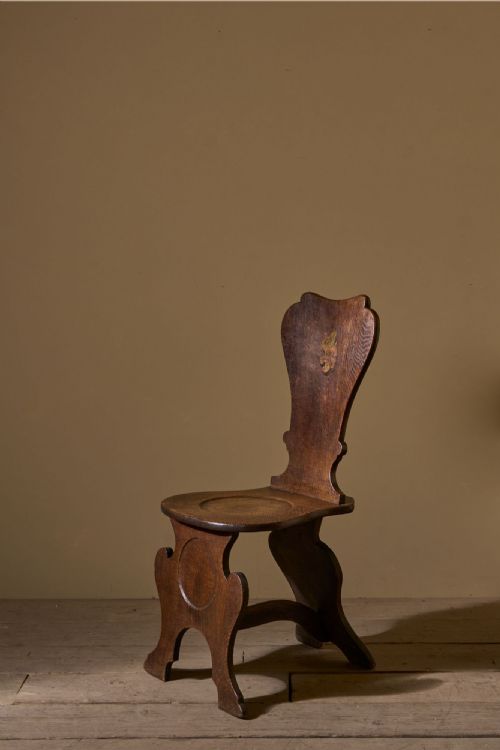
These chairs served different roles depending on their period, from high-status seating by the hearth in seventeenth-century rooms to formal reception pieces in grand hallways. Hall chairs functioned mainly as monumental statements of lineage and hospitality rather than comfortable lounging seats.
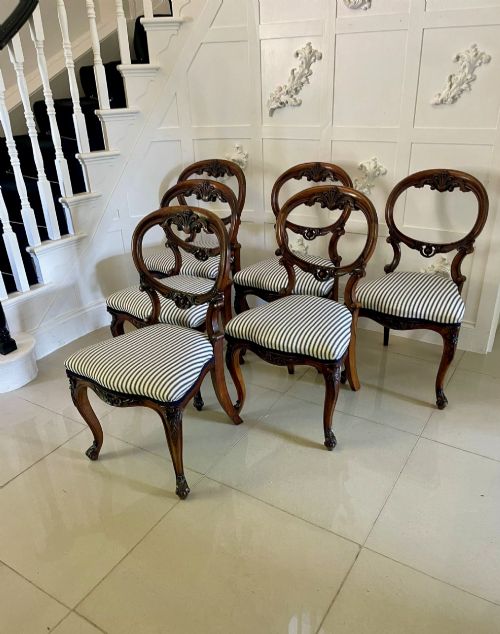
Dining sets placed around large tables displayed the wealth and taste of the household to visiting guests. In studies and libraries, heavier armchairs provided sturdy seating for reading and writing.
Where should I place a carved crest chair?
A hall chair with an armorial crest works best against a plain wall where its silhouette and carved woodwork can be fully appreciated. Because their wooden seats and upright backs encourage an erect posture, they suit entryways and corridors rather than sitting rooms.
Upholstered variants and library armchairs fit comfortably into studies or corners where softer fabrics balance the heavy carved timber. Pairing a single armorial chair with a simple desk creates a striking focal point.
How do I tell seventeenth-century oak from later revivals?
Seventeenth-century pieces display the tool marks, irregular peg placement, and natural oxidation of centuries of handling. The timber exhibits deep patination and shrinkage cracks unique to unassisted ageing.
Revival pieces from the nineteenth century often show mechanical uniformity in their turning and brighter, more even coloration across the grain. Examining the underside and the joinery reveals whether the construction relies on modern metal screws or traditional pegged tenons.
What is an armorial crest?
An armorial crest is a specific heraldic device belonging to a family, carved into the wooden shield at the top of the chair back. These carvings often commemorate alliances or local lineage.
Country house hall chairs frequently carried these motifs to reinforce the identity of the estate. They transform a utilitarian seat into a record of family history.