
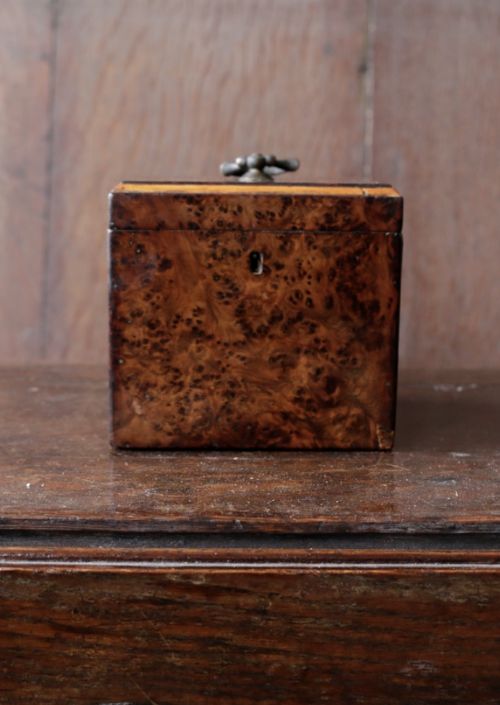


George III Tea Box
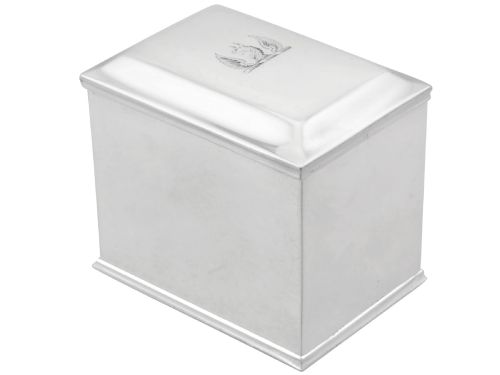
A george iii tea box is a small timber chest designed to store dried leaves securely under lock.
George III Tea Box
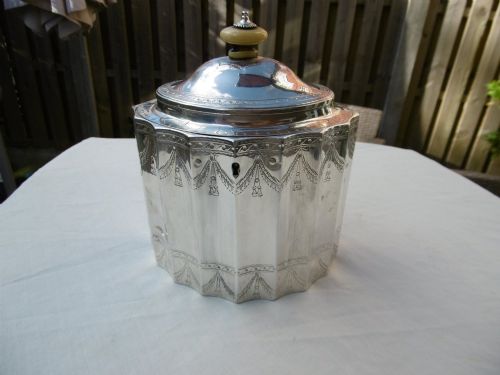
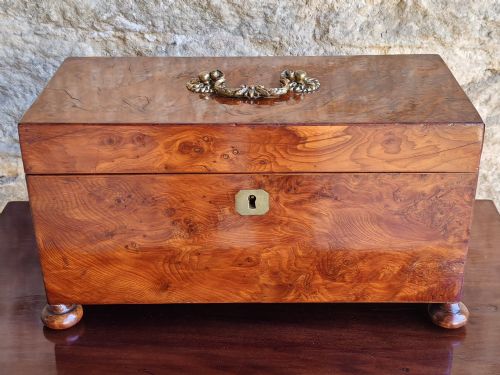
A george iii tea box takes various geometric forms, including rectangular, oval, hexagonal, octagonal, and cube shapes made during the Georgian period. Mahogany and satinwood predominate among the timbers, alongside burr yew, partridge wood, tortoiseshell, and harewood.
Makers shaped these containers to sit upon parlour tables, often incorporating wood inlay, boxwood stringing, and secret drawers. Many surviving examples date from the eighteenth century and the early nineteenth century.
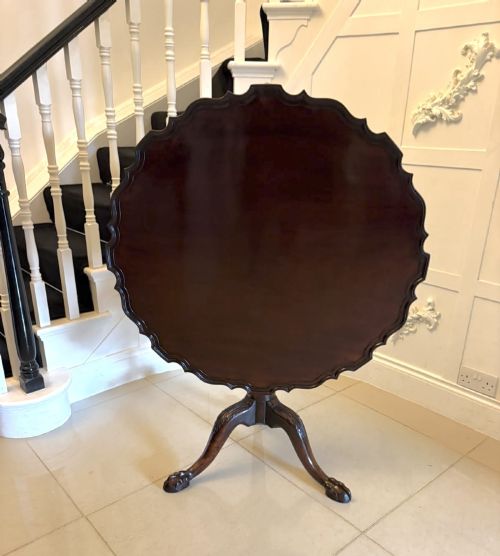
Alongside standard tea caddies, the selection occasionally includes related items such as storage boxes, biscuit boxes, and sewing tables from the same era.
Materials and construction
Cabinetmakers utilised solid timbers and applied veneers, shaping mahogany, satinwood, and yew into precise geometric outlines. Decorative surface patterns relied on contrasting wood inlay, boxwood stringing, and marquetry.
Internal compartments often featured fitted sections for leaf storage, sometimes accompanied by concealed drawers accessed through ingenious mechanisms. Selected pieces incorporated brass handles, escutcheons, and locking mechanisms.
George III Tea Box Retail Price Guide 2026
Typical asking prices for george iii tea box among the pieces listed under this phrase on Sellingantiques today, from the lower quarter to the upper quarter. They describe what is for sale here now, not the wider market.
Listings feature mahogany, satinwood, burr yew, tortoiseshell, and partridge wood across the Georgian period.
Distinctions in quality
The sophistication of the timber figure and the precision of the wood inlay determine the visual appeal of a piece. Figured mahogany and highly figured burr yew command attention through rich grain patterns.
Refinement shows in the symmetry of shaped outlines, such as serpentine or octagonal bodies, and the intact survival of original internal fittings and brass hardware.
Robert Hennell·P A W Bateman
The George III Tea Box Glossary
- Tea caddy
- A small box or chest intended for the domestic storage of loose tea leaves. These containers were frequently fitted with internal lids and locks.
- Stringing
- A narrow inlay of contrasting wood used to outline panels, drawers, or edges on cabinet furniture. Boxwood is frequently utilised for this decorative linear work.
- Marquetry
- Decorative veneer work forming pictorial or geometric patterns using various coloured timbers. Cabinetmakers applied this technique to satinwood and mahogany surfaces.
- Serpentine
- A curved outline featuring a convex centre flanked by concave sides. This flowing shape appears on quality storage boxes and caddies.
- Escutcheon
- A protective plate surrounding a keyhole, usually fashioned from brass. It guards the surrounding timber from wear when operating the lock.
George III Tea Box: Frequently Asked Questions
What is a george iii tea box?
A george iii tea box is a lidded wooden container made during the Georgian era to store expensive tea leaves safely under lock.
These pieces reflect the high status of tea in the eighteenth century, serving both a functional and a decorative role in the home.
How were george iii tea boxes used?
Households used these containers to keep valuable tea leaves secure from servants and guests, as tea was a costly commodity.
Many examples feature internal lidded canisters and mixing bowls, allowing the master of the house to dispense the leaves personally.
What woods are common?
Mahogany and satinwood appear most frequently, often enhanced by decorative elements like boxwood stringing and wood inlay.
Craftsman also utilised exotic timbers including burr yew, partridge wood, tortoiseshell, and harewood to create striking visual variety.