
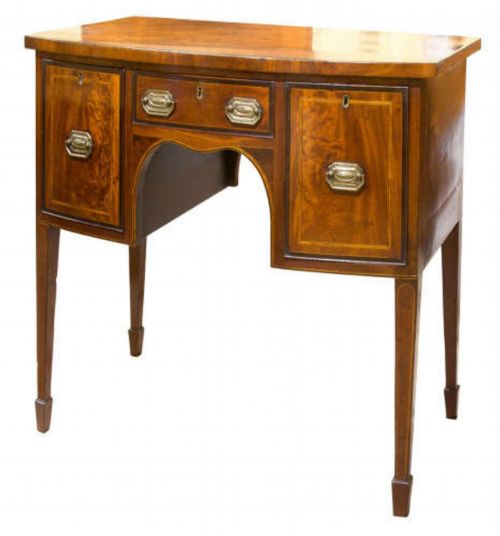
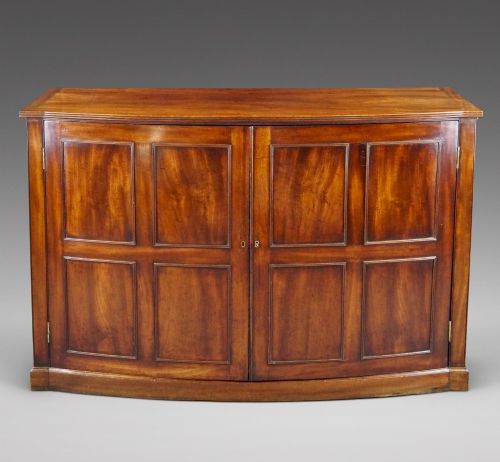
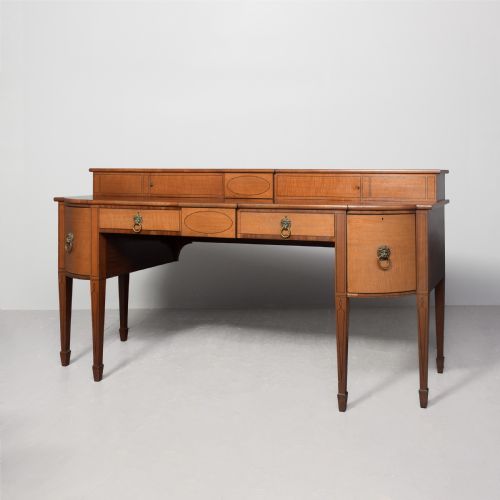
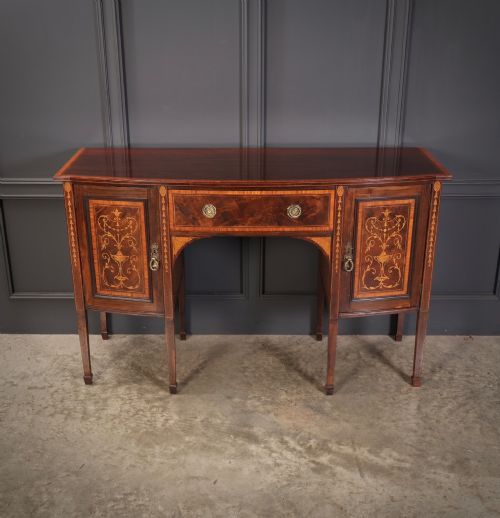

George III Mahogany Credenza
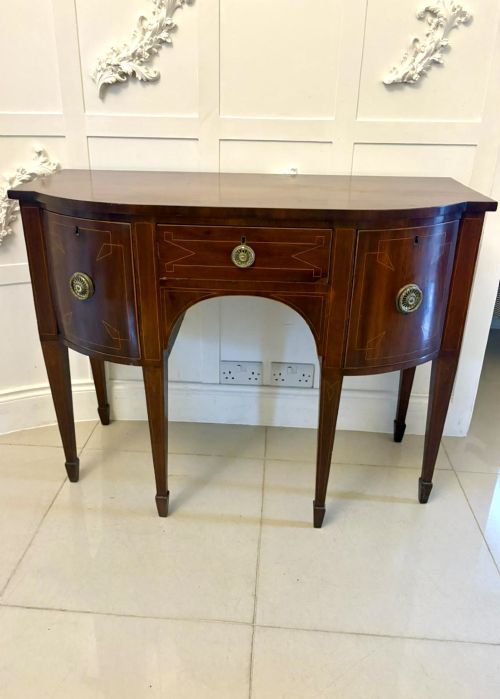
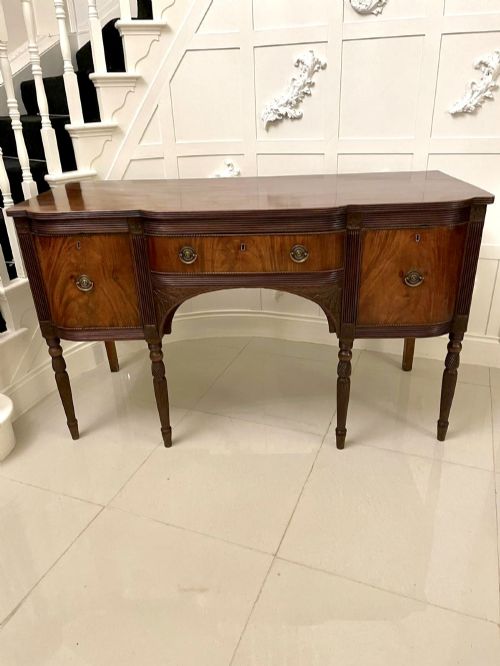
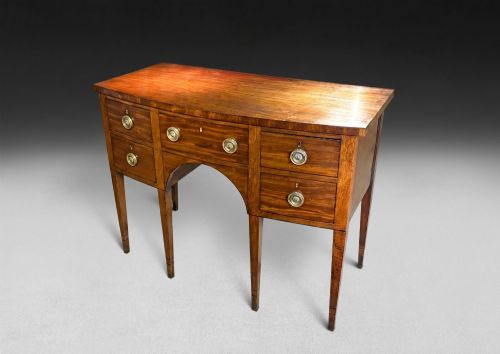
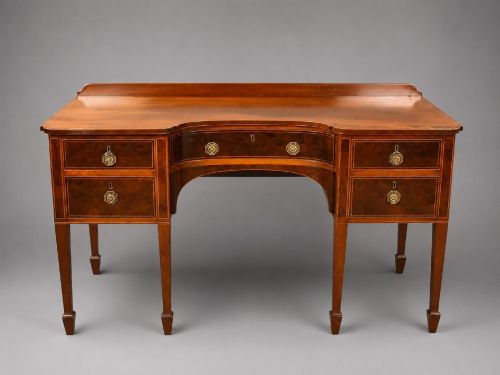
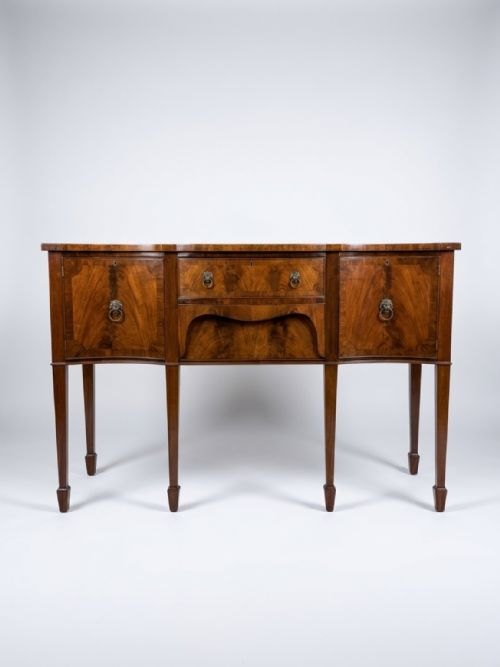
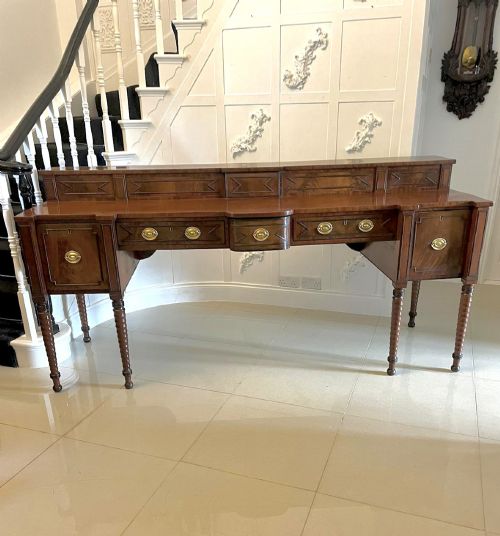
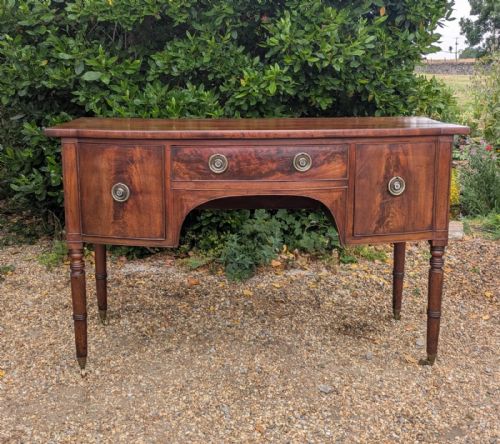
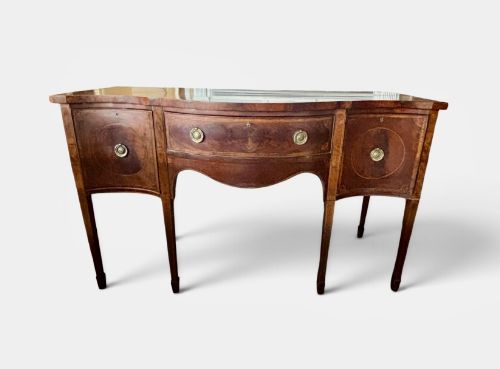
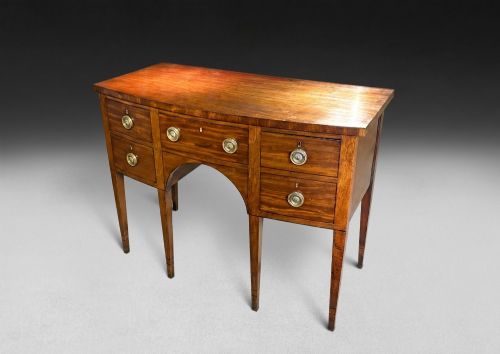
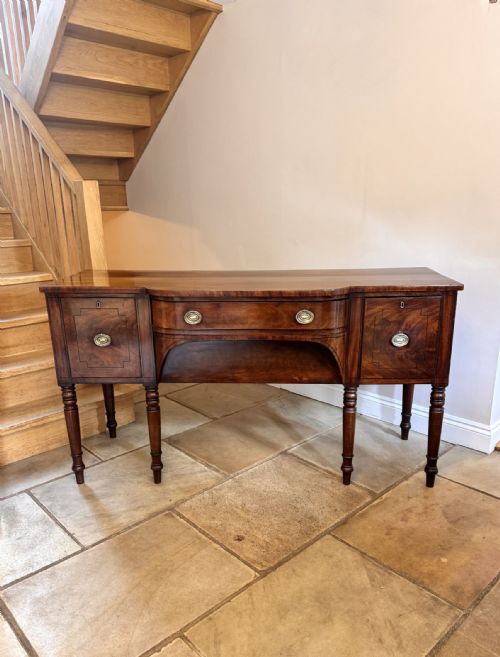
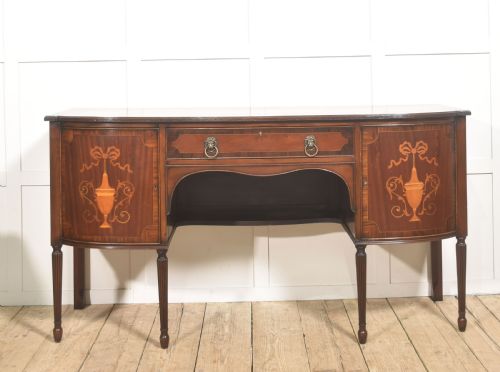
A george iii mahogany credenza brings sophisticated dining room storage into a home through figured timbers and graceful serpentine lines.
George III Mahogany Credenza
A george iii mahogany credenza search draws together formal dining furniture primarily taking the form of sideboards, side cabinets, and commodes. These pieces originate predominantly from the Georgian era and the eighteenth century, with later nineteenth-century revivals also appearing.
Buyers will encounter various structural frontages including bow-front, serpentine, breakfront, and demi-lune shapes. Scottish regional variants with stage-backs and lower press cupboards add distinct regional forms to the selection.
Materials and construction
Cabinet makers utilised solid mahogany and flame mahogany veneers over stable secondary timbers to achieve rich figuring across wide drawer fronts and tabletops. Decorative contrast comes from boxwood, satinwood, and purpleheart inlays arranged in delicate stringing and marquetry patterns.
Hardware details incorporate brass fittings, while structural joinery relies on period techniques suited to curved and serpentine carcases. Specialist workshops also shaped low press cupboards and secretaire drawers into the main bodies.
Evaluating craftsmanship
Quality rests upon the selection of timber figures, where rich flame mahogany veneers and balanced satinwood or boxwood inlay elevate the visual depth of the piece. The sharpness of the serpentine or bow-front shaping also dictates the level of artisanal skill involved.
Proportion and scale distinguish finer examples, particularly in smaller compact sideboards or large Scottish stage-back variants where maintaining clean lines across complex curves requires supreme cabinet-making expertise.
Gillows
The George III Mahogany Credenza Glossary
- Serpentine
- A curved front edge featuring a convex centre flanked by concave wings. This shape requires advanced woodworking skill to construct cleanly.
- Bow-front
- A convex curving front facade that projects outward from the room. It softens the corners of dining room storage furniture.
- Flame mahogany
- A distinct grain pattern in mahogany timber resembling flickering flames. Cabinet makers prized this wood for central drawer panels.
- Breakfront
- A cabinet or sideboard whose central section projects forward from the flanking outer sections. It creates a strong architectural rhythm.
- Stringing
- Thin inlaid lines of contrasting light wood such as boxwood used to outline panels. It frames the primary mahogany surface.
George III Mahogany Credenza: Frequently Asked Questions
What is a george iii mahogany credenza used for?
These pieces function primarily as dining room server units and storage cupboards for tableware, linens, and silver.
They provide wide surface space for serving food during meals while keeping dining accessories neatly concealed below.
How do I identify a george iii piece?
Look for authentic Georgian proportions, hand-cut dovetail joints, and dense native mahogany timbers that exhibit deep natural patination.
Construction methods and traditional inlay materials such as boxwood stringing help separate eighteenth-century originals from later twentieth-century revivals.
Where should I place a bow-front sideboard?
These items suit dining rooms, large hallways, or spacious living areas where their curved profiles can be viewed without obstruction.
Ensure adequate clearance around the protruding front curves to maintain comfortable walking pathways in the room.
What maintenance do these wooden cabinets need?
Protect the polished mahogany surfaces by keeping them away from direct sunlight and sudden radiator heat fluctuations.
Apply occasional traditional beeswax to nourish the timber grain and preserve the rich colour of the polish.