
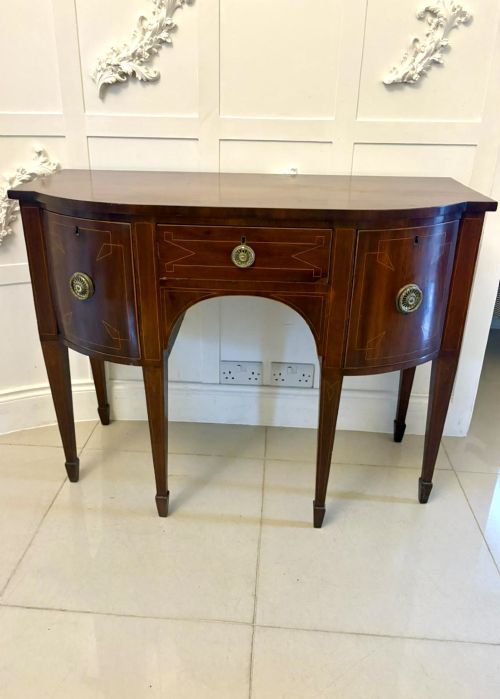
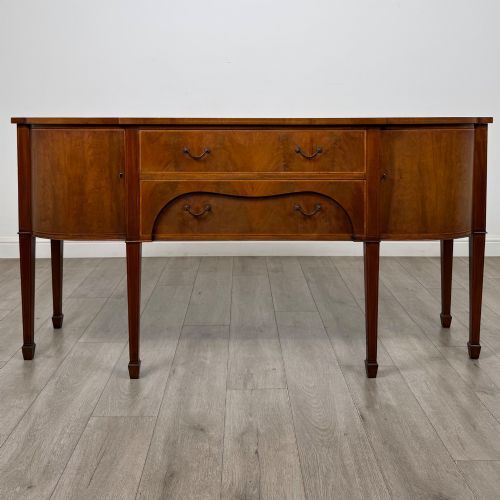
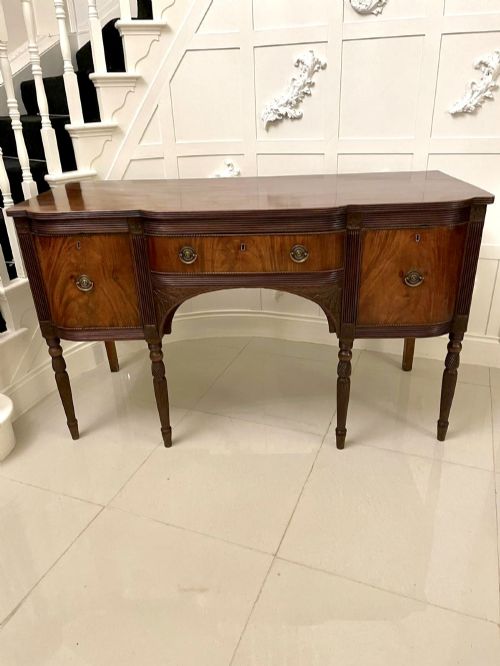
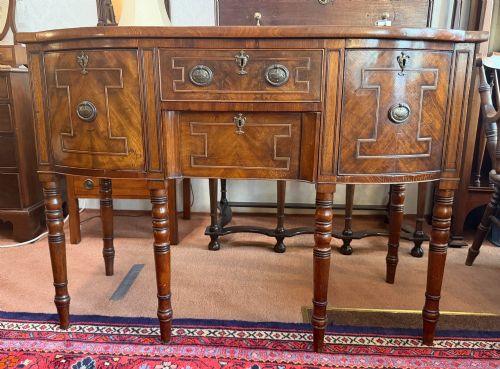
Georgian Mahogany Dining Server
A georgian mahogany dining server provides a substantial surface for food and silver during meals while anchoring a dining room with timber presence.
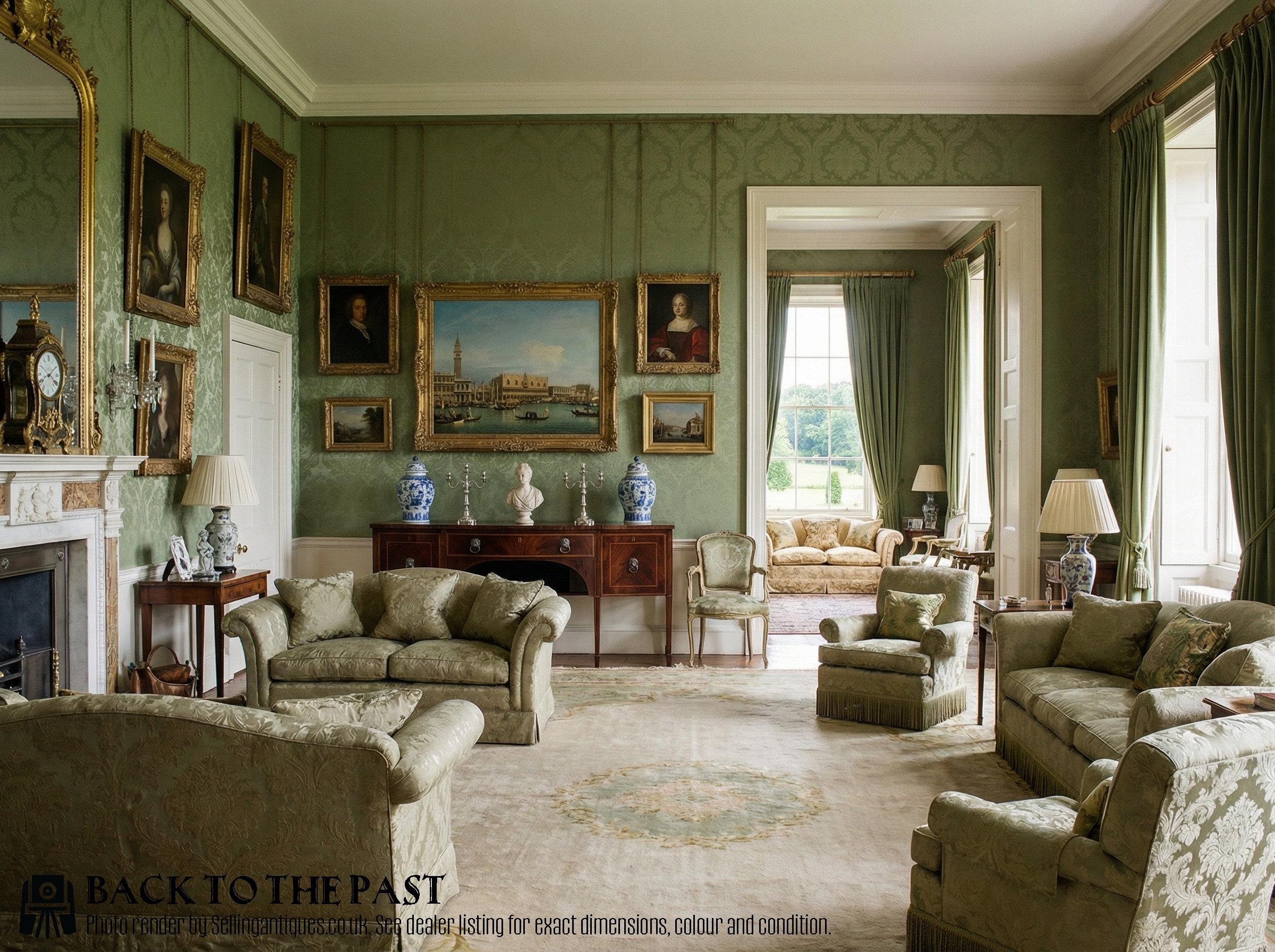
Georgian Mahogany Dining Server
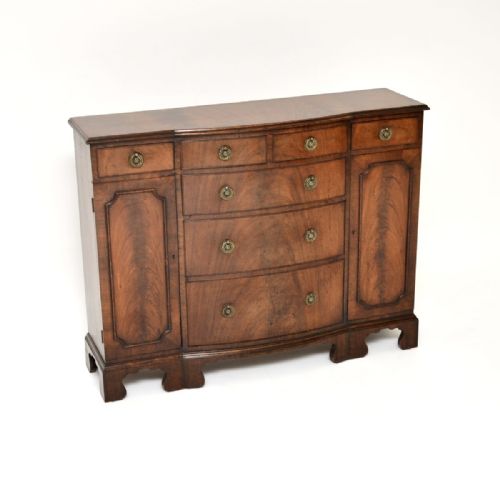
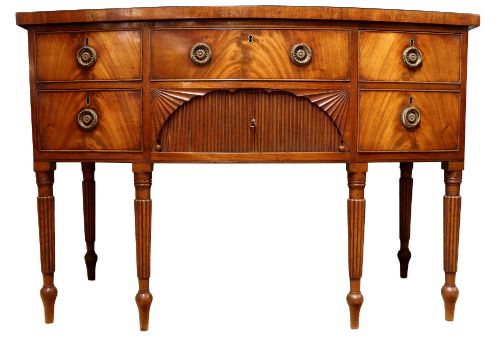
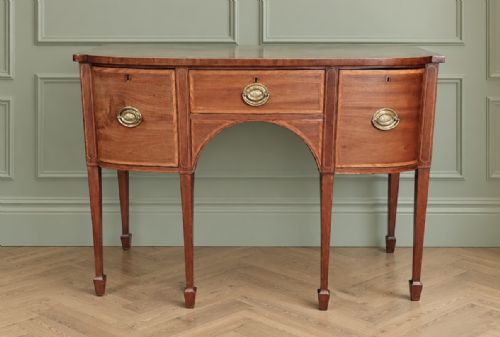
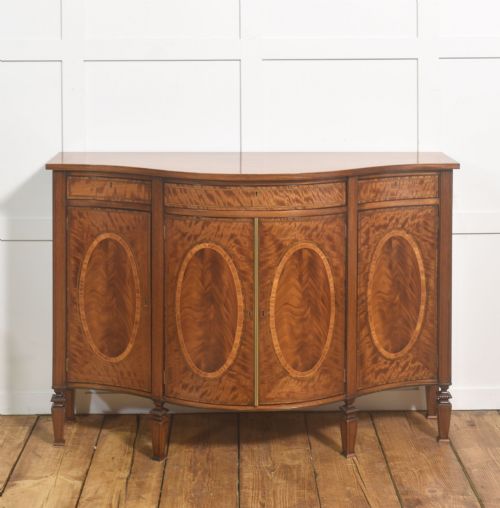
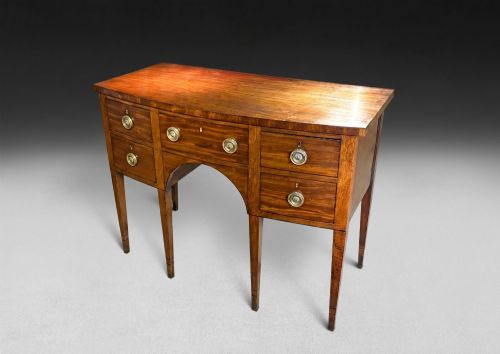
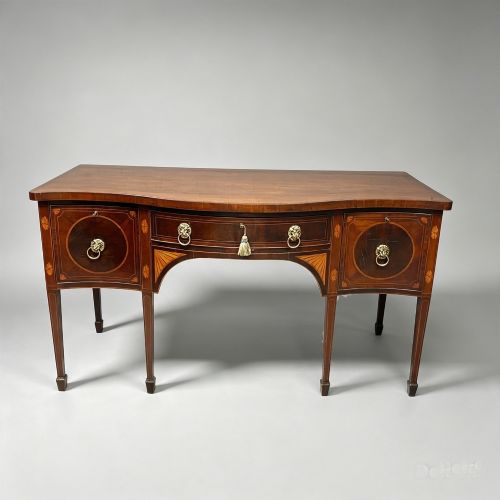
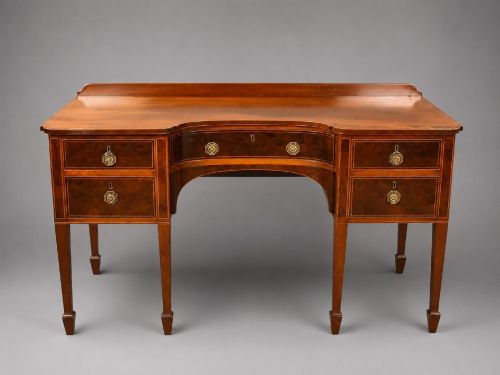
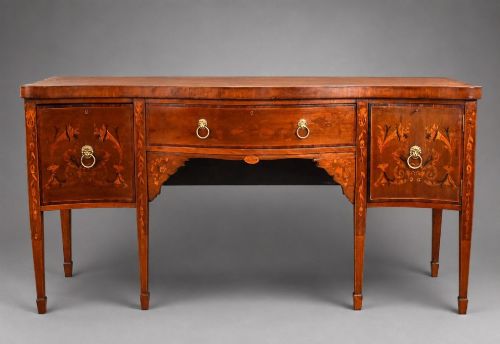
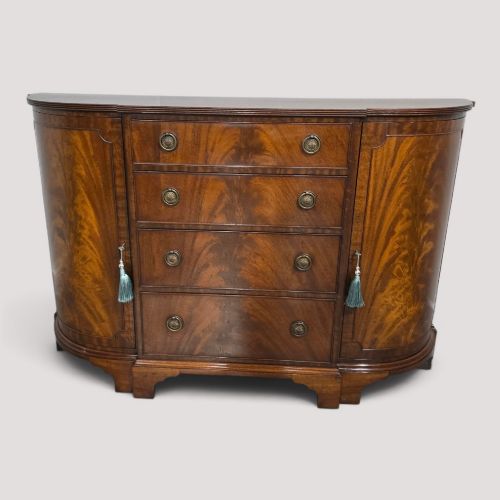
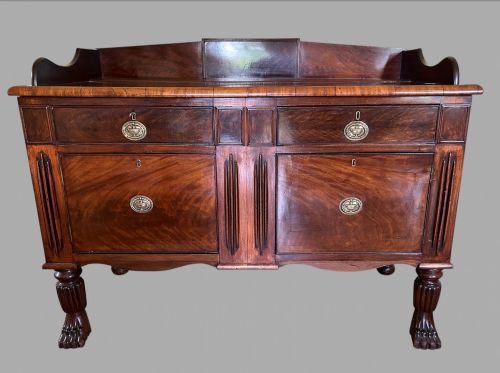
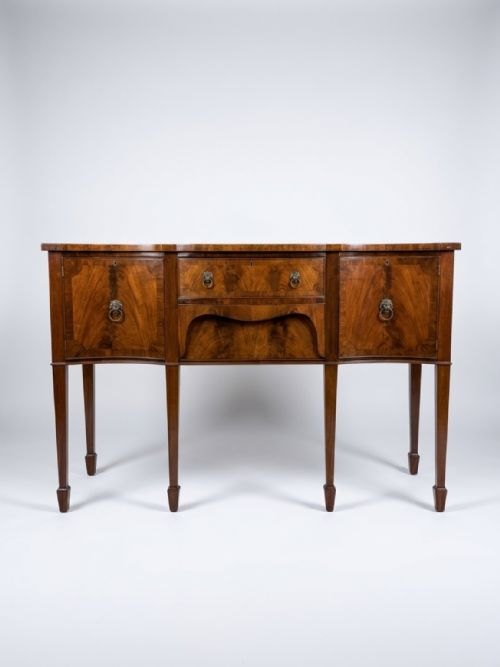
When you search for a georgian mahogany dining server, you encounter low timber furniture designed for dining rooms across the eighteenth and nineteenth centuries. The listings show forms primarily as sideboards, serving tables, and sideboards with bow fronts or breakfronts.
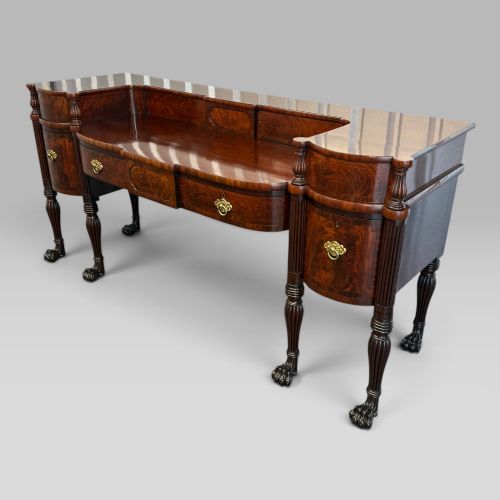
The periods span the Georgian and Regency eras into later Edwardian revivals, with proportions changing from compact smaller pieces to large stage-back and pedestal examples. You will frequently meet bow-front and serpentine shapes alongside traditional rectangular serving tables.
Origins stretch from eighteenth-century workshops to early twentieth-century revivals utilising similar mahogany timbers. The structural layouts serve practical hosting needs through cupboards, drawers, and tiered shelving.
Craftsmanship and Proportion
The distinction between ordinary and exceptional pieces rests on the choice of timber and the precision of the shaping. Flame mahogany veneers matched symmetrically across a bow front require superior skill compared to plain straight-grained boards.
Subtlety of inlay work and the carving of details like lion paw feet separate ambitious cabinet work from standard production. Well-balanced proportions and crisp execution of serpentine edges elevate a piece above simpler utilitarian forms.
Forms include serpentine sideboards, pedestal servers, and tiered dumb waiters.
M. D. Miller & Sons
The Georgian Mahogany Dining Server Glossary
- Bow front
- A convex curved cabinet front popular on dining servers of the Georgian and Regency periods. This shape softens the room's geometry while increasing internal storage depth.
- Serpentine
- A front contour characterised by a convex centre flanked by concave curves. It demands precise carpentry to follow the undulating line.
- Flame mahogany
- Timber cut from the fork of the tree where branches meet the trunk, producing a fiery, feather-like grain pattern. Cabinet makers reserved these striking veneers for prominent drawer fronts and doors.
- Pedestal sideboard
- A server featuring separate pedestals flanking a central table or lower section. They emerged during the Regency period to grand effect.
- Breakfront
- A cabinet design where the central section projects forward from the flanking wings. This architectural arrangement creates depth and visual rhythm in larger dining rooms.
Georgian Mahogany Dining Server: Frequently Asked Questions
How do I spot a true Georgian server?
Examine the timber selection and construction methods underneath and behind the piece. Eighteenth-century examples typically feature hand-cut dovetails in the drawer construction and native secondary woods like oak.
Check for the characteristic patination that develops over centuries of polishing. Later revivals from the Edwardian period often employ machine-sawn elements and different internal framing.
Where should I place a server?
Position the piece against a primary dining room wall where it can function during meals. Ensure sufficient clearance for doors and drawers to open fully without obstruction.
Keep timber servers away from direct heat sources and strong sunlight to protect the mahogany veneer and polish from fading or drying out.
What is the difference between a sideboard and a serving table?
Sideboards usually incorporate integrated storage compartments, cupboards, and multiple drawers for dining linens and silver. They provide enclosed space alongside surface area.
Serving tables are generally open-framed tables without enclosed cupboards underneath. They focus entirely on providing an expansive top surface for food presentation.
How do I care for antique mahogany?
Dust the surfaces regularly with a soft, dry cloth to prevent grit accumulation. Apply a quality beeswax polish sparingly when the timber appears dry to nourish the grain.
Avoid using silicone-based sprays or placing damp items directly onto the polished wood. Use coasters and mats to protect the surface finish from rings and moisture.