

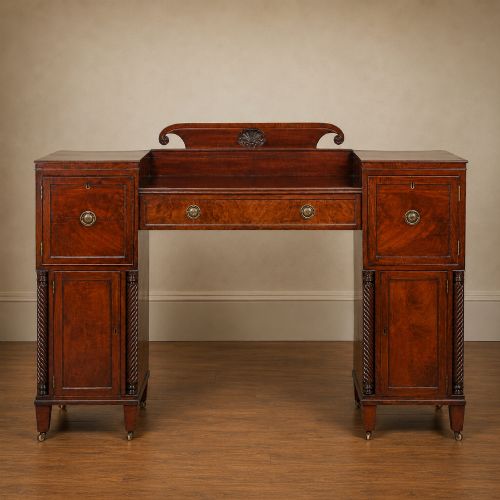
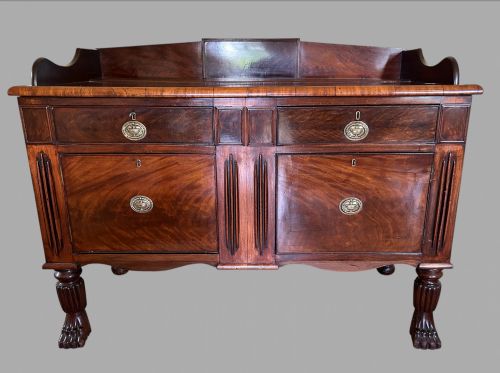

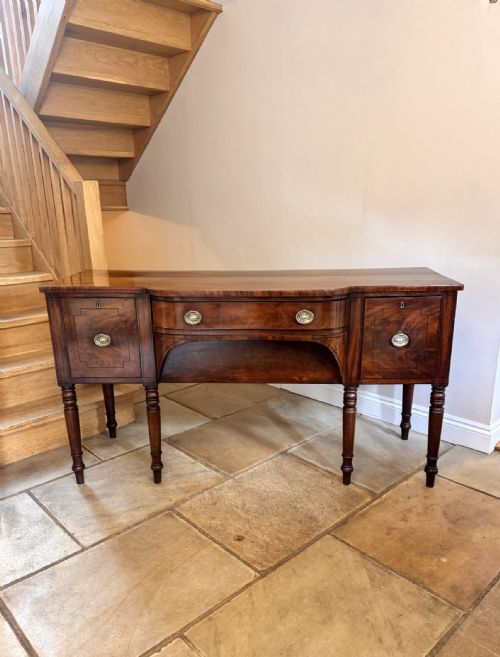


Georgian Cellarette Sideboard
These georgian cellarette sideboard pieces combine practical storage with fine timber, offering period character and stately presence for the dining room.
Georgian Cellarette Sideboard
When you search for a georgian cellarette sideboard, you encounter formal dining room furniture designed for serving and storing wine. These pieces span the eighteenth and nineteenth centuries, taking forms such as pedestals, bowfronts, and serving buffets.
The selection ranges from large pedestal sideboards to compact bowfront formats and dedicated wine coolers. Each piece reflects the formal dining requirements of its period through functional internal layouts and robust timber construction.
Materials and construction
Makers utilised solid mahogany and flame mahogany veneers over secondary timbers such as oak, building carcases designed to withstand heavy domestic use. The application of selected veneers created striking grain patterns across large drawer fronts and doors.
Details were emphasised through contrasting stringing and boxwood inlay, while functional elements incorporated brass fittings and handles. These materials were worked by hand using traditional cabinet-making techniques appropriate to the Georgian and Regency periods.
Georgian Cellarette Sideboard Retail Price Guide 2026
Typical asking prices for georgian cellarette sideboard among the pieces listed under this phrase on Sellingantiques today, from the lower quarter to the upper quarter. They describe what is for sale here now, not the wider market.
Several examples incorporate hidden internal compartments specifically designed to keep individual wine bottles cool during lengthy Victorian dinners.
Judging quality and proportion
The distinction between ordinary and exceptional examples lies in the choice of timber and the restraint of the design. Superior pieces display heavily figured flame mahogany veneers that have been carefully matched across the front.
Subtle details such as fine boxwood inlay and original brass hardware elevate a piece above standard workshop production. Proportions remain balanced and architectural, ensuring the furniture commands the room without appearing heavy.
The Georgian Cellarette Sideboard Glossary
- Flame mahogany
- A veneer cut from timber where the grain creates a pattern resembling flickering flames. This decorative cut was favoured for principal surfaces.
- Bowfront
- A curved furniture front that bulges outwards in the centre. This shape softens the profile of a sideboard.
- Pedestal sideboard
- A form featuring distinct side pedestals flanking a central section. They often incorporated storage for wine bottles.
- Boxwood inlay
- Narrow strips of pale wood embedded into the darker mahogany surface. This technique created geometric borders and contrasting lines.
Georgian Cellarette Sideboard: Frequently Asked Questions
What is a cellarette sideboard?
A cellarette sideboard is a formal dining room cabinet designed for serving food and storing wine bottles securely.
They combine surface space for display with internal compartments built for bottle storage.
How do I date a piece?
Dating relies on observing timber choices, inlay styles, and structural proportions associated with specific design eras.
Key indicators include the presence of flame mahogany veneers, boxwood stringing, and brass hardware typical of the eighteenth and nineteenth centuries.
Where were they used?
These pieces were principal furnishings in the dining rooms of substantial townhouses and country estates.
Servants used them to stage courses and manage wine service during formal meals.
How do I care for mahogany?
Mahogany requires stable room temperatures and protection from direct sunlight to prevent the timber and veneer from drying out.
Regular dusting with a dry cloth and occasional application of appropriate wax maintain the finish.