

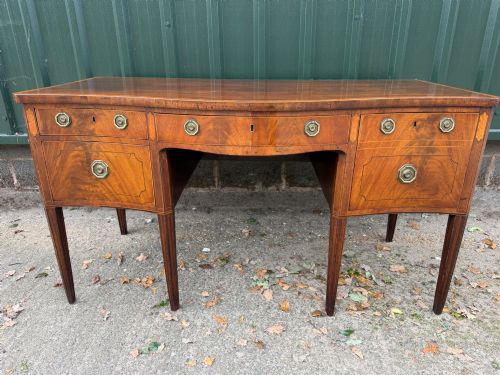
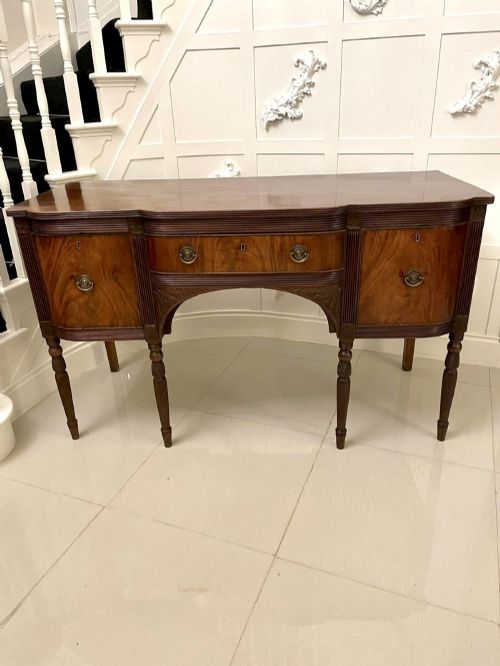
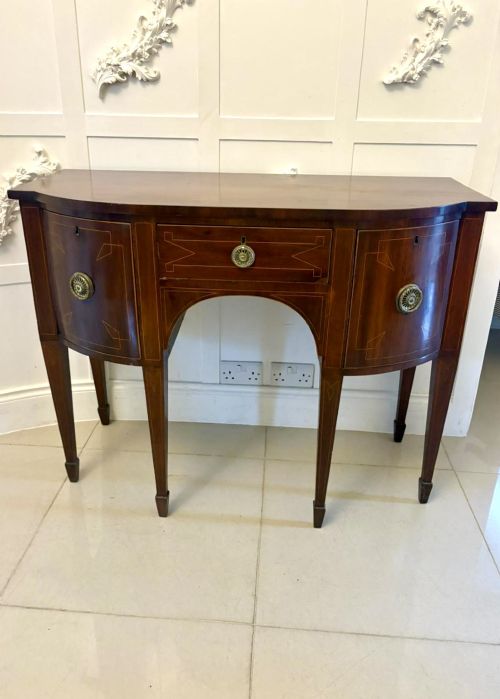
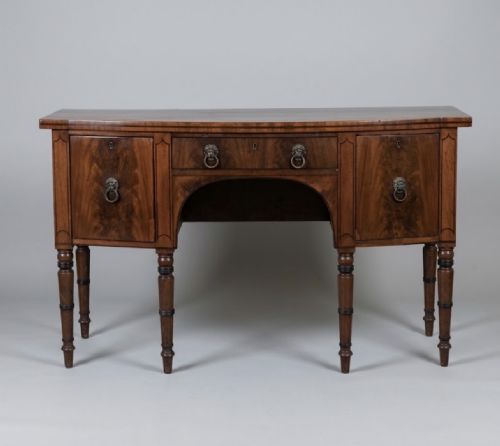
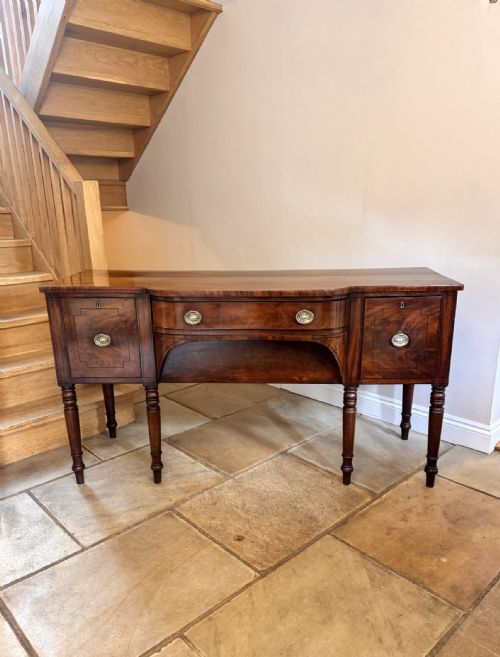
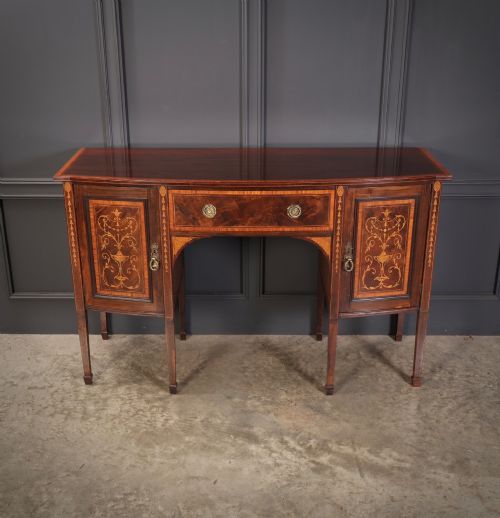
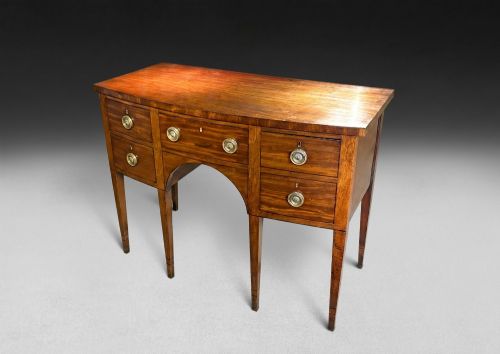

George III Dining Sideboard
A george iii dining sideboard brings architectural presence and refined timber to a room, serving as both a commanding focal point and a practical piece for entertaining.
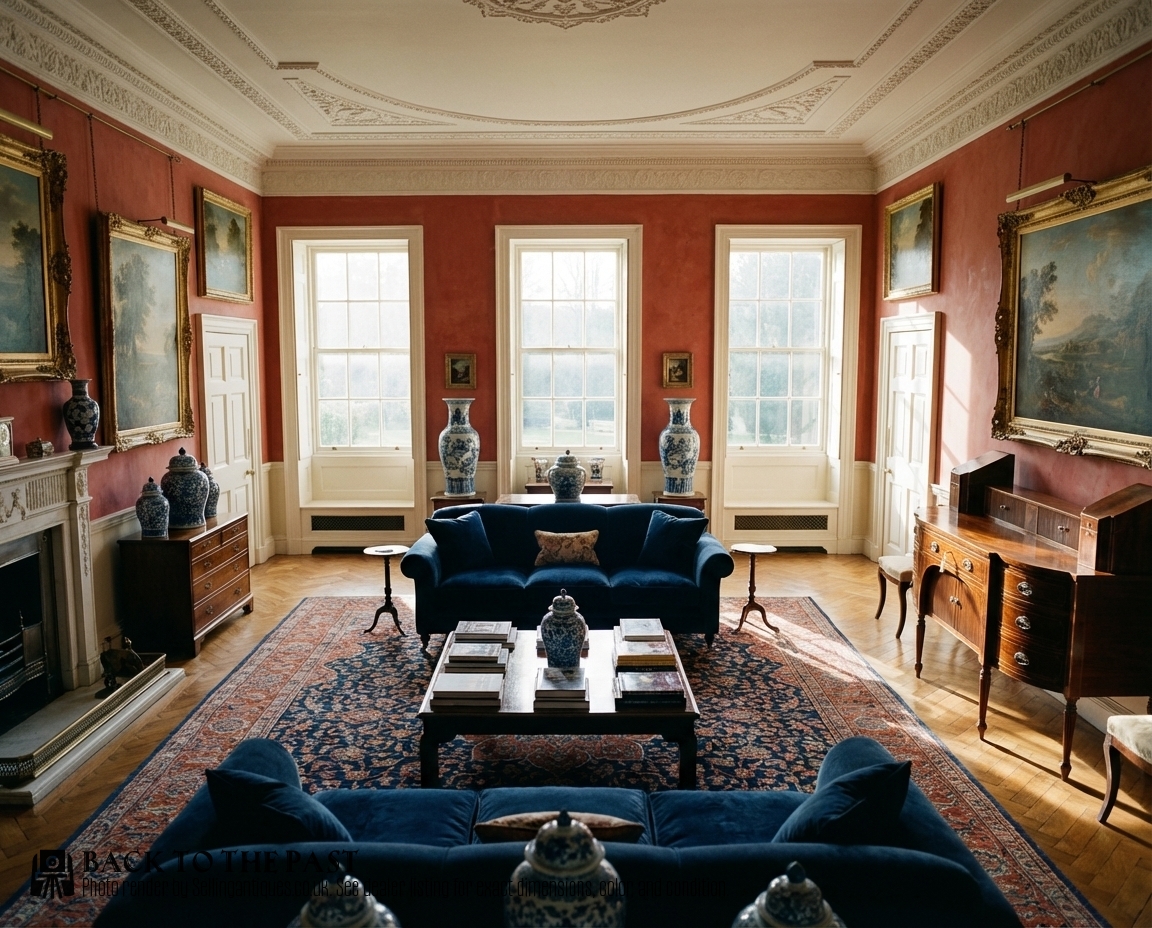
George III Dining Sideboard
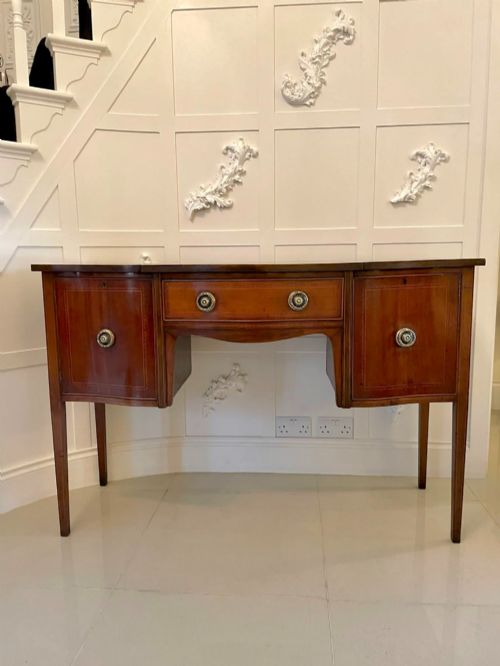
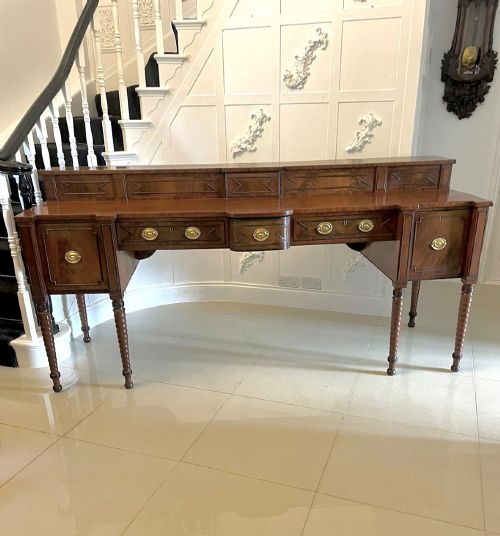
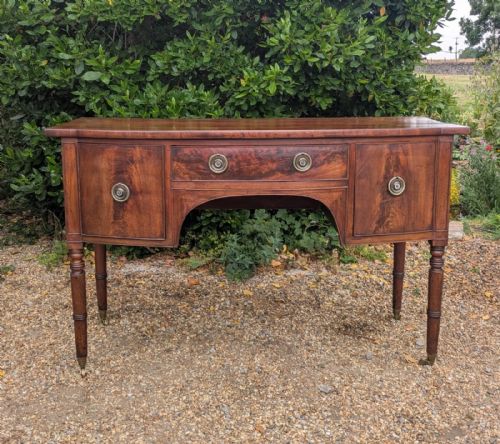
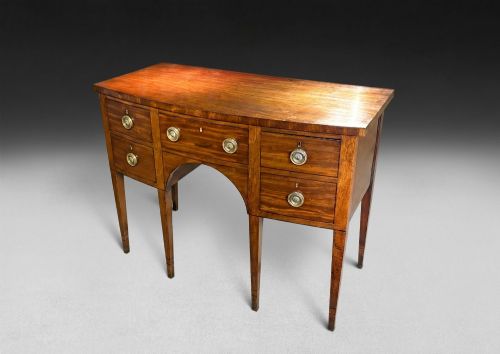
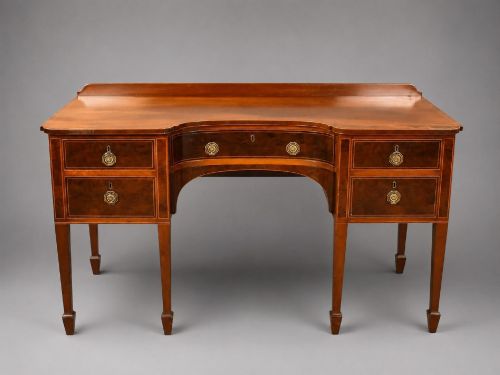
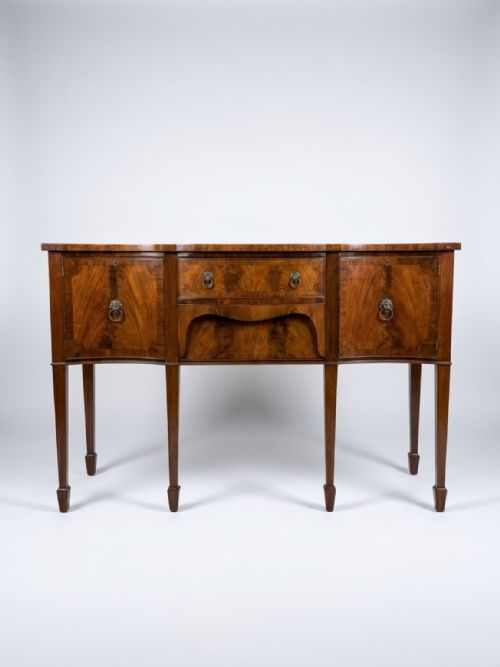
A george iii dining sideboard is a substantial serving and storage furniture form originating during the Georgian era, designed to hold dining room silver and linen. When exploring this selection, buyers frequently encounter bow fronted, serpentine, and breakfront shapes constructed from rich timbers.
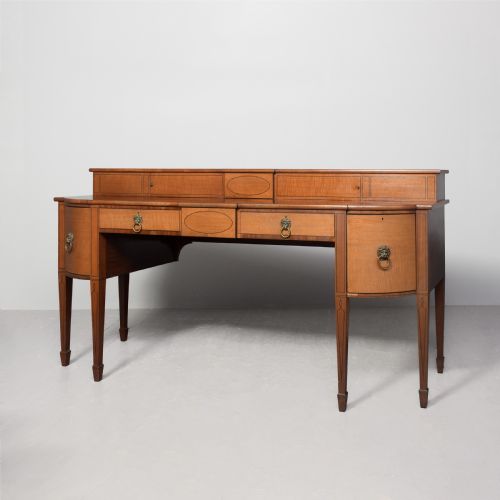
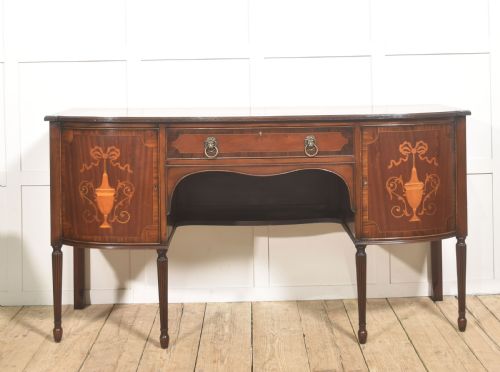
The pieces listed span authentic 18th century examples alongside later revival periods, including Sheraton Revival interpretations from the 1900s. Regional variations, such as Scottish stage-back designs, also appear within the collection.
Most examples rely on solid mahogany carcasses enhanced with decorative veneers and contrasting stringing. They range from compact small sideboards to large breakfront and pedestal configurations intended for grand dining spaces.
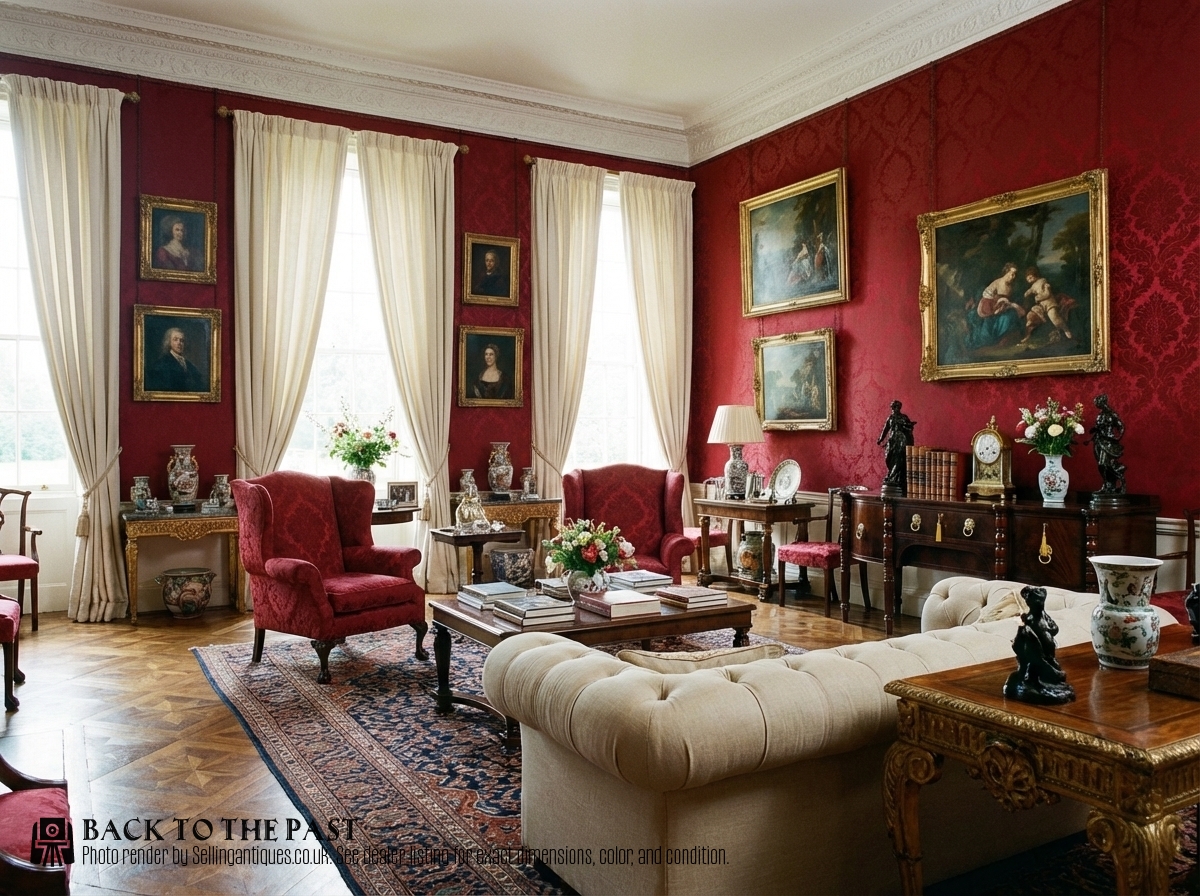
How they were made
Cabinet makers constructed the primary framework using solid mahogany, often selecting figured timber or flame mahogany veneer for the exterior surfaces. These primary woods provide the deep reddish-brown tone characteristic of the period.
Surface ornamentation relies on contrasting timbers such as satinwood and boxwood inlay, alongside delicate boxwood stringing to define the edges and drawer fronts. Brass fittings, including handles and escutcheons, complete the construction details.
George III Dining Sideboard Retail Price Guide 2026
Typical asking prices for george iii dining sideboard among the pieces listed under this phrase on Sellingantiques today, from the lower quarter to the upper quarter. They describe what is for sale here now, not the wider market.
Materials recorded across the inventory include solid mahogany, flame mahogany veneer, satinwood, and boxwood inlay.
What varies in quality
The refinement of the timber figures dictates the visual impact of a piece, with highly figured flame mahogany and crisp marquetry separating standard examples from exceptional ones. The choice of contrasting inlay woods, such as satinwood and boxwood, further elevates the overall finish.
Structural complexity also defines the tier of a piece; serpentine fronts and breakfront profiles require advanced carpentry skills compared to simple straight or bow front designs. Original brass hardware and the crispness of edge stringing contribute significantly to the perceived standard of manufacture.
The George III Dining Sideboard Glossary
- Serpentine
- A front profile curving outward in the centre and inward toward the ends, creating a fluid, undulating line. This shape demands precise woodworking technique.
- Bow front
- A convex curved front profile that projects outward in a smooth arc. It softens the linear appearance of a dining room.
- Breakfront
- A piece of furniture where the central section projects forward from the flanking lateral sections. This architectural arrangement creates depth and shadow.
- Stringing
- Thin inlaid lines of contrasting wood used to outline drawers, panels, and borders. It provides a crisp linear definition.
- Flame mahogany
- A veneer cut from timber where the grain resembles flickering flames. It creates dramatic patterns across large drawer fronts.
George III Dining Sideboard: Frequently Asked Questions
How do I spot a true period piece?
Examine the timber selection, secondary woods used inside the drawers, and the method of construction. Genuine Georgian examples display period-appropriate joinery and natural patination built up over centuries.
Compare the proportion of the hardware and the crispness of any boxwood stringing against known period standards. Revival pieces from later decades often utilise different internal lining woods and mechanical fasteners.
Where should I place a sideboard?
A dining sideboard traditionally sits against the main dining room wall, functioning as a surface for serving food and displaying silver. Ensure you measure the floor space carefully, as serpentine and breakfront profiles project further outward than flat designs.
Keep the piece away from direct heat sources and strong sunlight to protect the fragile mahogany veneers and delicate satinwood inlay work. Proper placement allows the drawers and cupboards to open fully without obstruction.
How do I care for mahogany surfaces?
Dust the timber regularly with a soft, dry cloth to prevent microscopic particles from scratching the polished wax finish. Avoid silicone-based sprays, which can penetrate the pores of antique wood and alter its natural sheen.
Apply a quality beeswax periodically to nourish the mahogany and maintain its deep lustre. This simple maintenance preserves the historical patination developed over generations.