
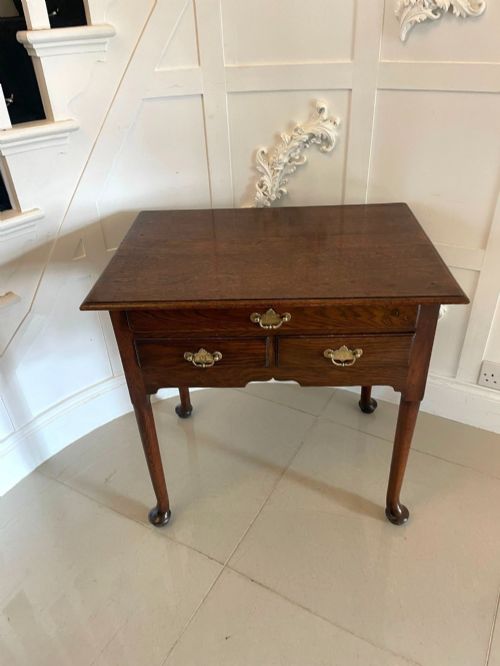
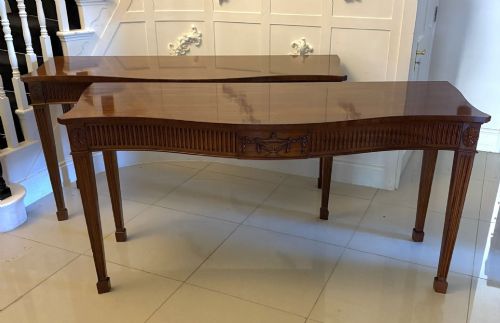
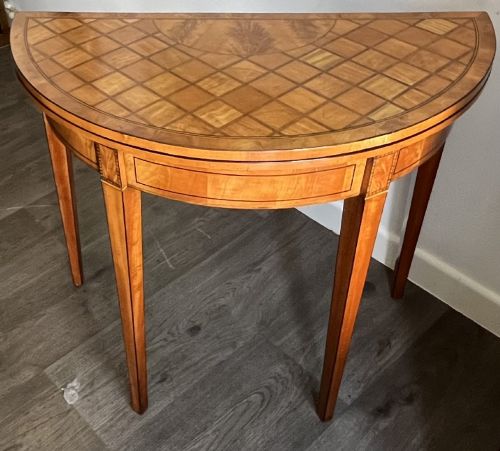

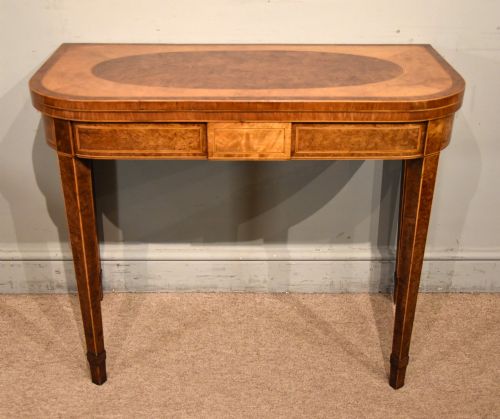
George III Console
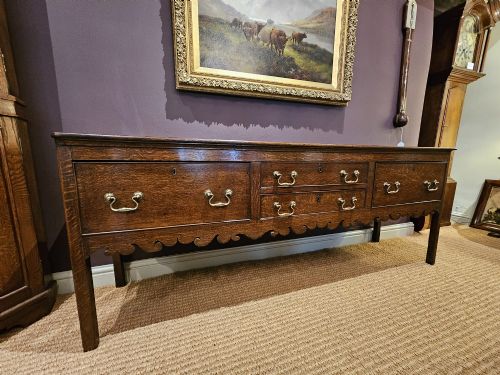
A george iii console brings architectural proportion and rich cabinet timber into a room, serving as a graceful surface for display or card play.
George III Console
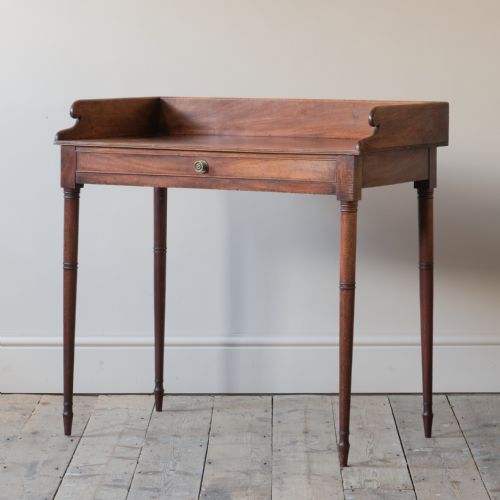
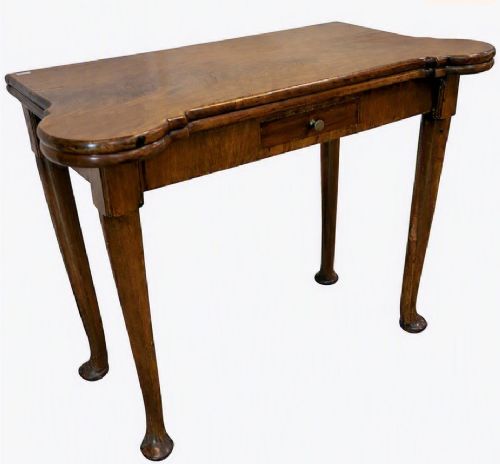
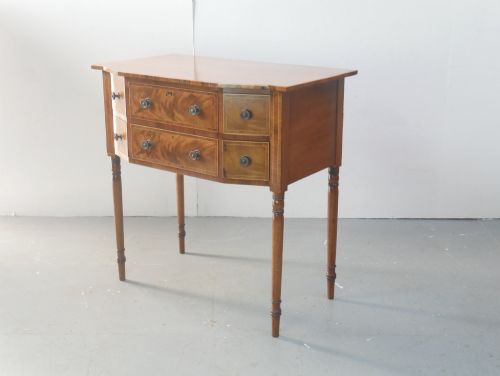
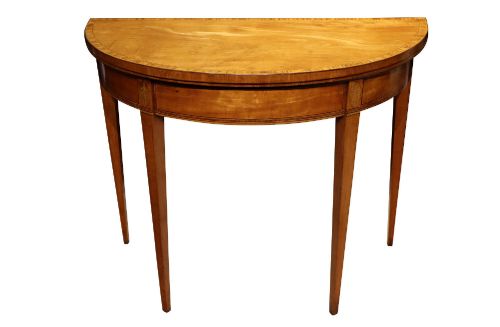
When searching for a george iii console, a buyer encounters pieces originating primarily from the Georgian period through to the nineteenth century, with later revival interpretations appearing alongside period examples. The forms span demi-lune shapes, serving tables, and fold-over variations designed for card or tea use.
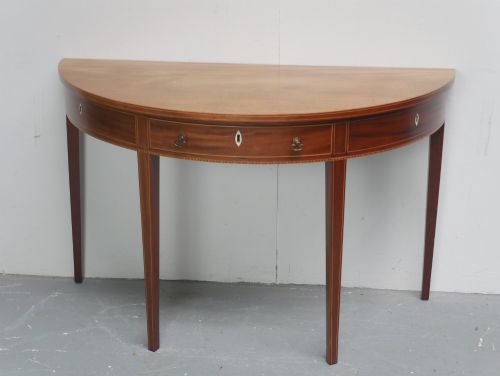
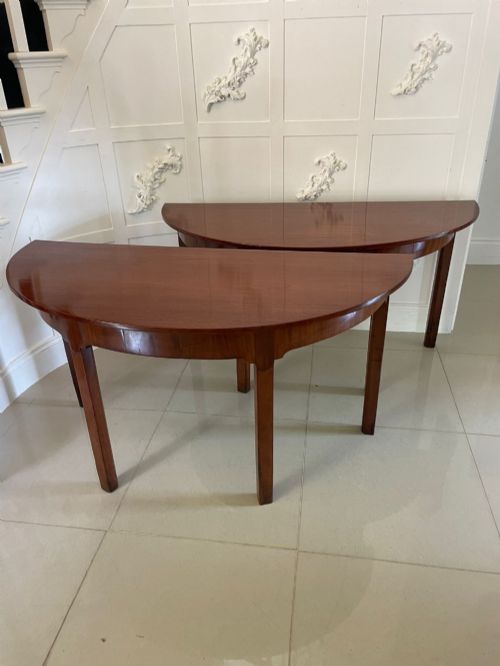
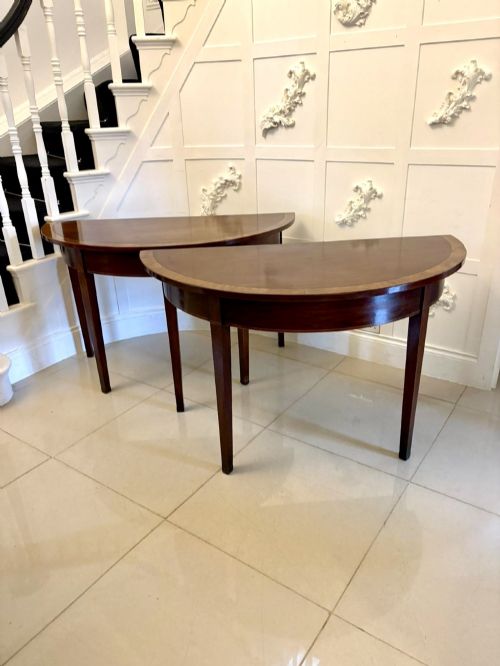
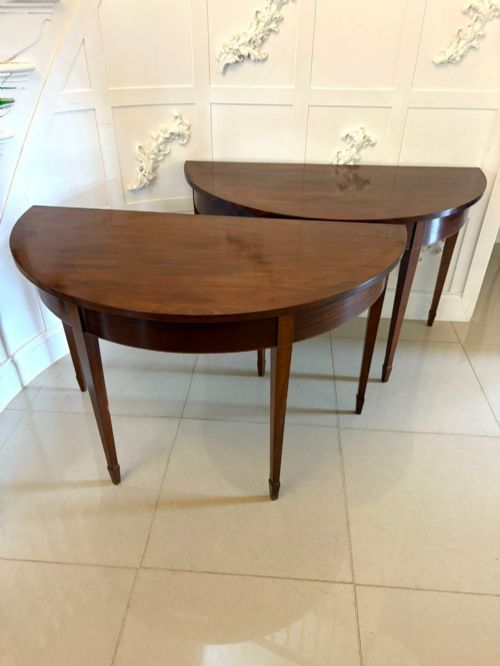
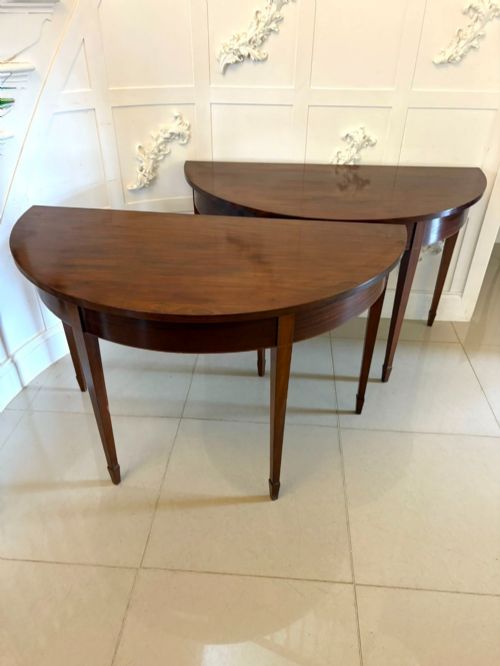
The version most frequently met on this page is the figured mahogany demi-lune console, often found singly or in matched pairs. These tables combine semicircular tops with sturdy legs, serving both practical uses and decorative display against a wall.
Judging Quality
The upper tier of pieces displays superior timber selection, where the grain pattern of the mahogany or exotic veneer flows continuously across the top and matches symmetrically. Lesser examples rely on plain boards with minimal attention to grain alignment.
Refinement of detail separates standard items from exceptional ones. Crisp neoclassical carving, precise string inlay, and integrated design of the legs demonstrate superior workshop execution.
Several folding tables retain the hidden spaces once used secretly to conceal gaming counters and midnight tea.
George Bullock·Bruce And Burns·Gillows
The George III Console Glossary
- Demi-lune
- Having the shape of a half-moon. This semicircular format allowed tables to sit flush against a wall while saving floor space.
- Crossbanding
- A border of veneer laid with the grain running perpendicular to the main surface. It creates a framing effect around the top of the table.
- Lowboy
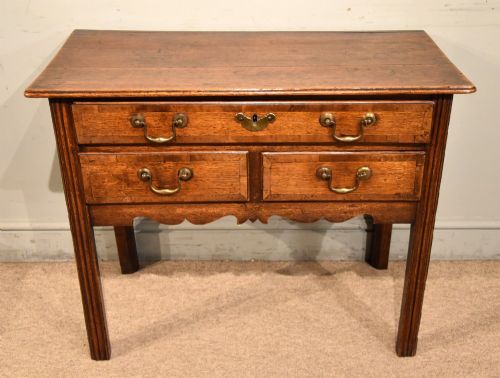
- A small kneehole dressing table or side table with one or more rows of drawers. These early pieces feature slender legs and practical proportions.
- Marquetry
- Elaborate patterns formed by inserting pieces of contrasting wood into a veneer background. This technique decorated the tops of high-status tables.
George III Console: Frequently Asked Questions
What is a george iii console used for?
These tables functioned primarily as serving surfaces in dining rooms or display ledges in hallways. Many incorporated fold-over tops designed for card games and tea drinking.
Today, they suit entryways and living spaces where a shallow footprint allows the piece to rest against a wall without obstructing movement.
How do I identify a period piece?
Examination of the timber, construction methods, and secondary woods reveals the age of the item. Georgian examples exhibit hand-cut joinery and mature patina developed over centuries.
Later nineteenth-century and revival pieces often display machine-made elements or standardised hardware beneath the polished exterior.
Are pairs common in these tables?
Matching pairs appear frequently in the record, often configured as demi-lune shapes that could combine to form a circular dining table or stand symmetrically in a large hall.
Finding a matched pair increases the architectural presence of the furniture within a room.
How do I care for polished mahogany?
Maintaining the surface requires gentle dusting with a soft cloth and protection from direct sunlight and excessive heat. Avoid silicone sprays that build up residue over the wood.
Applying traditional wax periodically preserves the depth and sheen of the original finish.