

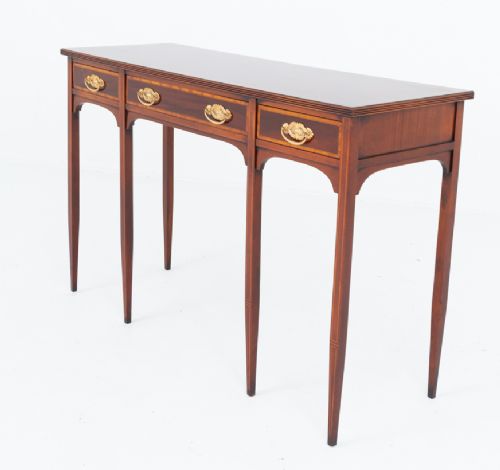
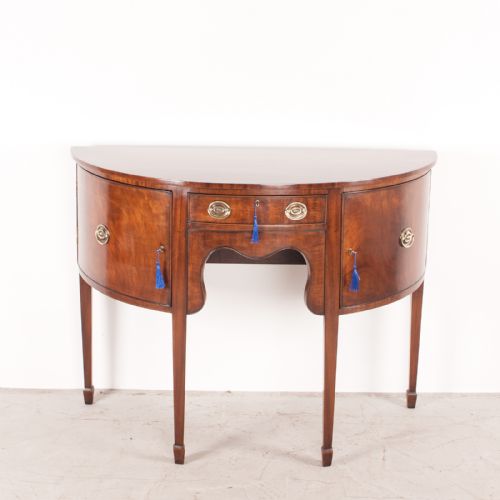


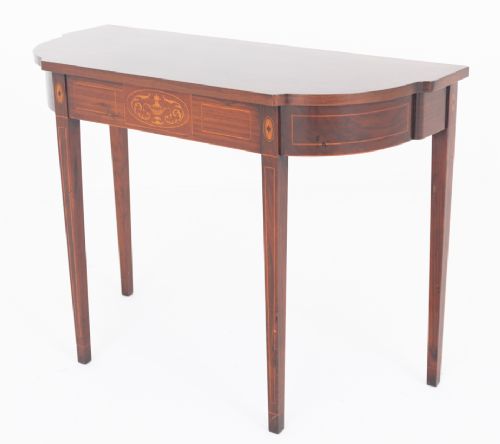


Sheraton Style Console
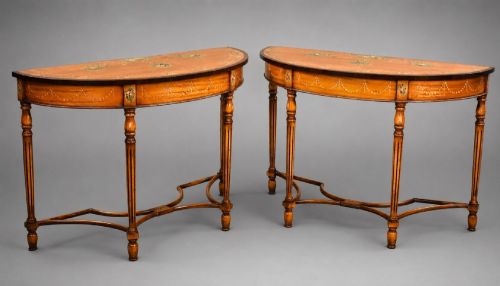
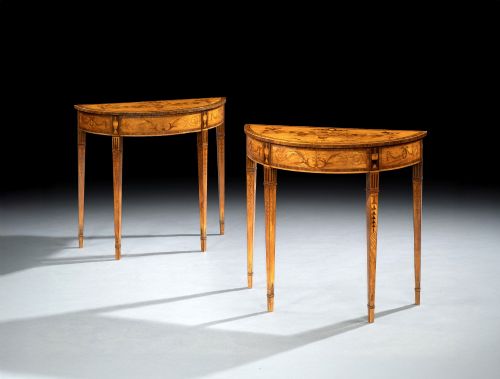
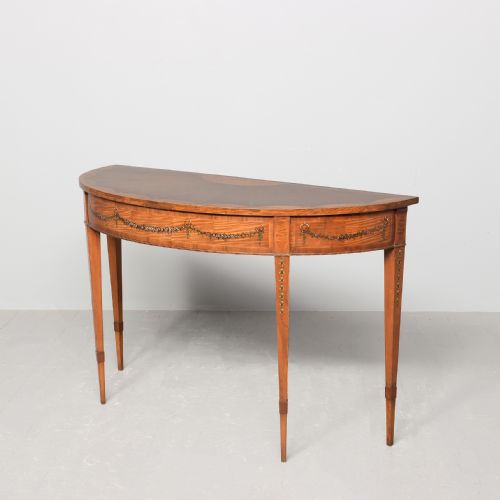
Sheraton style console tables bring neoclassical elegance into a room through curved demi-lune forms and delicate marquetry.
Sheraton Style Console
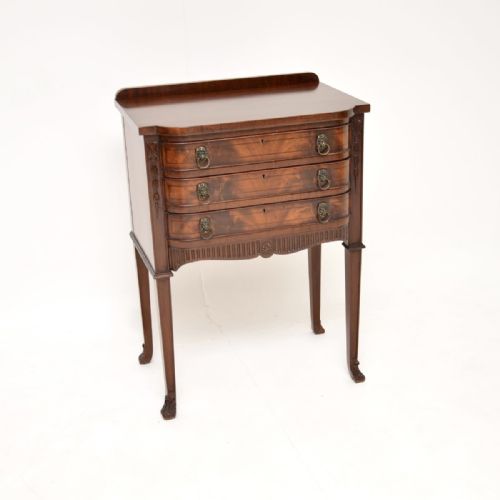
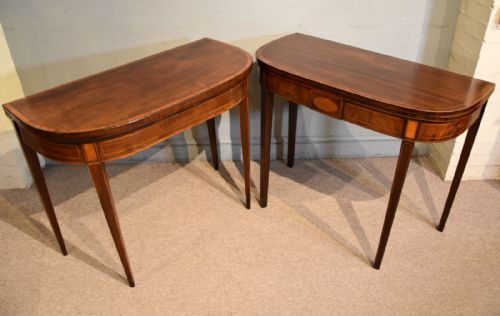
A Sheraton style console encompasses demi-lune tables, side tables, and serving pieces produced across the eighteenth, nineteenth, and early twentieth centuries. These tables often take the form of half-moon shapes designed to sit flat against a wall, frequently functioning as card tables, tea tables, or serving surfaces.
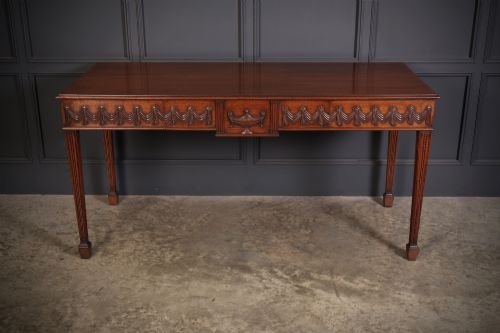
The pieces on this page span genuine eighteenth-century George III examples alongside later nineteenth-century revivals and Edwardian interpretations. Mahogany and satinwood predominate, decorated with intricate boxwood inlay and painted classical panels that echo the lighter, more refined furniture of the late Georgian period.
Materials and construction methods
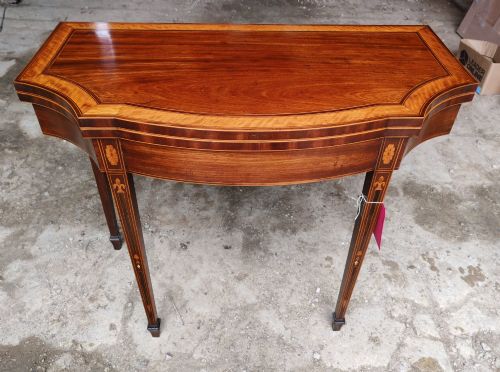
Cabinetmakers relied heavily on solid mahogany and rich satinwood surfaces, often enhanced by contrasting boxwood inlay and detailed marquetry. These woods provided a stable yet elegant canvas for delicate geometric borders and classical motifs.
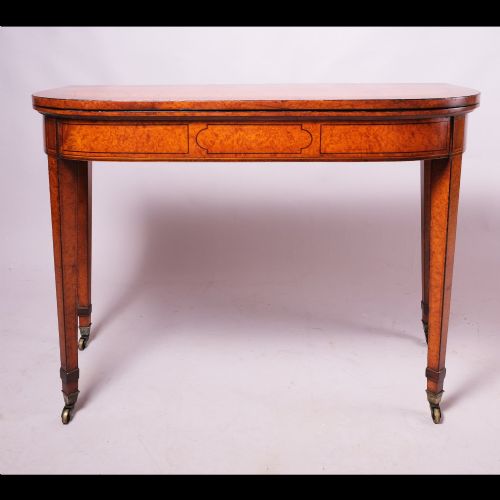
Craftsmen utilised crossbanding and fine painted decoration to create visual depth on flat tops and curved aprons. Foldover tops on card and tea tables required precise joinery to ensure the hinged leaves aligned smoothly when opened.
Listings feature mahogany, satinwood, and rosewood timbers alongside intricate boxwood inlay and painted decoration.
Judging the quality of a console
Quality rests in the crispness of the marquetry inlay and the careful selection of figured timber veneers. Pieces with finely hand-painted classical panels or intricate satinwood grain patterns demand greater skill than simpler veneered alternatives.
Structural integrity in the slender tapering legs and the precise fit of folding table leaves separate standard production from exceptional craftsmanship. The retention of original painted surfaces and polished brass hardware adds considerable merit.
Edwards & Roberts
The Sheraton Style Console Glossary
- Demi-lune
- Half-moon shaped furniture designed to stand flush against a wall. This profile defines many classic console and card tables.
- Marquetry
- Decorative patterns formed by inserting pieces of contrasting wood and veneer into a solid ground. It creates pictorial or geometric designs on tabletops.
- Crossbanding
- A border of veneer laid around the edge of a tabletop with the grain running perpendicular to the central panel. This technique frames the primary wood.
- Satinwood
- A pale, lustrous timber imported from the West Indies and India, widely utilised in late eighteenth and revival furniture for its bright yellow sheen.
- Sheraton Revival
- A late nineteenth and early twentieth-century movement emulating the light, elegant furniture designs associated with Thomas Sheraton.
Sheraton Style Console: Frequently Asked Questions
How do I spot a revival piece?
Revival pieces, often dating from the late nineteenth or early twentieth century, imitate the lighter proportions and satinwood finishes of eighteenth-century originals. Close inspection of secondary timbers and construction methods usually reveals the later manufacturing date.
While not originating in the Georgian period, these later interpretations frequently display high standards of cabinetmaking and inlay work.
Where should I place a console table?
Console tables sit naturally in entrance halls, living rooms, or dining spaces against empty wall sections. Their shallow depth ensures they do not obstruct walkways while providing a useful surface for lamps or ornaments.
Foldover versions can also be pulled into the room and opened when hosting guests for cards or tea.
Are painted satinwood tables delicate?
Painted satinwood surfaces require gentle care to preserve the original artwork and polished finish. Direct sunlight and excessive moisture can damage the delicate pigments and timber veneers over time.
Regular dusting with a soft, dry cloth helps maintain the lustre without harming the antique finish.