


George III Centre Table
These george iii centre table examples are substantial freestanding pieces designed for central room placement, offering practical surfaces and period craftsmanship.
George III Centre Table
When you search for a george iii centre table, you encounter a variety of freestanding forms created primarily during the eighteenth and early nineteenth centuries. The pieces on this page span Georgian periods, later revivals, and specific dates up to the early twentieth century.
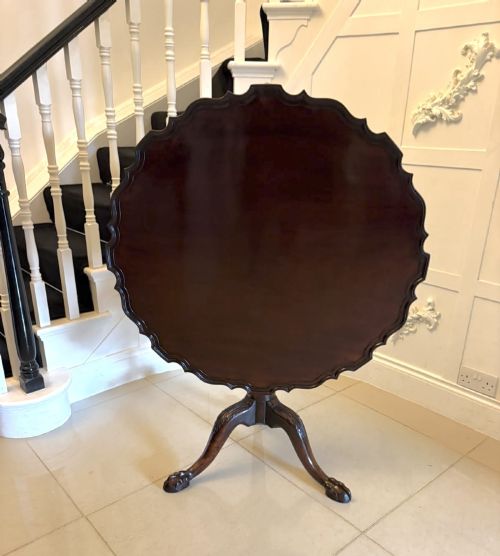
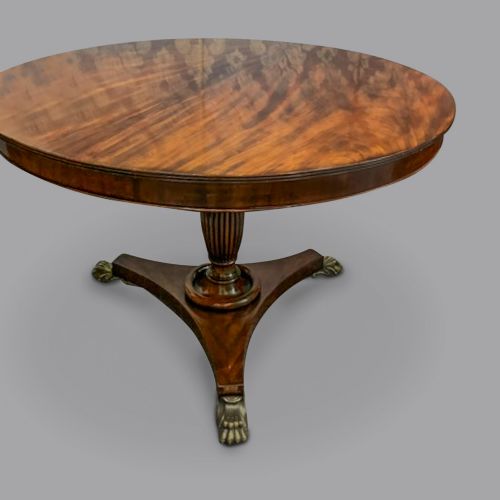
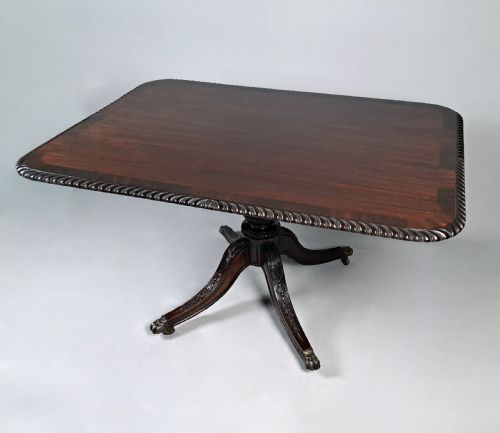
Circular and oval tilt-top breakfast tables, drum tables, and rectangular dining variants dominate the available selections. Makers constructed these items for multiple domestic uses, including dining, writing, and displaying decorative objects in the middle of a room rather than against a wall.
Makers also produced occasional tables, supper tables, and centre stools within the broader George III style and Adam Revival traditions. Mahogany forms the backbone of these pieces, alongside regional variations utilising yew, satinwood, and brass inlay.
Materials and construction
Timber selection dictated the foundational character of each george iii centre table, with solid and figured mahogany appearing extensively across circular, oval, and rectangular formats. Craftsmen integrated contrasting timbers such as satinwood, burr yew, and lacewood for banded borders and decorative panels.
Structural engineering involved stable pillar and tripod supports, tilt-top mechanisms using snap catches, and heavy pedestals to bear the weight of large single-piece timber tops. Brass inlay, leather inserts, and ebonised detailing added refined surface contrast to tables intended for prominent rooms.
George III Centre Table Retail Price Guide 2026
Typical asking prices for george iii centre table among the pieces listed under this phrase on Sellingantiques today, from the lower quarter to the upper quarter. They describe what is for sale here now, not the wider market.
Listings feature mahogany, satinwood, yew, burr yew, and brass inlay across Georgian periods and later revivals.
Craftsmanship and proportion
The distinction between standard examples and finer pieces rests upon the selection of timber grain, such as figured or burr mahogany, and the precision of the cabinetmaker's joinery. Well-drawn proportions in pedestal turnings and tripod leg placement separate superior examples from simpler utilitarian furniture.
The integration of decorative elements like brass inlay, piecrust edges, and tilt-top mechanisms demonstrates the level of specialist labour invested in the construction. Pieces attributed to documented workshops exhibit heightened attention to internal framing and subtle edge moulding.
Gillows·George Bullock·Chippendale
The George III Centre Table Glossary
- Tilt-top
- A mechanism allowing the table top to pivot vertically on its base for storage against a wall when not in use.
- Drum table
- A circular library or writing table featuring a deep frieze fitted with alternating drawers around the perimeter.
- Piecrust edge
- A carved raised rim featuring alternating curves and indentations shaped to resemble pastry crust.
- Tripod base
- A central pillar supported by three divergent legs, commonly terminating in pad or claw feet.
- Satinwood
- A pale, hard exotic timber utilised for veneers, stringing, and contrasting geometric inlay work.
George III Centre Table: Frequently Asked Questions
What is a george iii centre table used for?
These tables served multiple functions in large period rooms, acting as dining surfaces, breakfast tables, or central display points for lamps and decorative objects. Because they are finished on all sides, they stood independently away from walls.
Owners frequently utilised tilt-top variants for flexible room arrangements, folding the top away when the surface was not required for meals or writing tasks.
How do I identify a tilt-top mechanism?
A tilt-top table incorporates a clever wooden catch or brass latch beneath the surface that releases the top from its horizontal locking position. This allows the primary board to swing vertically on a pivot block.
When lowered back down, the mechanism engages securely with the central pillar to provide a stable, flat surface without wobbling.
Where should I place a drum table?
Drum tables suit open spaces where their circular shape and surrounding drawers remain fully accessible from any angle. They function well as library desks or centrepieces in larger studies.
Ensure you leave adequate clearance around the perimeter so the integrated frieze drawers can open fully without obstruction from surrounding seating.