
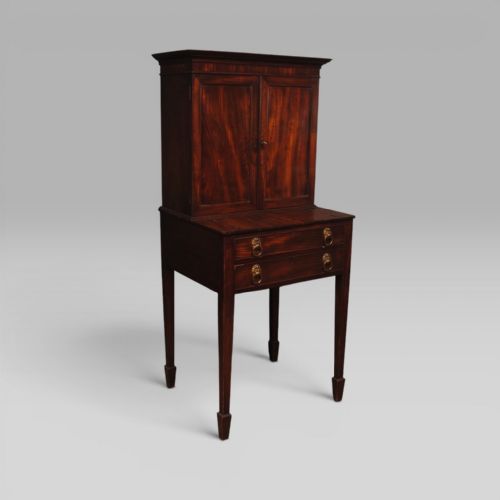

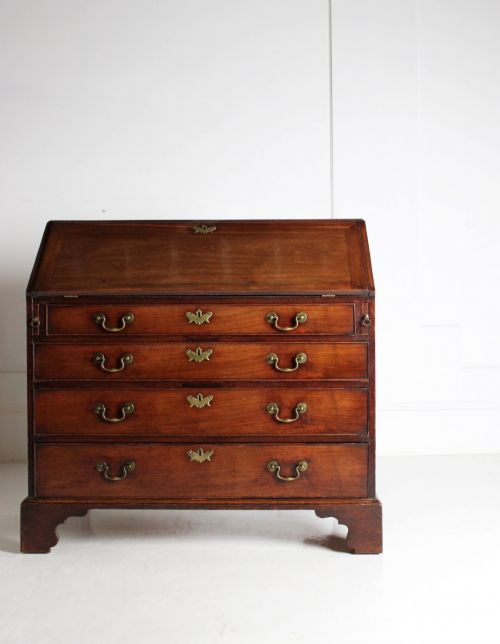

George III Bureau Desk
A george iii bureau desk brings structural mastery and concealed writing compartments into a room with understated authority.
George III Bureau Desk
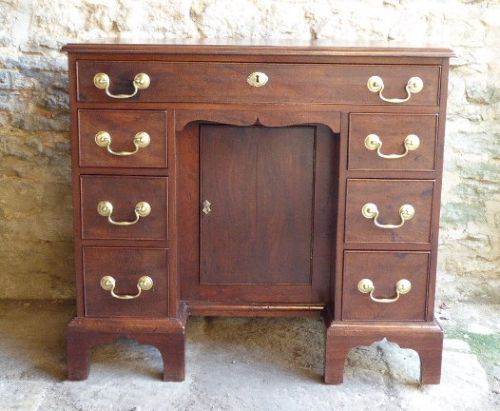
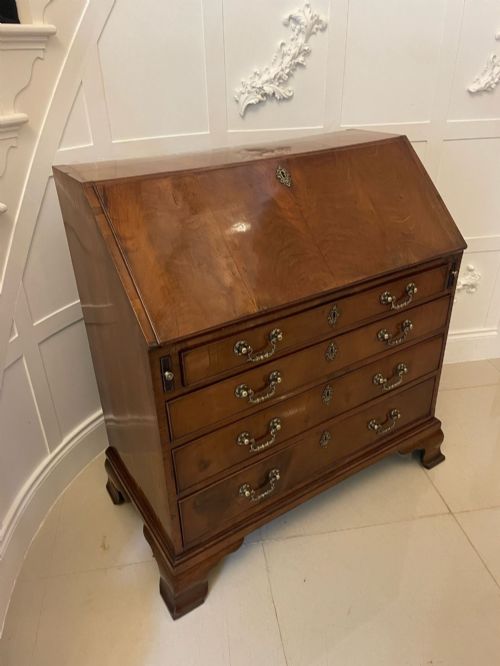
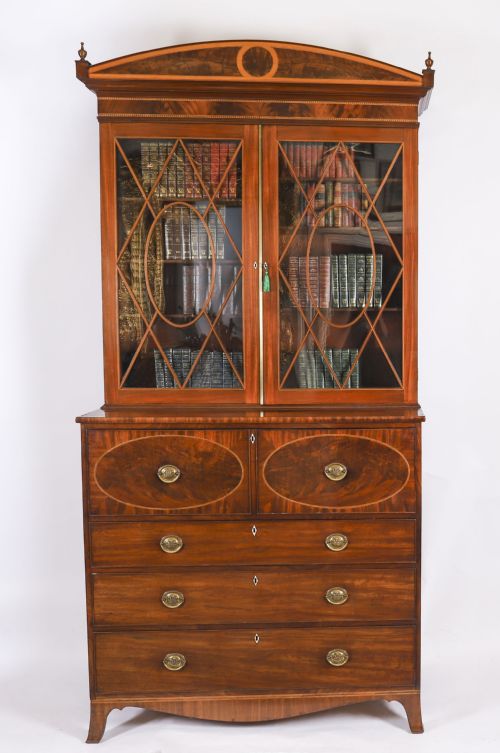
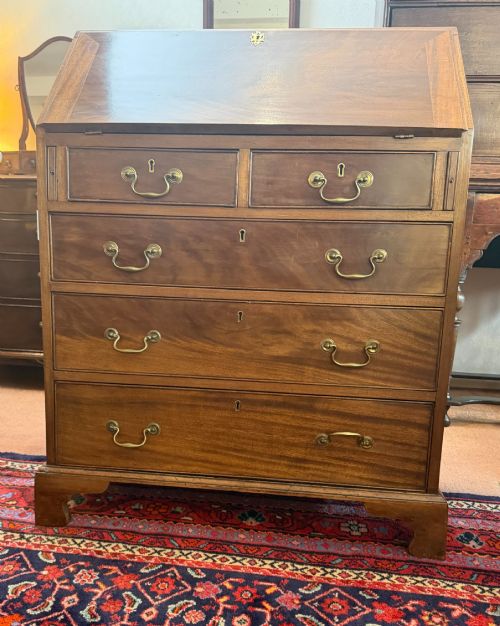
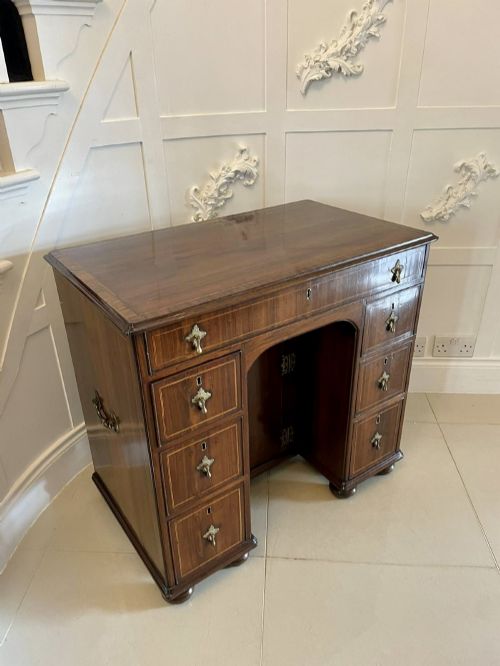
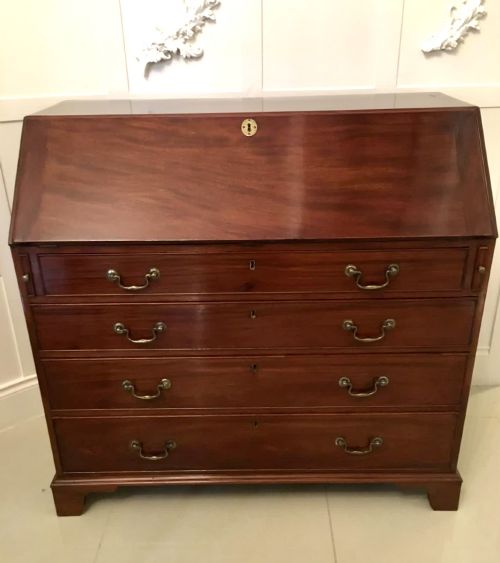
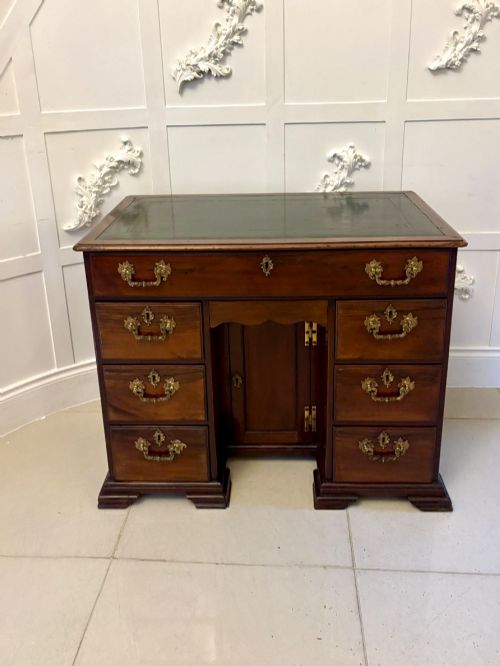
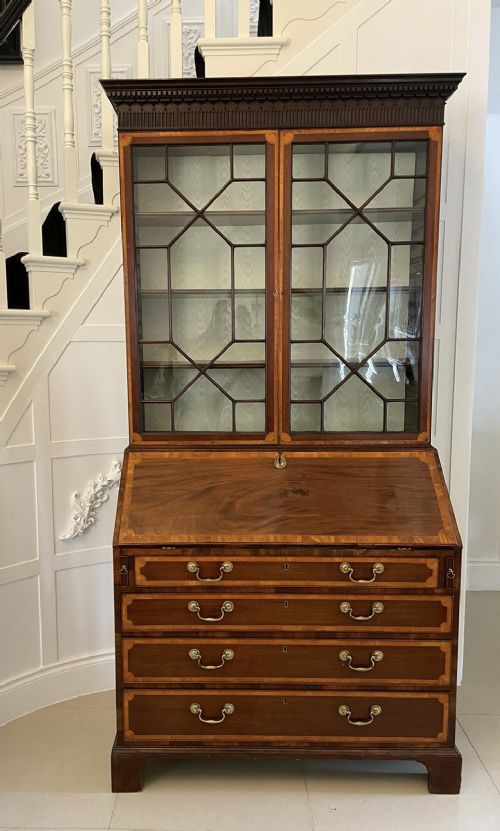
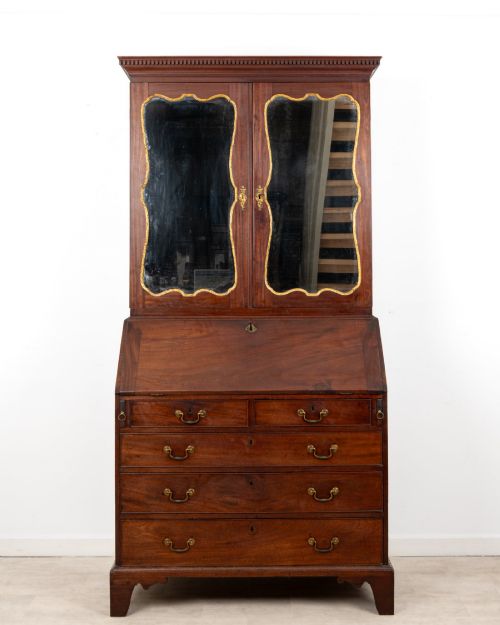
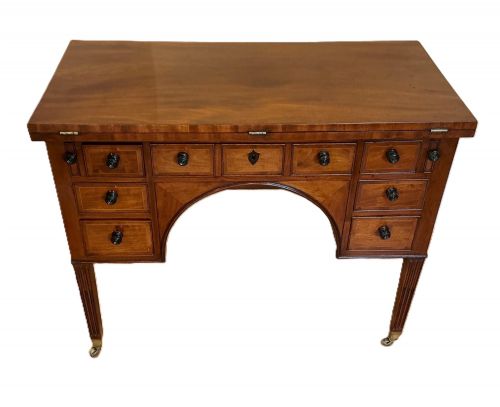
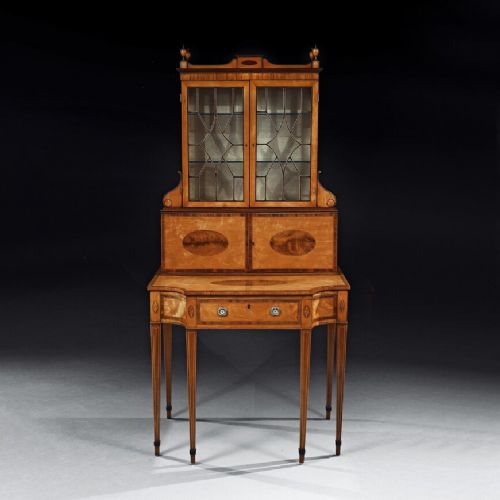
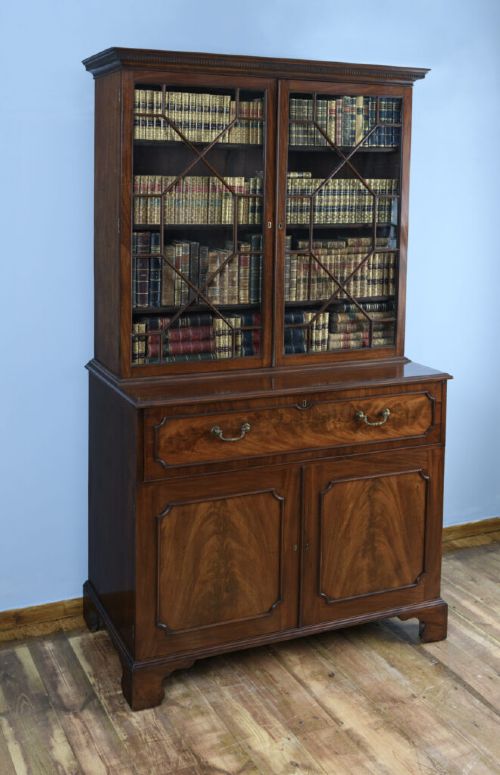
When you examine a george iii bureau desk, you are looking at a fitted writing cabinet designed to conceal correspondence and papers behind a fall-front flap or sliding top. The forms span compact kneehole tables, large bureau bookcases, and elegant writing cabinets.
The pieces appearing most frequently across this selection are straightforward mahogany bureaux and taller secretaire bookcases dating from the eighteenth century and the early nineteenth century. Oak, walnut, and satinwood examples also emerge regularly, showing considerable variety in regional and cabinetmaking traditions.
Materials and construction
Cabinetmakers constructed these desks primarily using solid timbers and veneers of mahogany, oak, and elm, often accented with satinwood inlay and brass hardware. Glass panels frequently form the upper doors of taller bookcase variants.
Internal components rely on intricate joinery to create small drawers, pigeonholes, and secret compartments behind the main writing flap. Hand-cut dovetails anchor the drawer construction, while applied mouldings and painted finishes complete the exterior.
Listings feature woods including solid elm, pollard oak, and satinwood alongside traditional mahogany.
Judging quality in a george iii bureau desk
Quality rests in the selection of timber figures, such as flame mahogany or burr walnut, and the precision of the internal pigeonhole arrangement. Finer examples display meticulous attention to inlay work and the harmonious grain matching of secondary woods.
The integrity of the structural joinery and the survival of original brass handles separate ordinary utility pieces from finer cabinetwork. Consideration is also given to proportions, particularly in diminutive or kneehole formats where space economy dictates the design.
Gillows
The George III Bureau Desk Glossary
- Fall-front
- A hinged writing flap that drops down to provide a flat surface for correspondence. This panel conceals the internal drawers and pigeonholes when closed.
- Secretaire
- A desk or cabinet featuring a pull-out or drop-front writing drawer disguised as a standard drawer chest. It often integrates with a bookcase upper section.
- Kneehole desk
- A compact writing table featuring a central recess for the user's legs, flanked by pedestals of small drawers. These pieces suit smaller domestic spaces.
- Satinwood
- A pale, lustrous exotic timber utilised for veneers and decorative stringing. It provides strong visual contrast against darker woods like mahogany.
George III Bureau Desk: Frequently Asked Questions
How do I use a bureau desk daily?
Lower the fall-front flap to reveal the internal compartments and use the baize or leather writing surface for correspondence.
Store papers and writing instruments within the pigeonholes and small drawers before closing the flap to keep your room tidy.
Where should I place a bureau bookcase?
Position the piece against a sturdy interior wall away from direct sunlight and heat sources to protect the polished wood surfaces.
Ensure adequate clearance in front of the desk so the fall-front flap can open fully without obstruction.
How do I distinguish eighteenth century pieces?
Examine the drawer construction for hand-cut dovetails and inspect the secondary timbers used for drawer linings, such as oak or pine.
Look for period-specific hardware fixings and characteristic cabinet proportions associated with the Georgian era.
What maintenance do these wooden desks need?
Apply a traditional beeswax polish occasionally to nourish the timber and maintain a soft sheen without building up heavy wax layers.
Maintain stable indoor humidity levels to prevent the solid woods and veneers from splitting or warping over time.