
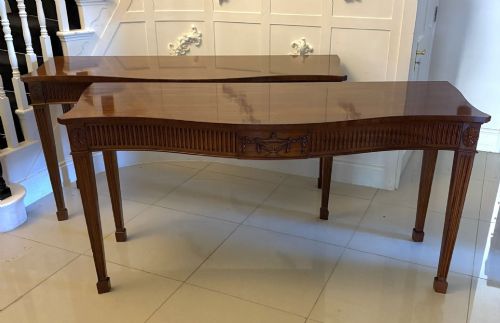

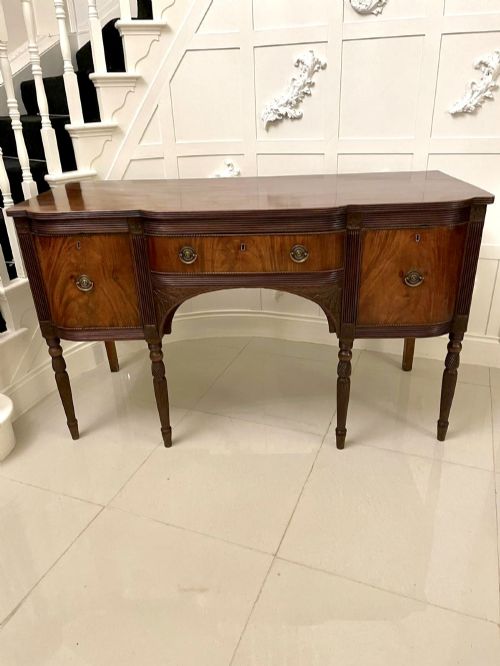
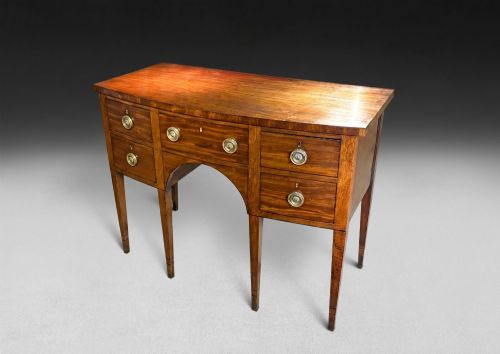
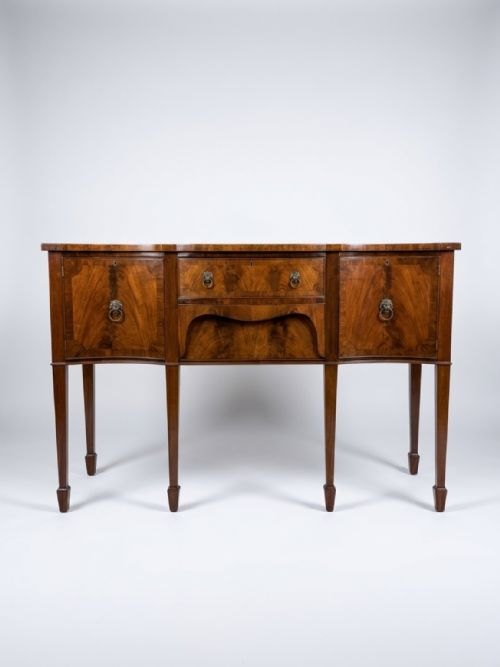

George III Buffet Table
A george iii buffet table brings architectural proportion and dense timber into the dining room through serving tables, sideboards, and dumb waiters.
George III Buffet Table
A george iii buffet table encompasses serving tables, sideboards, and dumb waiters originating primarily from the eighteenth century and the Georgian period. These pieces served dining rooms by holding dishes, serving ware, and drinks during long meals.
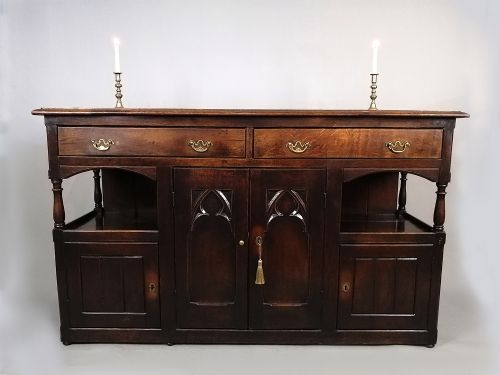
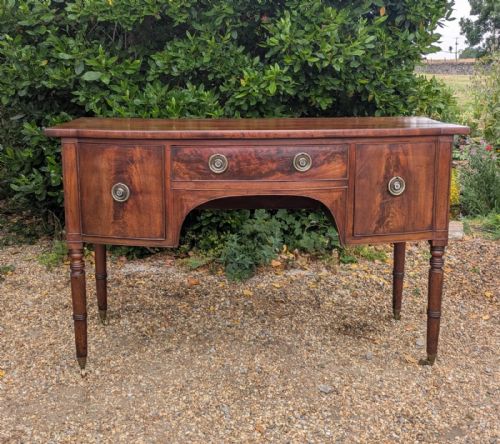
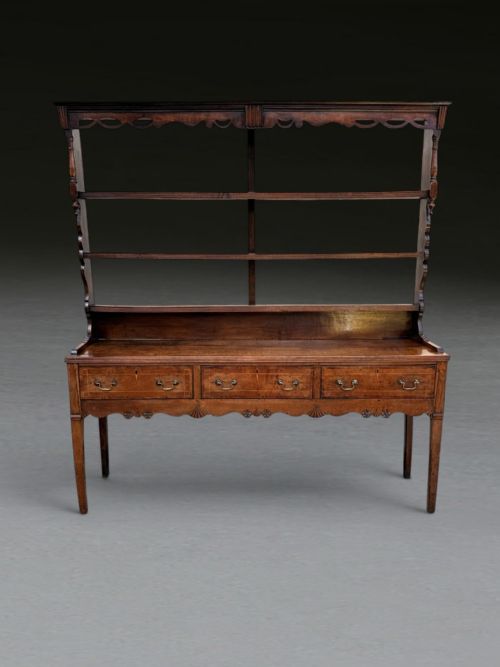
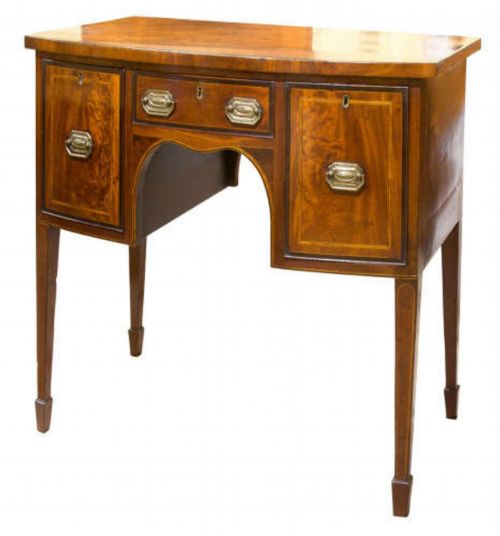
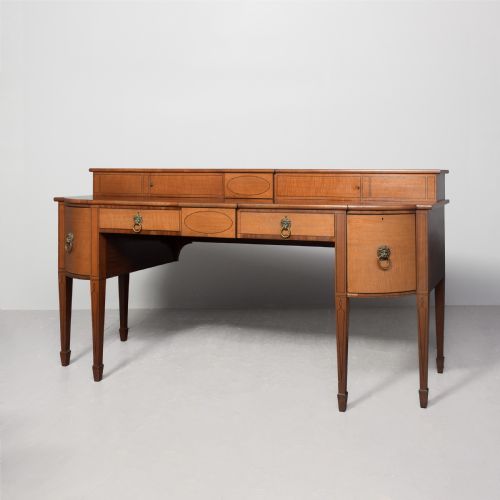
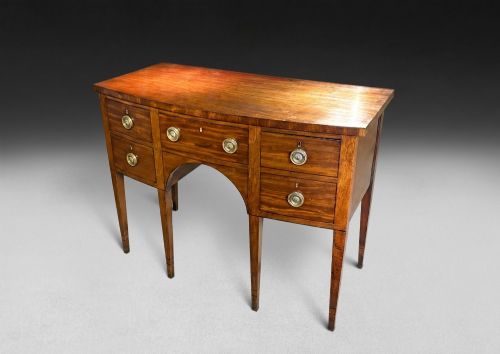
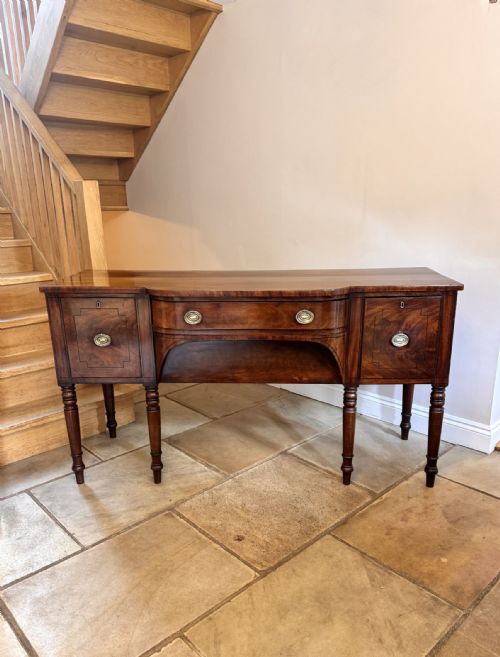
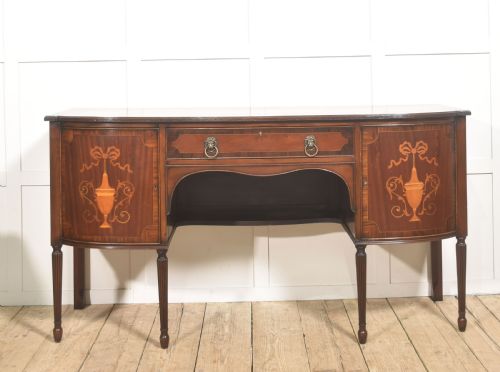
The versions most commonly met on this page take the form of mahogany sideboards with straight, bow, or serpentine fronts. Alongside them, tiered dumb waiters and oak potboard dresser bases appear in various sizes.
Materials and Construction
Makers utilised solid timber and veneers, relying heavily on mahogany, flame mahogany, and oak for the primary structures. Secondary woods and decorative elements incorporated satinwood, boxwood, boxwood inlay, and brass fittings.
Joinery techniques united structural stability with decorative surface design, employing banding, stringing, and neoclassical carving to enrich the exterior appearance of the furniture.
Listings feature eighteenth-century and Georgian pieces built from mahogany, oak, satinwood, and boxwood.
Design and Execution
Quality separates pieces through the selection of timber figures and the precision of the cabinetwork. Fine examples display figured or flame mahogany matched symmetrically across drawer fronts and top boards.
The sophistication of the silhouette, such as a crisp serpentine curve or delicate boxwood stringing, determines the distinction of the work. Lesser pieces rely on plain stock timber without deliberate grain alignment or secondary inlay.
The George III Buffet Table Glossary
- Serpentine
- A front or table edge shaped with a central convex curve flanked by two concave sweeps. This profile demands high skill from the cabinetmaker to execute cleanly.
- Dumb waiter
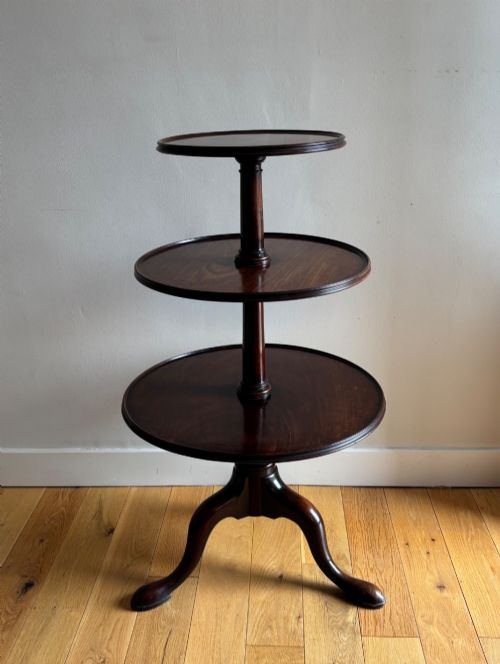
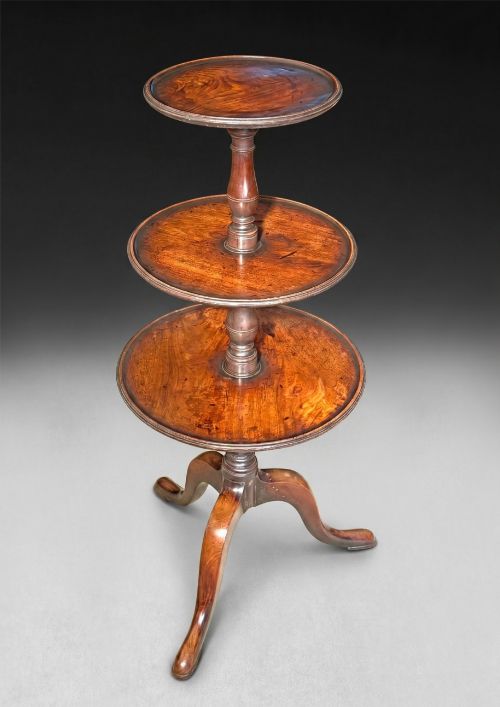
- A freestanding piece of furniture featuring multiple graduated tiers on a central column and tripod base. It held plates and glasses independently of servants.
- Bow-front
- A convex, outwardly curved front elevation common on sideboards and serving tables. It softens the linear geometry of a dining room.
- Potboard
- An open lower shelf fitted between the legs of a dresser base. It originally stored heavy earthenware pots and kitchen utensils.
- Flame mahogany
- Timber cut from the fork of the mahogany tree to reveal a fiery, flickering grain pattern. Cabinetmakers reserved this veneer for the most prominent drawer fronts and surfaces.
George III Buffet Table: Frequently Asked Questions
What is a george iii buffet table?
A george iii buffet table refers to dining room serving furniture produced during the latter half of the eighteenth century and the early nineteenth century. These forms include sideboards, serving tables, and tiered serving stands.
They function as both practical servers and architectural statements in a traditional dining space. The category spans restrained oak country pieces and highly refined urban mahogany examples.
How were dumb waiters used?
Dumb waiters stood beside the dining table to hold extra plates, cutlery, and bottles during meals. Their tiered circular or rectangular shelves allowed diners to help themselves without servants present.
The revolving or stationary tiers kept provisions within arm's reach during lengthy Georgian dinner services.
Where does flame mahogany come from?
Flame mahogany comes from the junction where branches meet the main trunk of the tree. Cutting through this wood produces a dramatic, flame-like grain pattern.
Craftmen sliced this timber into thin veneers to display the decorative figuring across prominent surfaces.