
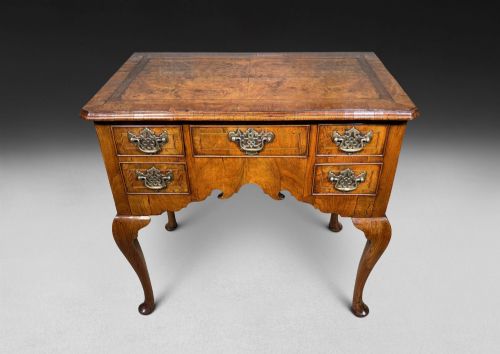
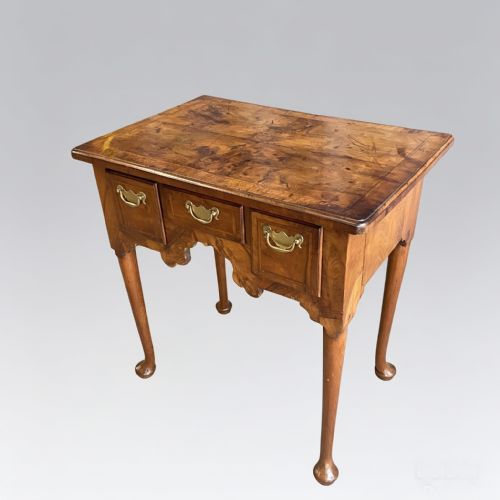


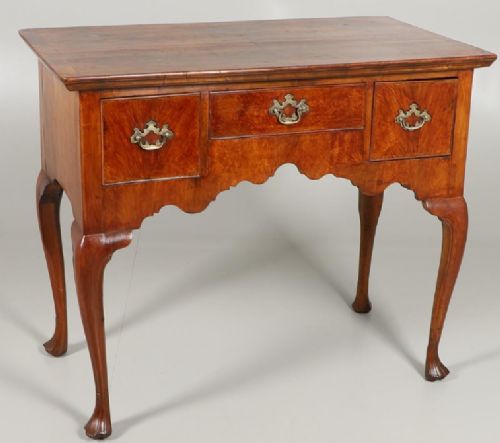


George II Walnut Lowboy
A george ii walnut lowboy offers the compact elegance of 18th-century cabinetmaking, combining rich timber grain with practical drawer storage.
George II Walnut Lowboy
A george ii walnut lowboy is a small side table or dressing table typically fitted with drawers beneath the surface. The form appears predominantly from the 18th century, with later revival interpretations also reaching the market.
Most examples function as low side tables, dressers, or miniature chests on stands, utilising timbers like burr walnut, red walnut, and occasionally oak or fruitwood secondary woods. Collectors encounter both authentic period pieces and nineteenth-century revival versions on this page.
How they were made
Cabinetmakers constructed these tables using solid and veneered walnut, often applying figured or burr walnut veneers to drawer fronts and top surfaces. Secondary timbers such as oak and fruitwood provided sturdy internal framing and drawer linings.
Hardware typically included cast brass drop handles and drawer pulls secured to backplates, complementing the warm tones of the timber. Feather banding and inlay work frequently bordered the primary surfaces of finer examples.
Listings feature 18th century and 19th century pieces built from walnut, burr walnut, fruitwood, oak, and brass.
What varies in quality
The choice of timber grain defines much of the visual merit, with highly figured burr walnut commanding particular attention over plain boards. The retention of original brasses and untouched surface patination elevates an example far above those with replaced hardware or stripped finishes.
Structural integrity and the crispness of cabinet joints distinguish superior workshops from ordinary production. Subtle details such as precise feather banding and uncompromised drawer linings reveal the standard of the original maker.
The George II Walnut Lowboy Glossary
- Burr walnut
- A prized timber harvested from walnut tree growths, producing swirling, highly decorative grain patterns. Cabinetmakers sliced this wood into thin veneers for primary surfaces.
- Feather banding
- A decorative inlay technique using small veneers arranged in a herringbone pattern to frame drawer fronts or tabletops. It requires considerable skill from the woodworker.
- Lowboy
- A small 18th-century table with one or more rows of drawers, commonly used as a dressing table or side table. The compact proportions made them versatile items in domestic rooms.
- Red walnut
- A dense variety of walnut timber with a distinctly warm, reddish hue, frequently utilised in Georgian furniture production. It was favoured for its durability and rich natural colour.
George II Walnut Lowboy: Frequently Asked Questions
What is a lowboy used for?
These small tables served primarily as dressing tables for personal grooming or as side tables in reception rooms for holding small items.
In modern interiors, they function effectively as console tables, desk surfaces, or lamp tables in compact spaces.
How do I spot a revival piece?
Nineteenth-century revival examples often display machine-cut timber traits and different interior secondary woods compared to 18th-century originals.
Examining the drawer construction, timber shrinkage, and wear patterns helps separate period pieces from later interpretations.
Are brass handles original?
Many surviving pieces retain their early or original brass drop handles, which leave distinct ghost marks on the wood if replaced.
Original hardware matches the period style and fits snugly into the historical pinholes left in the drawer fronts.
What woods were used?
Primary surfaces typically showcase figured, burr, or red walnut veneers laid over solid carcase timbers.
Secondary woods like oak, fruitwood, and pine commonly appear inside drawer boxes and beneath table tops.