
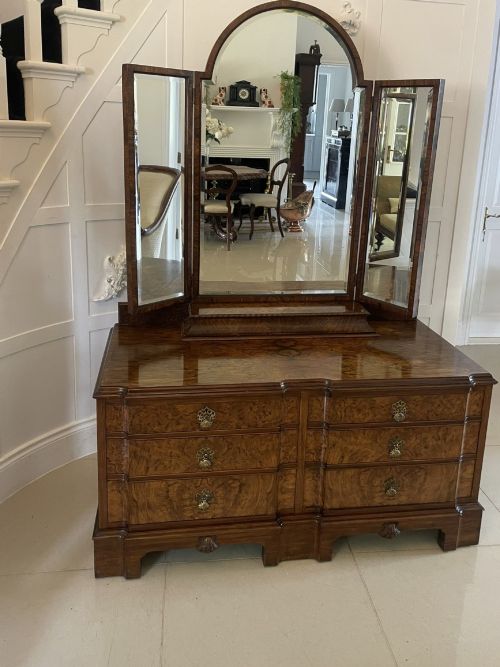
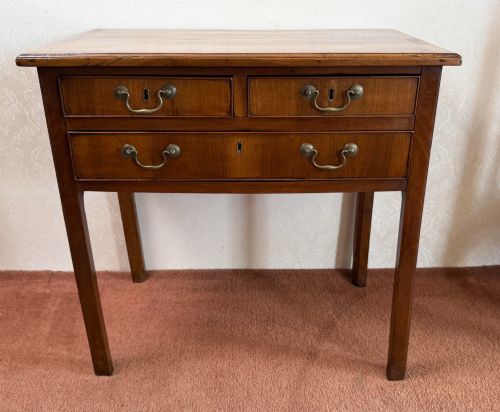
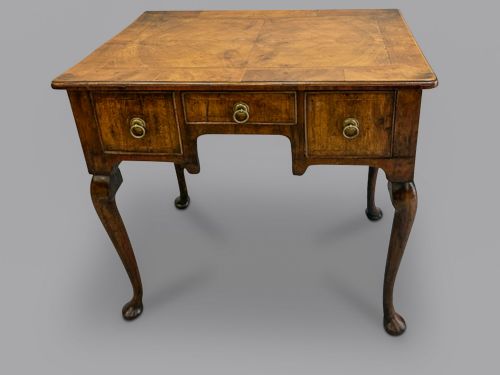
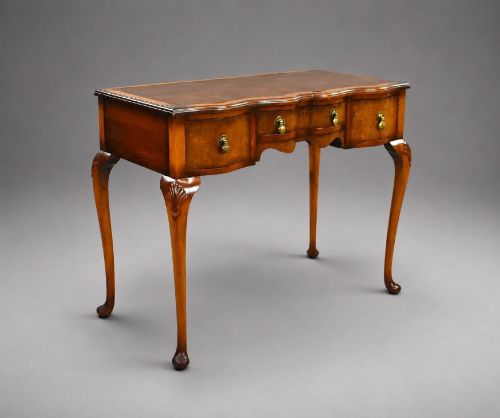


Brown Walnut Lowboy Desk
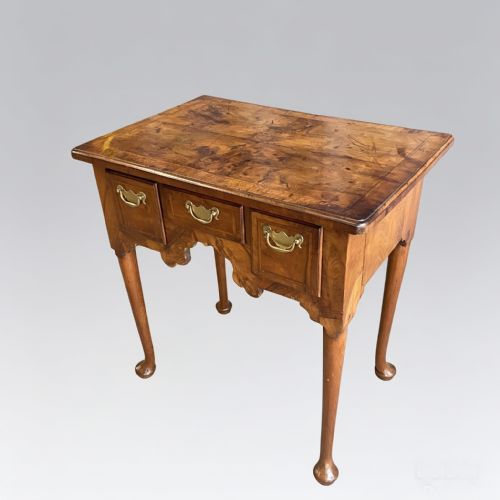
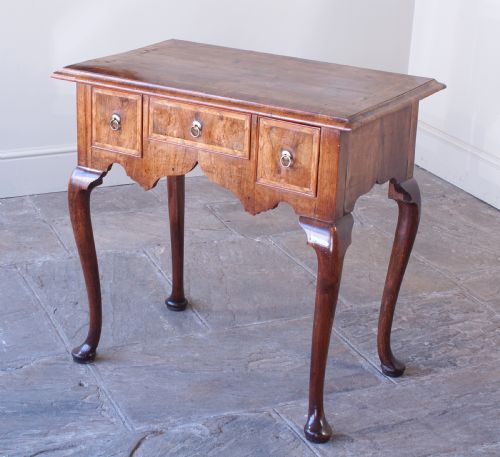
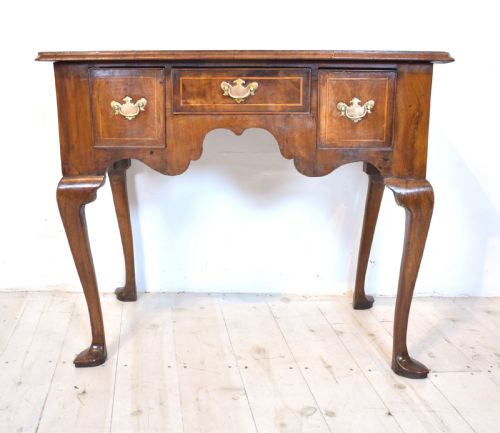
A brown walnut lowboy desk offers a compact surface with fitted drawers, combining rich timber figuring with historic proportions.
Brown Walnut Lowboy Desk
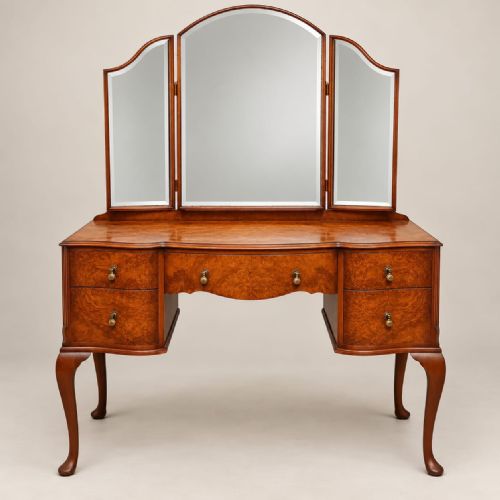
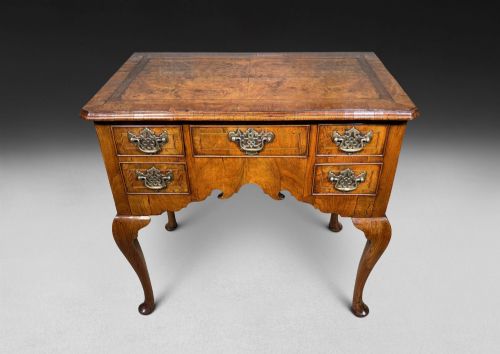
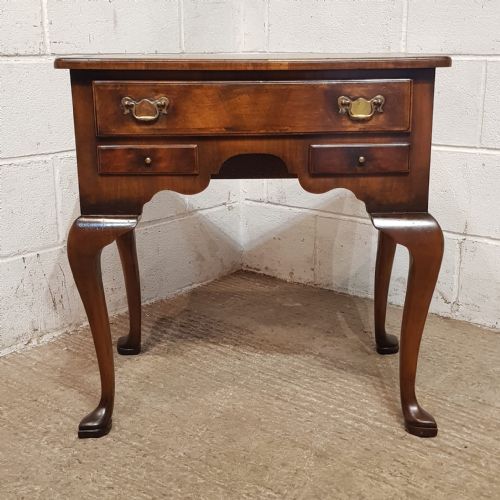
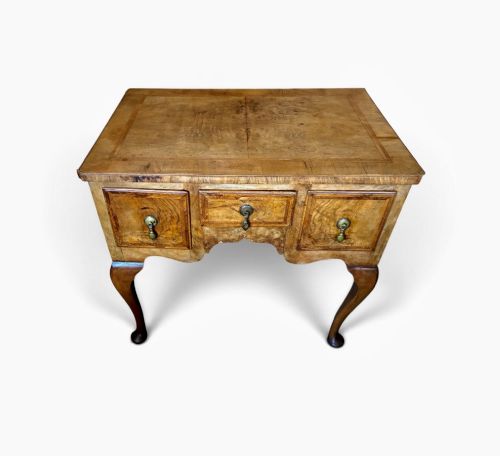
When you search for a brown walnut lowboy desk, you are examining low-standing tables equipped with multiple drawers originating primarily from the eighteenth century alongside revival periods like the nineteen-twenties.
These pieces function variously as side tables, dressing tables, writing tables, and correspondence desks depending on their internal drawer configuration and upper surface layout.
You will frequently encounter authentic Georgian examples alongside later Queen Anne style and George II revival interpretations sharing the same core pedestal and drawer proportions.
How they were made
Cabinet makers utilised solid walnut, burr walnut veneer, and secondary timbers like oak and fruitwood to construct the frames and drawer linings.
Decorative surfaces frequently incorporate figured grain patterns, feather banding, and marquetry inlay work set into the primary walnut boards.
Metal hardware typically includes cast brass drop handles and drawer pulls secured to the facade.
Listings feature pieces spanning the early eighteenth century through the nineteen-thirties, encompassing Georgian, Queen Anne style, and Edwardian periods.
What varies in quality
The sophistication of the timber selection dictates much of the visual merit, distinguishing plain walnut boards from highly figured burr veneers and intricate marquetry panels.
Proportional harmony in the cabriole legs and the crispness of any carved detailing separate standard workshop production from finer cabinet work.
The integrity of the drawer construction and the preservation of original hardware surfaces heavily influence the overall character of the piece.
The Brown Walnut Lowboy Desk Glossary
- Lowboy
- A small low table with drawers, typically used as a dressing table or side table. These pieces rest on short legs, often cabriole in form.
- Burr Walnut
- Timber taken from a tree growth where the grain has burl formation, creating highly swirling patterns. Cabinet makers prized this veneer for principal drawer fronts and top panels.
- Feather Banding
- A form of inlay consisting of small strips of veneer laid diagonally to form a herringbone pattern. It frames the perimeter of drawer faces and tabletops.
- Cabriole Leg
- A furniture leg that bends outward in a convex curve and tapers inward in a concave curve, ending in a pad or foot. This form appeared widely during the Queen Anne and Georgian periods.
- Marquetry
- Decorative inlay work using various tinted woods to create pictorial designs on a surface. Eighteenth-century examples occasionally incorporate floral or geometric motifs.
Brown Walnut Lowboy Desk: Frequently Asked Questions
What is a lowboy used for?
These low tables serve multiple domestic functions including writing, correspondence, and dressing. The integrated drawers provide secure storage for small personal items while keeping a low profile against a wall.
Historically placed in bedrooms or parlours, their versatile top surfaces accommodate small mirrors, writing instruments, or decorative objects without dominating a room.
How do I date a walnut lowboy?
Dating relies on examining construction methods, timber choices, and hardware styles. Eighteenth-century pieces display hand-cut joinery and native woods like oak linings, whereas twentieth-century revivals often utilise modern machining.
Leg profiles and veneer applications also shift across eras, moving from early Queen Anne curves to later Georgian refinements and twentieth-century revival interpretations.
Are all lowboys made of solid walnut?
Many examples combine solid timber frameworks with decorative veneers applied to secondary woods. Burr walnut sections typically appear as surface veneers over stable base boards.
Internal drawer components frequently utilise secondary timbers such as oak or fruitwood, reflecting standard period construction practices rather than uniform solid timber building.
How do I clean a walnut surface?
Maintenance requires gentle dusting with a soft, dry cloth to prevent particulate accumulation on the timber. Avoid modern silicone polishes that can degrade historic finishes over time.
Applying traditional beeswax occasionally helps nourish the walnut grain and protect the surface without altering the patina built up over decades or centuries.