
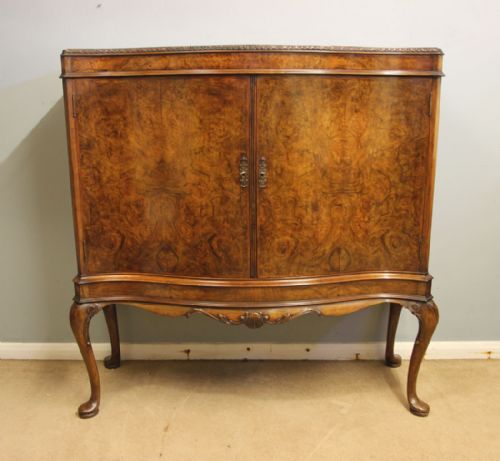
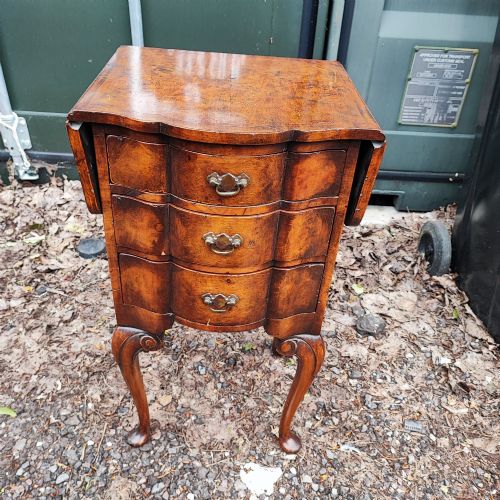


Georgian Walnut Side Cabinet
A georgian walnut side cabinet brings rich grain and practical storage to a room, ranging from compact bedside cupboards to grand three-door sideboards.
Georgian Walnut Side Cabinet
A georgian walnut side cabinet encompasses a variety of timber furniture forms designed for domestic storage and display, spanning from bedside tables to lowboys and commodes. Buyers searching this phrase most frequently encounter 1920s revival pieces alongside genuine 18th-century examples, reflecting both period craftsmanship and later interpretations.
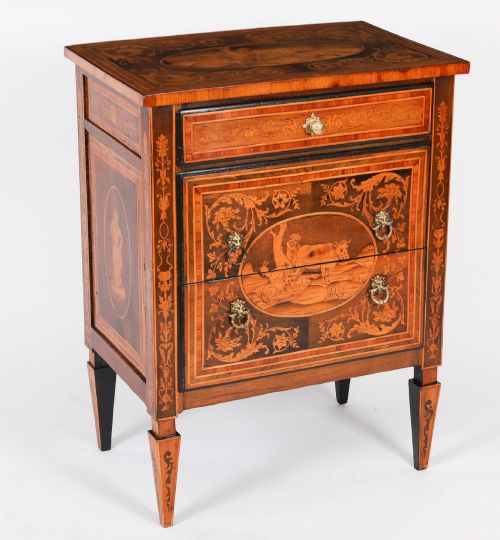
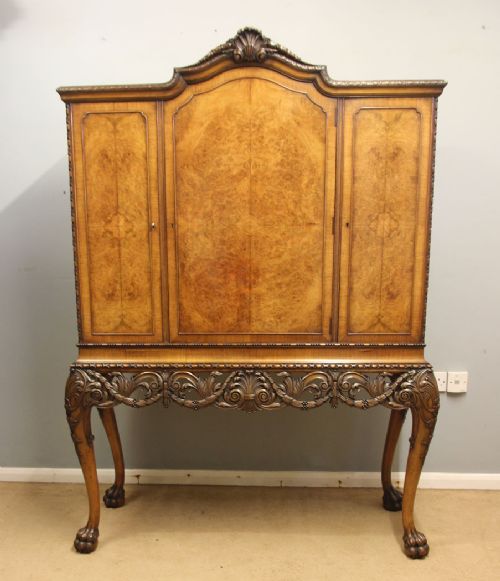
The material vocabulary of these items leans heavily on walnut, burr walnut, and figured walnut veneers, sometimes paired with marble tops or cherrywood and iron components. Forms range from shaped bedside cabinets and tambour nightstands to break-fronted bookcases and multi-drawer dressers.
Geographic origins and stylistic influences stretch across British periods into French Provincial, Baroque, and Louis XVI Neoclassical styles, as well as Queen Anne revivals. This variety means a side cabinet can function equally as a lamp stand, occasional table, or principal dining room sideboard.
How they were made
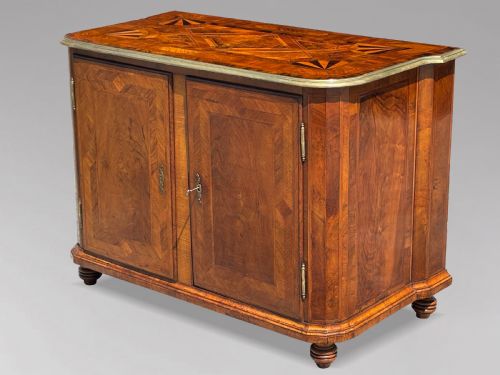
Makers utilised solid walnut and decorative veneers like burr and figured walnut applied to secondary timbers, creating rich patterns across doors and drawer fronts. Brass handles and mounts frequently provide structural and decorative contrast to the dark timber grain.
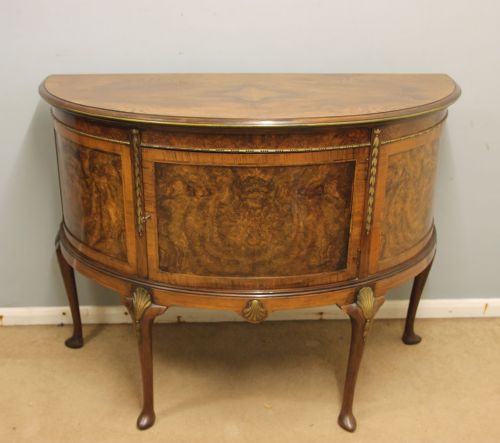
Surviving pieces incorporate specialised construction techniques such as feather banding around drawer perimeters and curved demi-lune framing. Heavier case pieces occasionally integrate marble tops or iron bracing to support stone and timber weights.
Some bedside cupboards arrive in pairs, offering symmetrical storage for both sides of a historical bed frame.
What varies in quality
The visual hierarchy of a georgian walnut side cabinet depends largely on the choice and matching of veneer figures across the primary surfaces. Finer examples display symmetrical burr patterns that wrap coherently around curves and corners.
Hardware selection and secondary wood choices also separate standard production from superior cabinet work, with well-fitted brass elements and precise drawer linings indicating greater workshop care.
The Georgian Walnut Side Cabinet Glossary
- Burr walnut
- A prized timber harvested from tree growths that produce swirling, highly decorative grain patterns. This veneer is typically reserved for the most prominent exterior surfaces of high-end cabinetry.
- Lowboy
- A small occasional table featuring one or more rows of drawers beneath a flat top. These low tables often stand on slender cabriole legs.
- Feather banding
- A decorative inlay technique using small sections of veneer arranged in a herringbone or V-shaped pattern around drawer edges. It frames the primary wood surface with precise geometric contrast.
- Demi-lune
- A half-moon shape applied to the footprint of console tables, commodes, and sideboards. This curved profile allows cabinets to sit flush against a wall while projecting into the room.
Georgian Walnut Side Cabinet: Frequently Asked Questions
What is a walnut side cabinet used for?
These cabinets serve as versatile storage units for living rooms, hallways, and bedrooms, holding everything from tableware to bedside essentials.
Many examples function equally well as lamp stands or display surfaces for decorative objects.
How do I date an antique cabinet?
Dating relies on examining construction methods, timber types, and hardware styles alongside the overarching design period.
Earlier pieces show hand-cut joinery and period-specific veneers, while revival items from the early twentieth century often display standardised internal framing.
Are all these cabinets from the 18th century?
The selection includes genuine 18th-century items alongside numerous pieces produced during early twentieth-century revival periods.
Both categories utilise traditional walnut timbers and classic forms but originate from different manufacturing eras.
How do I care for burr walnut veneer?
Burr walnut requires protection from direct sunlight and excessive moisture to prevent the delicate veneer from drying or cracking.
Regular dusting with a dry cloth and occasional application of appropriate furniture wax keeps the timber nourished.