
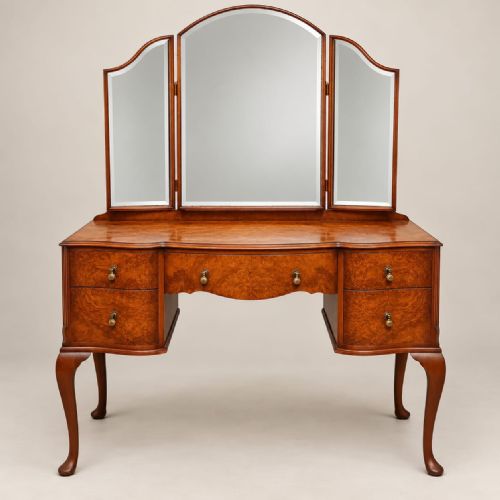
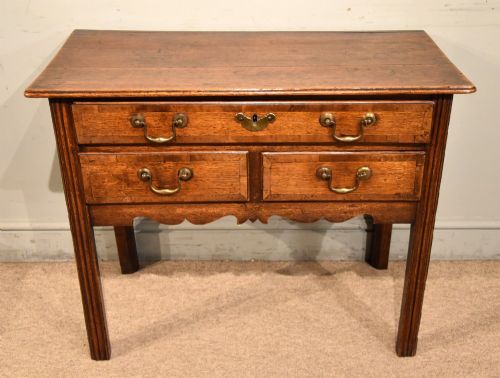
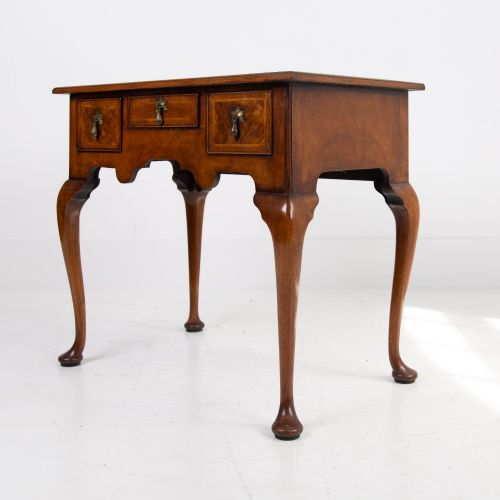
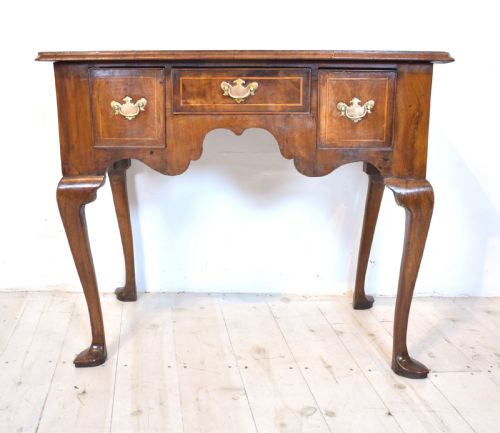
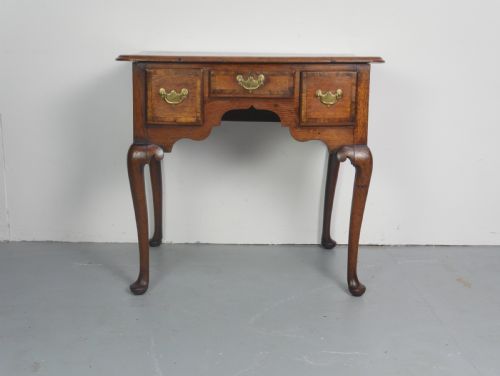


Warm Brown Lowboy Table
A warm brown lowboy table brings useful surface space and compact drawer storage, rooted in centuries of cabinet-making tradition.
Warm Brown Lowboy Table
A warm brown lowboy table is fundamentally a low occasional table fitted with drawers, originating as a dressing or side table during the seventeenth and eighteenth centuries. These pieces sit low to the ground and typically feature one to three drawers beneath a rectangular top, designed for domestic convenience in parlours and bedrooms.
The versions you encounter on this page span the Georgian, Victorian, and Edwardian periods, with eighteenth-century examples appearing most frequently. Alongside standard lowboys, the selection includes related low side tables and dresser bases sharing similar proportions and utility.
Woods vary across the periods, shifting from early native timbers to richly figured veneers on later or more ambitious pieces. The construction reflects the regional and stylistic preferences of British and continental makers, from simple country workshops to refined urban ateliers.
Distinctions in quality and execution
The calibre of a warm brown lowboy table rests on the selection of timber and the crispness of the cabinet-maker's joinery. Fine examples display carefully matched grain patterns across drawer fronts, subtle decorative banding, and well-proportioned legs that integrate harmoniously with the body.
Simpler country pieces prioritise sturdy utility over elaborate ornamentation, utilising local fruitwood, elm, or oak with straightforward turned supports. The depth of the patina and the integrity of the original timber surfaces ultimately separate standard regional examples from more refined urban commissions.
Several lowboys include secret drawers hidden beneath the moulding, built specifically for hiding love letters from prying eyes.
The Warm Brown Lowboy Table Glossary
- Lowboy
- A small table with drawers, standing on four legs, typically used as a dressing table or side table in eighteenth-century interiors.
- Cabriole leg
- A furniture leg that curves out at the knee and tapers inward to an ankle, frequently terminating in a pad or hoof foot.
- Dresser base
- A lower sideboard or storage unit featuring drawers and sometimes cupboards, sharing the low proportions of early tables.
- Feather banding
- A delicate decorative inlay of contrasting veneer strips arranged in a herringbone pattern around drawer perimeters.
- Stretcher
- A horizontal wooden rod connecting the legs of a table for added structural stability and rigidity.
Warm Brown Lowboy Table: Frequently Asked Questions
What is a lowboy table used for?
Historically, these tables served as compact dressing tables for personal grooming or as convenient side tables for holding small objects in reception rooms.
Today, they function well as lamp tables, hallway surfaces, or alternative writing desks where space is limited.
How do I date a warm brown lowboy table?
Dating relies on observing the timber species, leg profiles, drawer construction methods, and overall stylistic markers such as bracket feet or shaped aprons.
Earlier pieces from the eighteenth century typically feature hand-cut dovetails and native timbers like oak or walnut, while later revival pieces adopt different secondary woods.
Are these tables made of solid wood?
Many examples utilise solid native timbers throughout the top, frame, and drawer construction, particularly those originating from country workshops.
More formal pieces from the Georgian period often incorporate decorative veneers laid over sturdy secondary pine or oak subframes.
Where should I place a lowboy in my home?
Their compact dimensions make them exceptionally versatile for placement in narrow hallways, living room corners, or alongside a bed as an alternative bedside table.
The finished backs on many examples also allow them to sit away from the wall where visibility permits.