
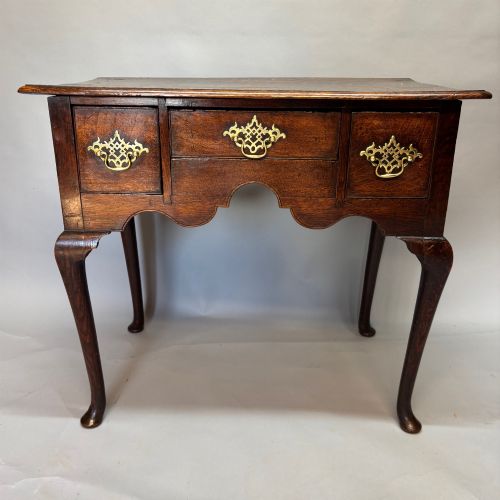
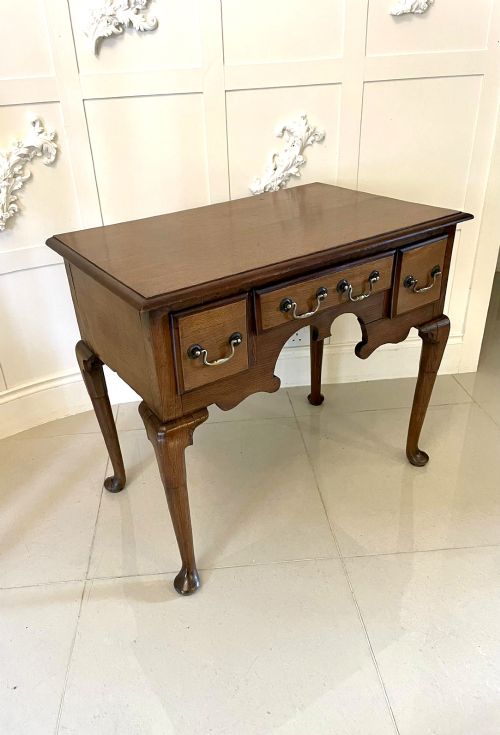
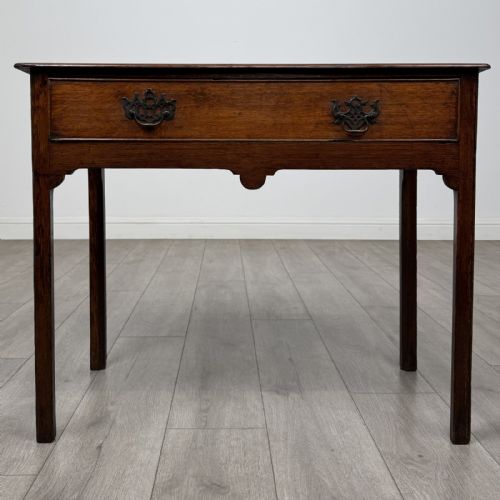
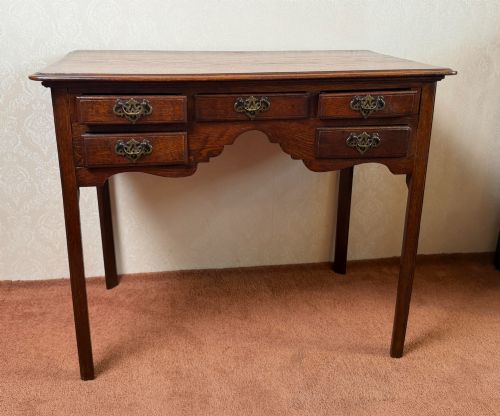
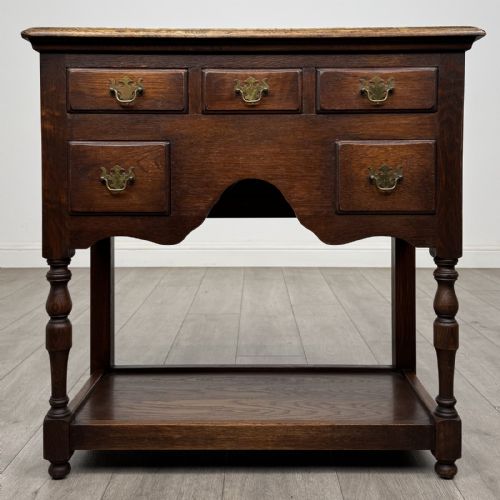
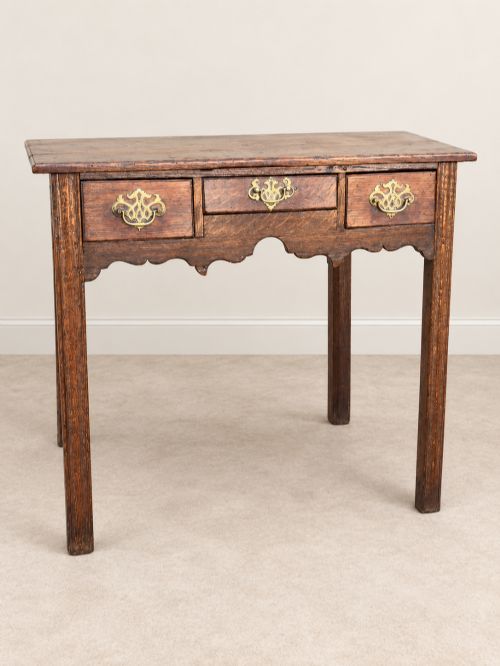
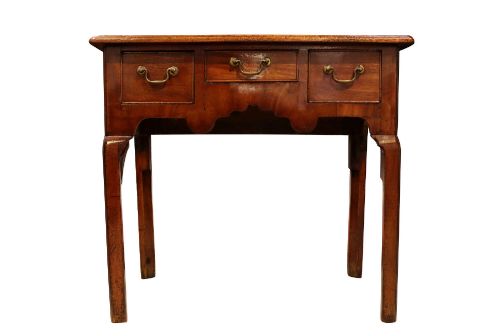
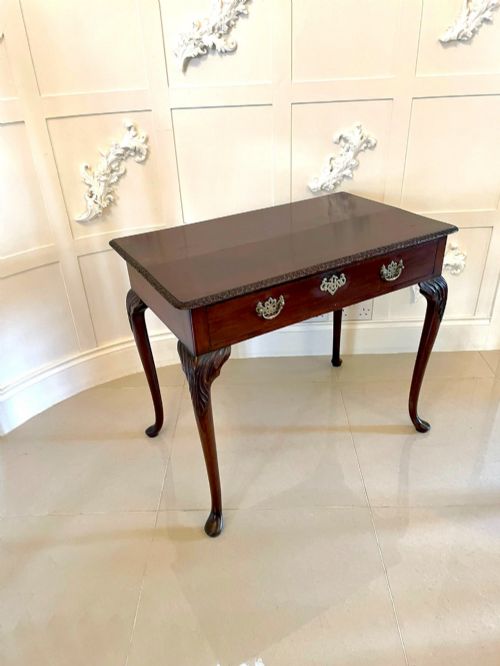
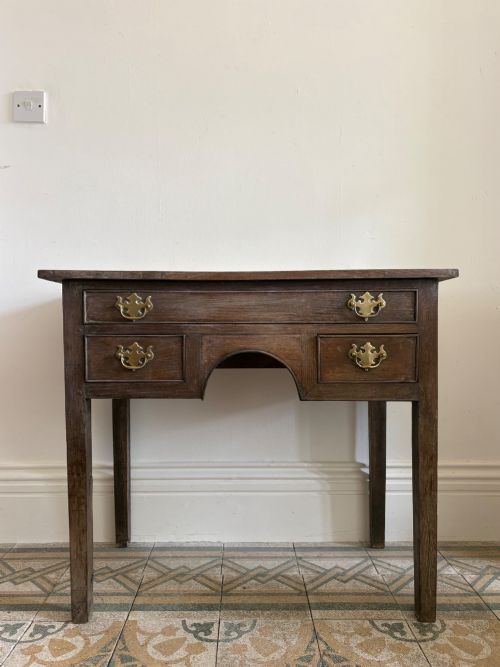
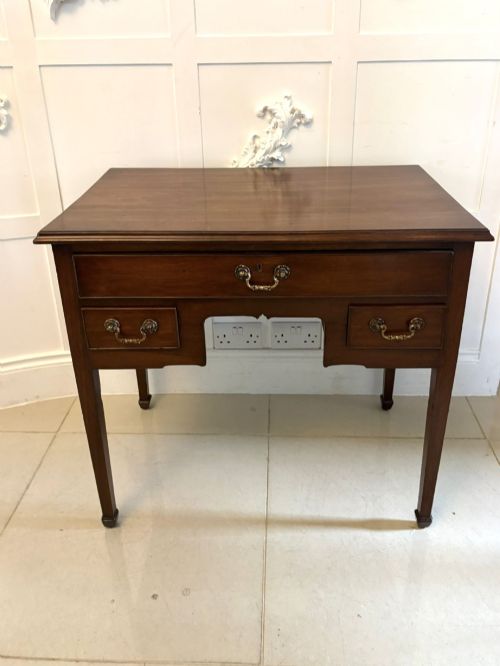
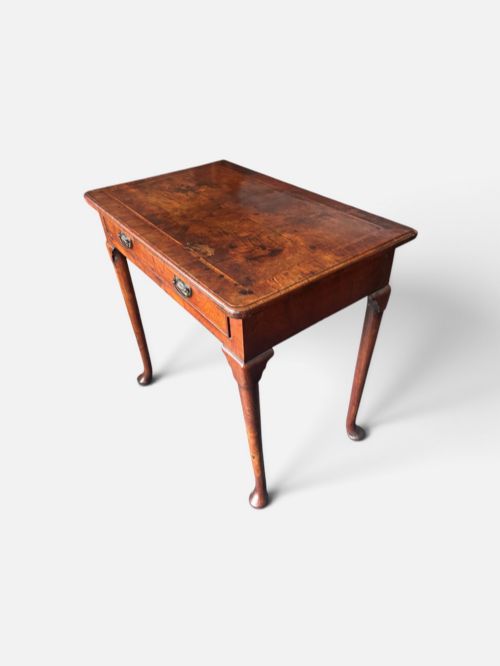
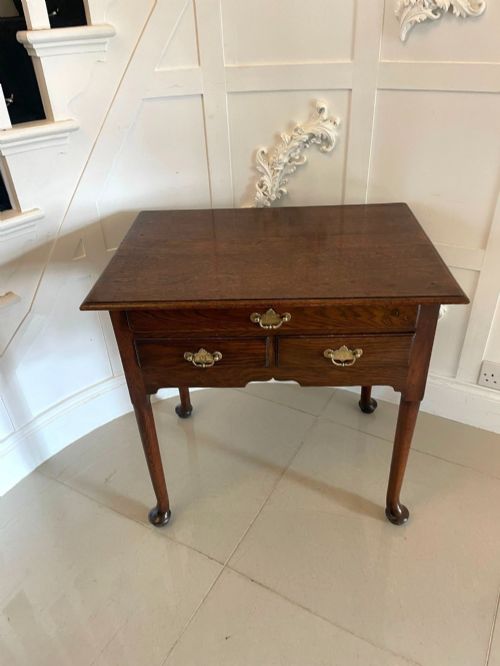
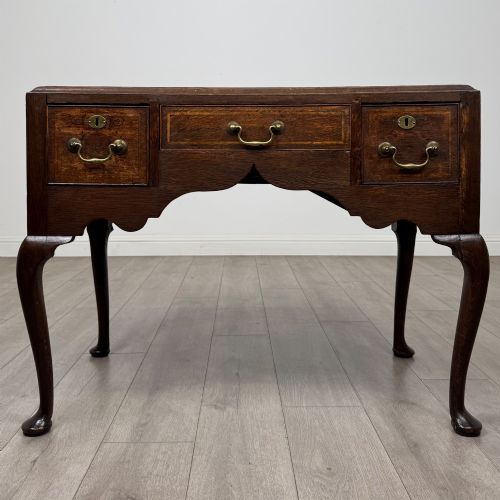
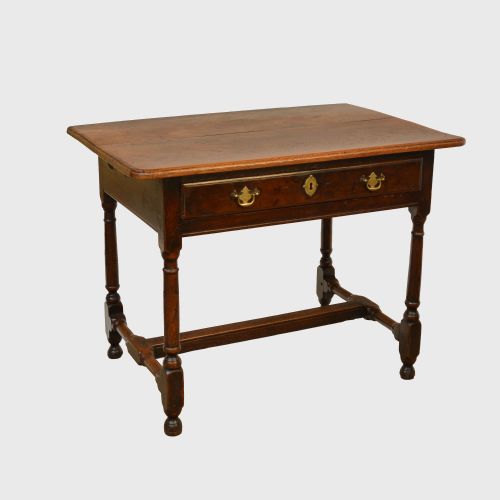
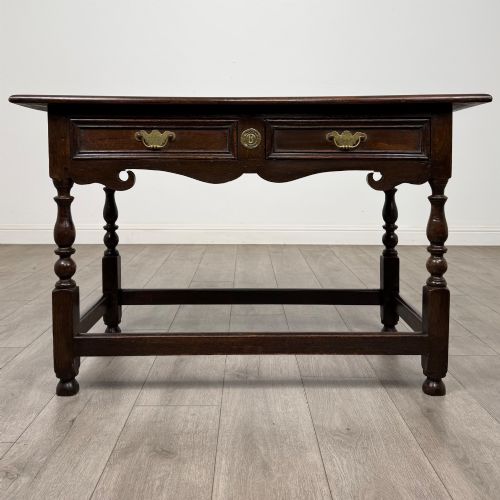
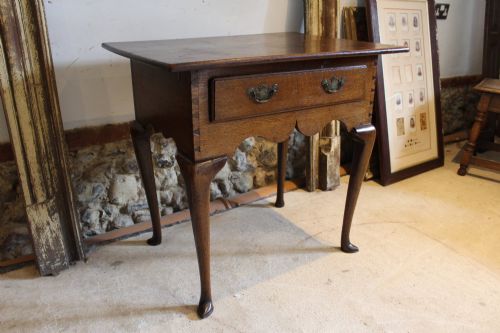
Georgian Lowboy Dressing Table
These tables are georgian lowboy dressing table examples built for small personal rooms during the eighteenth century.
Georgian Lowboy Dressing Table
A georgian lowboy dressing table is a compact fitted or freestanding surface designed for personal grooming and writing during the eighteenth century. Most pieces met on this page date from the Georgian period, spanning reigns from George I through to George III.
Makers produced these tables in various regional styles, including Queen Anne, George II, and George III designs. Alongside standard lowboys, the selection includes related side tables and dressing tables configured with single or multiple drawers.
How they were made
Cabinet makers built these tables primarily in native oak, walnut, and mahogany, frequently utilising secondary woods such as elm, yew, fruitwood, and burr walnut veneers. Timber selection dictated the character of the piece, from robust country oak to highly figured burr veneers.
Construction techniques involved traditional joinery methods paired with brass drawer pulls and handles. Surface finishes relied on hand polishing to highlight the natural grain and figuring of the timber.
What varies in quality
Quality rests primarily in the choice of timber figure, such as highly decorative burr walnut or figured mahogany, compared against plain structural woods. Finer examples display meticulous grain matching and sophisticated drawer configurations.
Proportion and execution set individual pieces apart, distinguishing restrained country workshops from accomplished metropolitan cabinet makers. Original brass hardware and untouched timber patination further elevate the standing of a piece.
The Georgian Lowboy Dressing Table Glossary
- Lowboy
- A small dressing or side table typically fitted with one or more drawers beneath the work surface. These compact items date predominantly to the eighteenth century.
- Burr walnut
- A wood harvested from walnut tree growths that produces highly swirling and ornamental grain patterns. Cabinet makers utilised these veneers on high-status surfaces.
- Side table
- A freestanding domestic table positioned against a wall for display or utility. Many examples share forms with traditional lowboys.
- Fruitwood
- A generic term for timber sourced from fruit-bearing trees such as pear or apple, used by rural makers. This dense material offers a warm tone and smooth texture.
Georgian Lowboy Dressing Table: Frequently Asked Questions
What is a georgian lowboy dressing table used for?
These pieces served primarily as personal dressing tables for morning grooming routines in private bedchambers. Their compact proportions also suited them for use as writing desks or occasional side tables in panelled rooms.
Drawers provided secure storage for cosmetics, brushes, and documents. Over time, owners repurposed them as hall tables or decorative surfaces for lamps.
How do I identify a George II lowboy?
George II examples often exhibit characteristic cabriole legs ending in pad or claw and foot motifs. The proportion tends to be stout, frequently utilising rich walnut or figured oak.
Drawer arrangements on these pieces range from single wide drawers to multi-drawer layouts with shaped aprons. Hardware typically consists of shaped brass backplates and swing handles.
Are these tables made of solid mahogany?
While many eighteenth-century pieces utilise solid timbers like oak or mahogany, others incorporate veneers over secondary woods. Burr walnut surfaces are commonly laid over pine or oak carcases to display decorative grain.
Construction methods varied according to regional workshop traditions and the availability of imported tropical hardwoods. Examining the drawer linings reveals the secondary woods employed by the cabinet maker.
How do I style a lowboy in a modern room?
A lowboy functions effectively as a slim hallway console or a compact desk beneath a wall mirror. Its shallow depth prevents overcrowding in narrow corridors or smaller bedrooms.
Pairing the table with a simple stool or leaving the surface uncluttered highlights the timber grain and period proportions. The low profile allows it to sit comfortably beneath artwork or windows.