
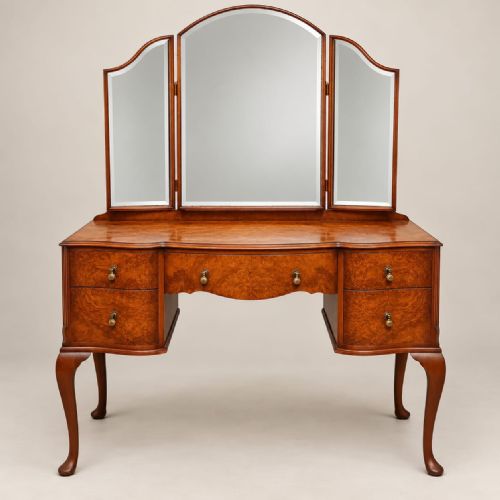
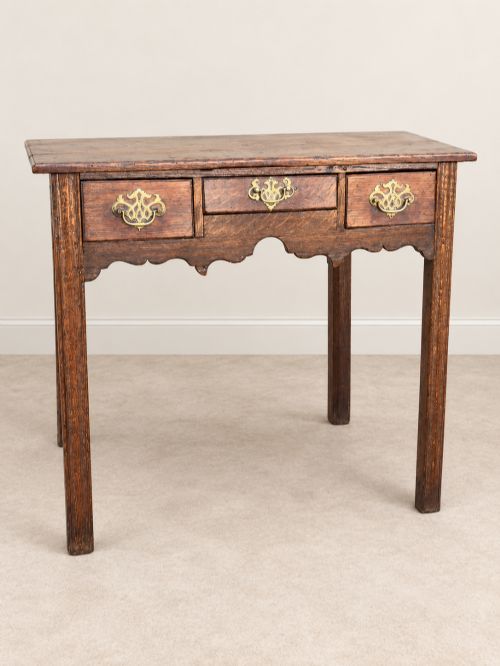
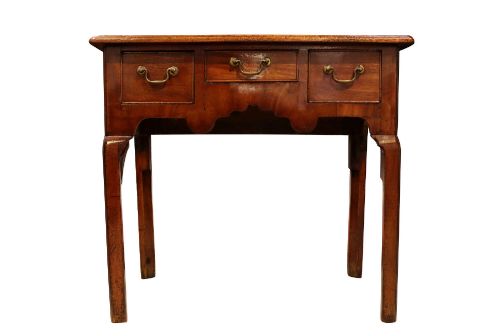
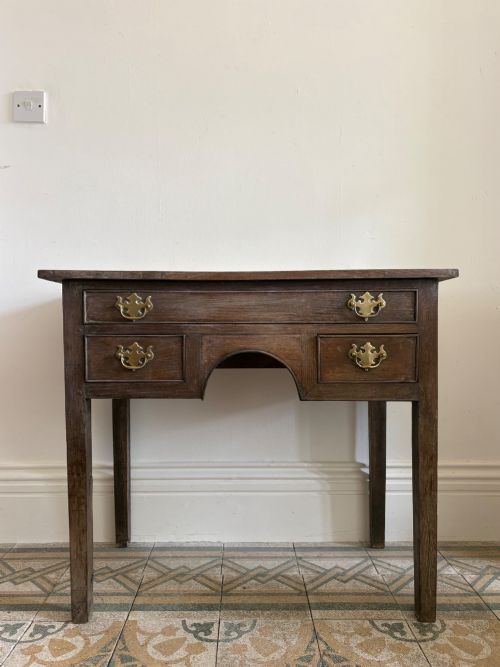
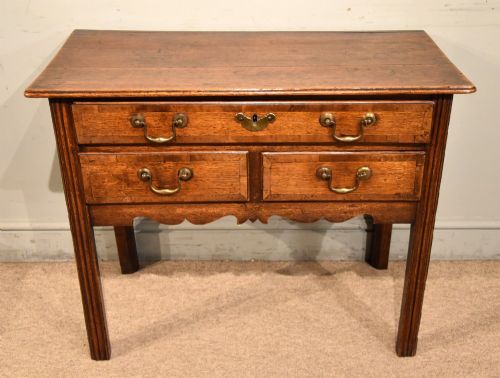
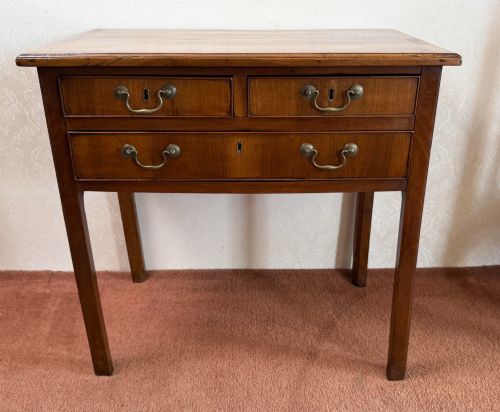
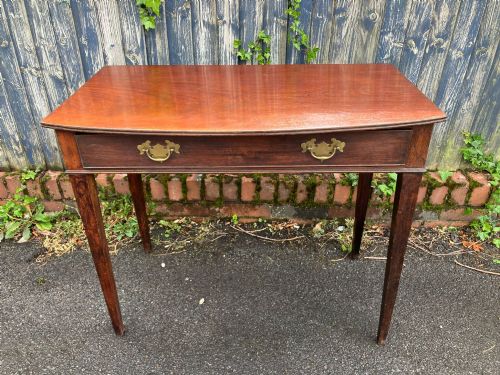
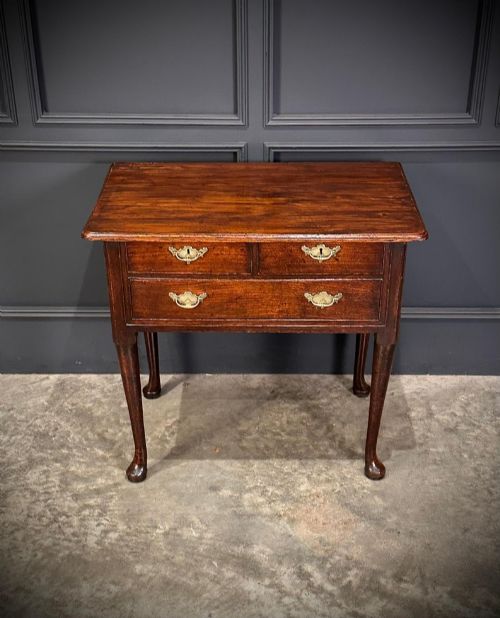
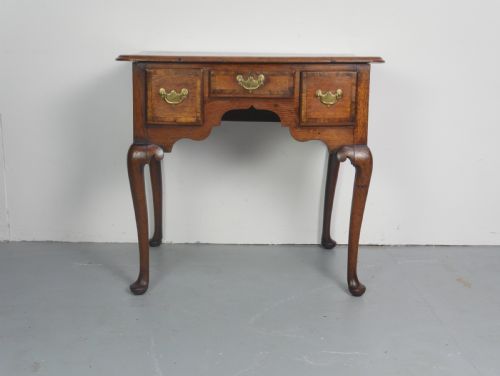
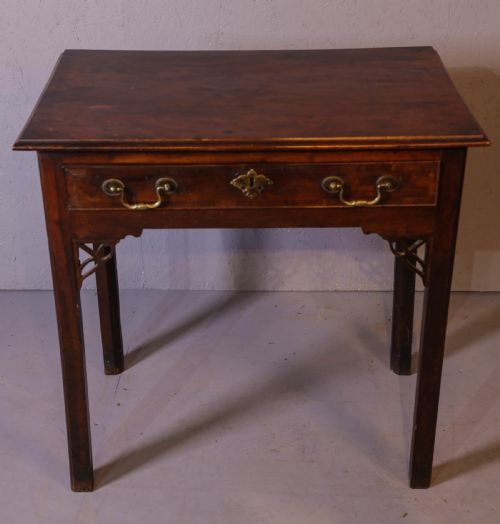


Brass Handle Lowboy Desk
A brass handle lowboy desk brings compact storage and working surface together, anchored by period timber and practical metalwork.
Brass Handle Lowboy Desk
A brass handle lowboy desk combines the low table form with drawers for writing equipment, often appearing under titles like lowboy, writing desk, or side table. These pieces emerge chiefly from the 18th century, spanning the Georgian, George II, and George III periods, alongside later Georgian style revivals from the 1920s.
The version most commonly met on this page is the compact oak or mahogany lowboy fitted with drawers and brass hardware. Formats range from straight-front designs to bow front models, functioning variously as writing tables, dressing tables, or side tables.
How they were made
Construction relies heavily on cabinet timbers such as oak, mahogany, walnut, burr walnut, yew, and cherrywood, sometimes finished with paint. Master joiners utilised these dense woods to build stable frames capable of supporting drawer tiers.
Metal components play a structural and decorative role, with brass handles securing the drawer fronts. These fittings complement the timber grain while providing daily utility for opening and closing compartments.
Listings span the 18th century, Georgian, and 1920s periods, using woods from oak and mahogany to yew and cherrywood.
What varies in quality
The choice of primary timber and secondary wood sets the baseline for quality across these pieces, with figured burr walnut and rich mahogany sitting apart from standard utility oak. Timber selection governs the visual depth of the surface.
Execution of the drawer construction and leg forms, such as cabriole legs, dictates the refinement of the piece. Superior examples display harmonious proportions between the brass handle placement and the overall frame.
The Brass Handle Lowboy Desk Glossary
- Lowboy
- A small kneehole-free table with drawers, typically standing on four legs and used for writing or dressing. It usually sits lower than a standard dining table.
- Cabriole leg
- A furniture leg that curves out and then in, resembling an animal's curving leg. This form appears frequently on mid 18th century examples.
- Bow front
- A convex curved front facade on a case piece or table. This shape softens the corners of the furniture.
- Burr walnut
- Wood taken from a walnut tree outgrowth, showing intricate swirling grain patterns. Cabinetmakers used it for decorative veneer work.
- Side table
- A small table placed against a wall, sharing dimensions and form with many lowboy writing desks.
Brass Handle Lowboy Desk: Frequently Asked Questions
What is a lowboy desk used for?
A lowboy desk functions primarily as a compact writing surface or dressing table, providing drawer space for small items.
Its modest proportions allow it to fit into hallways, bedrooms, and sitting rooms where larger desks overwhelm the floor plan.
How do I identify a Georgian lowboy?
Georgian lowboys display period timber choices like oak, mahogany, and walnut, often accompanied by characteristic brass drawer furniture.
Construction details and leg styles align with 18th century cabinetmaking conventions, though 1920s Georgian style reproductions also occur.
Are lowboys and side tables the same?
Many lowboys share identical forms with side tables and dressing tables, depending on how previous owners utilised the drawers.
Listing titles often overlap these terms because the physical form serves multiple domestic functions equally well.
How do I care for antique wood surfaces?
Protect antique timber surfaces from direct sunlight and extreme humidity changes to prevent the wood from drying out.
Apply appropriate natural waxes periodically to maintain the lustre of mahogany, oak, and walnut without sealing the grain.