
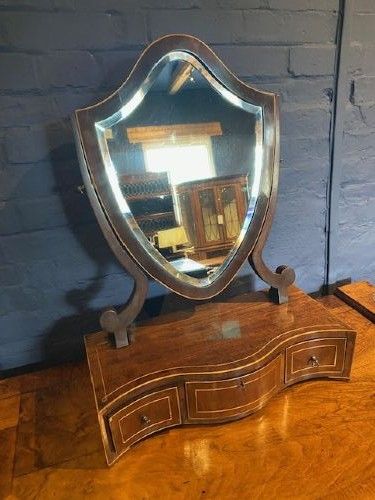
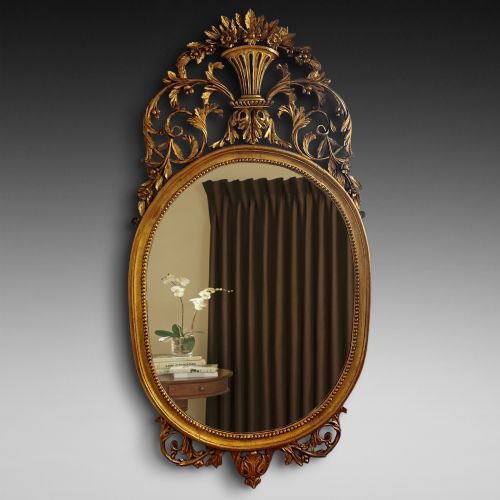


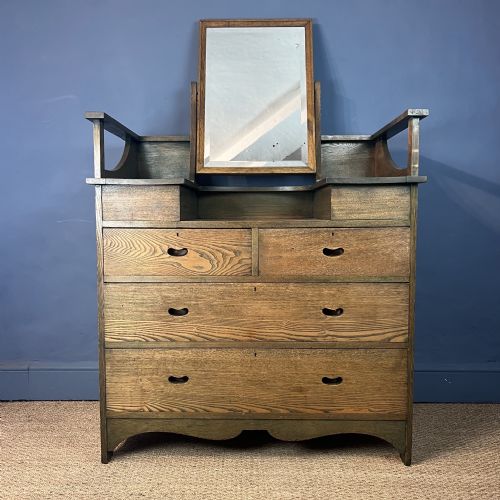
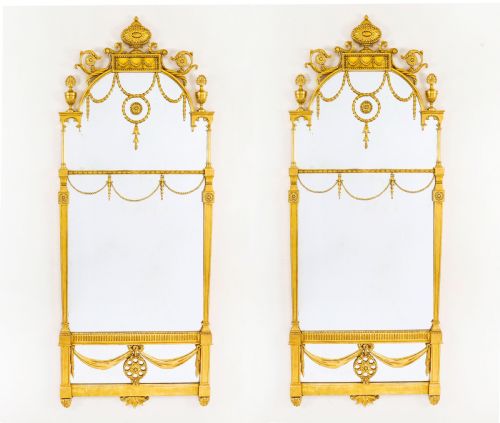
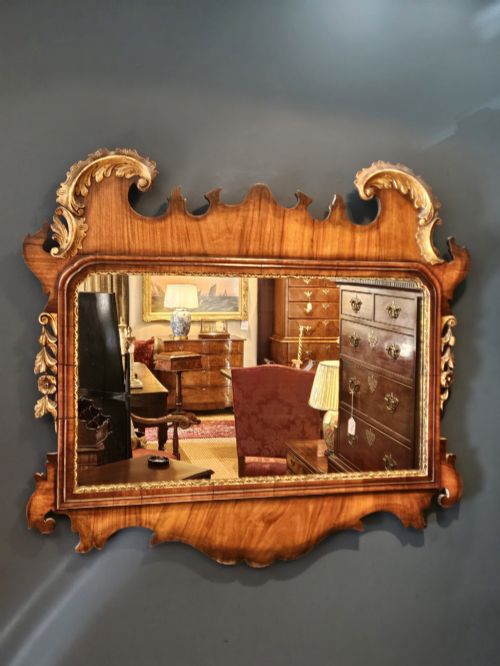


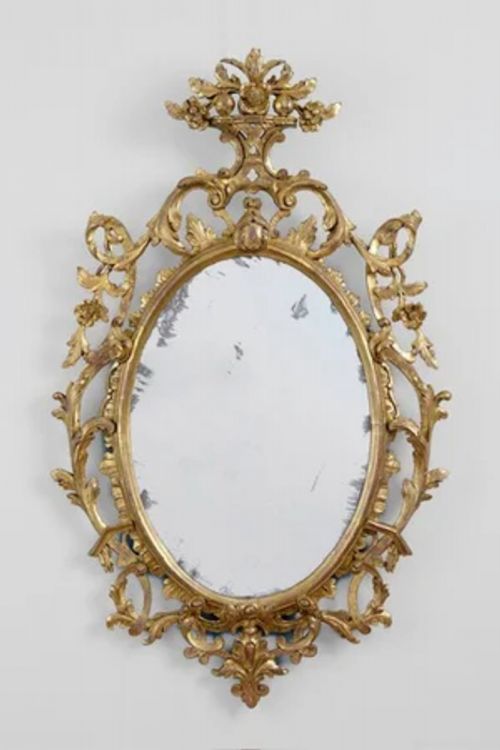


George I Style Mirror
When you search for a george i style mirror, you encounter elaborate walnut, giltwood, and japanned frames reflecting early eighteenth-century design principles.
George I Style Mirror
A george i style mirror draws upon the architectural symmetry and refined ornamentation popular during the early eighteenth century, though many examples date from subsequent revival periods in the nineteenth and twentieth centuries.
Buyers frequently encounter pier mirrors, wall mirrors, and dressing variants framed in walnut, mahogany, or gilded woods, often incorporating architectural pediments and parcel-gilt details.
The selection ranges from restrained walnut wall hangings to ornate red japanned pier mirrors and carved giltwood designs influenced by historical makers.
How they were made
Frames rely on cabinet woods like walnut and mahogany, frequently enhanced with parcel-gilt highlights, gesso mouldings, or hand-painted foliate panels.
Carvers shaped solid timber and applied gold leaf over prepared gesso grounds to achieve the brilliant surfaces characteristic of formal wall and pier glasses.
The inventory includes wall mirrors, dressing tables, and cheval mirrors alongside specialised red japanned pier mirrors.
What varies in quality
The crispness of the woodcarving and the depth of the gesso detailing distinguish finer interpretations from simpler commercial reproductions.
The choice of figured timber, such as burr walnut, and the preservation of original gilding and glass plates determine the desirability of individual pieces.
William Kent·John Belchier·George Walton·Chippendale
The George I Style Mirror Glossary
- Giltwood
- Wood that has been coated with gold leaf. This technique provides a luminous, reflective surface popular on formal mirrors.
- Pier Mirror
- A tall glass designed to hang on the wall between windows. These pieces often coordinate with console tables or architectural panels.
- Parcel-Gilt
- Partially gilded woodwork. Artisans apply gold leaf only to specific carved details to contrast against the natural wood grain.
- Japanned
- European imitation of East Asian lacquerwork. This finish involves layered varnishes and decorative painting, seen on specific revival pieces.
- Gesso
- A plaster mixture applied to wood frames. It serves as a smooth base for subsequent gilding or painting.
George I Style Mirror: Frequently Asked Questions
Are all these mirrors from the eighteenth century?
Many examples date from later revival periods in the nineteenth and early twentieth centuries, adopting the aesthetic of the Georgian era.
Craftsmen during the Victorian and Edwardian eras frequently reproduced these historical styles using traditional timber and gilding methods.
Where should I hang a pier mirror?
Pier mirrors were traditionally placed on the narrow wall space between two windows to reflect natural light into a room.
Today, they function effectively above low cabinets, sideboards, or console tables in hallways and reception rooms.
What is parcel-gilt wood?
Parcel-gilt refers to woodwork where gold leaf is applied only to selected carved areas rather than the entire surface.
This technique highlights specific architectural details while exposing the underlying walnut or mahogany grain.
How do I identify a reproduction?
Examinations of the timber age, construction joints, and the composition of the gesso layer help distinguish older items from modern copies.
Original antique glass plates frequently exhibit minor imperfections, waviness, and subtle foxing accumulated over centuries.