

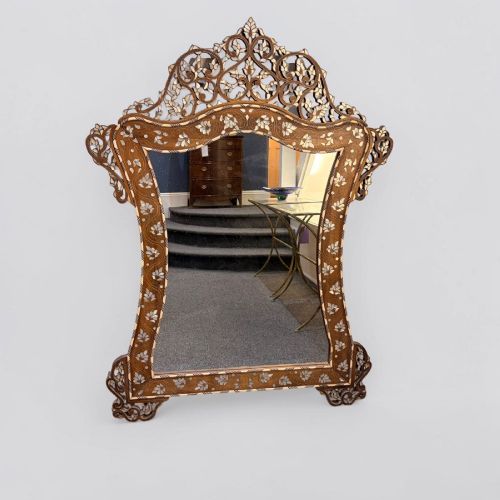
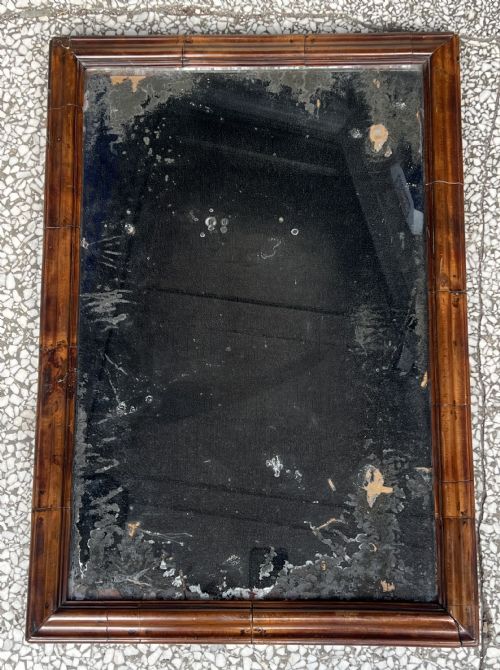

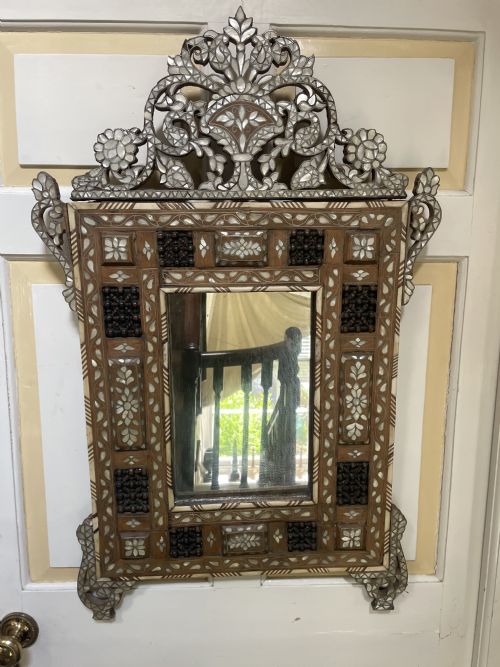


Antique Walnut Accent Mirror
An antique walnut accent mirror brings rich grain and warmth to a room, offering both practical reflection and decorative presence.
Antique Walnut Accent Mirror
When you search for an antique walnut accent mirror, you are looking at wall-hanging pieces constructed primarily in walnut, often enhanced with giltwood, parcel gilt, or painted details. The selection spans the eighteenth century through to the early twentieth century, taking in Queen Anne revival, Georgian styles, and Art Deco forms.
You are most likely to meet nineteenth-century interpretations on this page, alongside specific earlier examples such as eighteenth-century Italian and English wall mirrors. Forms range from vertical pier glasses and carved hand or wall mirrors to architectural wall frames.
Makers utilised rich burr walnut veneers and solid timbers, sometimes incorporating inset hand-painted panels or ormolu mounts. These pieces serve as striking focal points in hallways, reception rooms, and above mantelpieces.
How they were made
Makers built these frames using solid walnut and figured burr walnut veneers applied to secondary timbers, creating rich surface movement and depth. Carved elements were shaped directly into the wood before receiving gilding or parcel gilt highlights.
Giltwood and gilded wood details were applied to accentuate carved mouldings, foliage, and architectural framing. In certain pieces, oil paint was utilised on inset panels to add decorative imagery directly into the design.
Antique Walnut Accent Mirror Retail Price Guide 2026
Typical asking prices for walnut accent mirror among the pieces listed under this phrase on Sellingantiques today, from the lower quarter to the upper quarter. They describe what is for sale here now, not the wider market.
Listings feature pieces spanning the eighteenth, nineteenth, and early twentieth centuries, constructed in walnut, burr walnut, and giltwood.
What varies in quality
The sophistication of the carved detail separates standard production from superior examples, particularly where hand-carved foliage and mouldings display crisp depth. The choice of walnut timber also dictates standing, with rich burr veneers offering far greater visual complexity than plain stock.
Integration of secondary materials such as parcel gilding, ormolu mounts, or hand-painted panels defines the ambition of the piece. Preservation of the original mirrored glass and the integrity of the wooden frame structure complete the hierarchy.
The Antique Walnut Accent Mirror Glossary
- Parcel Gilt
- Partially gilded, where gold leaf is applied only to specific carved highlights or details rather than the entire surface. This technique contrasts the warm brown tones of the walnut with bright metallic accents.
- Burr Walnut
- Timber taken from a tree growth or burl, yielding swirling, highly figured grain patterns. It is sliced into veneers to create decorative surfaces on mirror frames.
- Pier Glass
- A tall mirror traditionally designed to hang on the pier, the section of wall between two windows. These pieces often matched console tables or pier cabinets below them.
- Giltwood
- Wood that has been coated with gold leaf or gold paint for decorative effect. It frequently frames or contrasts with the underlying walnut timber in period mirrors.
- Ormolu
- Finely chased and gilt bronze mounts used as decorative ornamentation on furniture and frames. This French technique adds metallic relief to walnut woodwork.
Antique Walnut Accent Mirror: Frequently Asked Questions
How do I hang a heavy antique wall mirror safely?
Heavy period mirrors require robust wall fixings anchored directly into masonry or secure wooden studs rather than plaster alone. Utilising professional mirror plates or heavy-duty brackets distributes the substantial weight evenly across the frame structure.
Ensure the hanging wire or chain attached to the back matches the load capacity of the mirror. It is advisable to check the structural integrity of the wooden joints where the hanging hardware connects before mounting.
How do I clean walnut frames without damage?
Dust the wooden frame regularly with a soft, dry, lint-free cloth to prevent buildup in carved crevices. Avoid using modern aerosol polishes, silicone sprays, or harsh chemical cleaners that can degrade antique finishes.
If necessary, apply a very sparing amount of high-quality beeswax paste using a soft cloth, then buff gently. Keep the mirror away from direct sunlight and damp environments to protect the walnut timber and any gilt details.
Can I place these mirrors in bathrooms?
High humidity and fluctuating temperatures in bathrooms can damage antique walnut timber and cause veneer to lift. Moisture may also penetrate behind the glass, leading to foxing and silver loss on the mirror plate.
Display these pieces in dry reception rooms, hallways, or bedrooms where the climate remains stable. This preserves both the polished wood surface and the original reflective glass.
How do I distinguish eighteenth-century mirrors from later revivals?
Eighteenth-century mirrors typically display construction methods characteristic of the period, including hand-cut joinery, older secondary woods, and heavy patination on the timber. The glass plates often show subtle distortions, hand-bevelling, or age-related foxing.
Revival pieces from the nineteenth and twentieth centuries may utilise more uniform mechanical fixings and cleaner, crisper timber surfaces. Examining the backboards, fixings, and overall wear helps clarify the true age of the piece.