
George I Dressing Table
A george i dressing table embodies early eighteenth-century craftsmanship, offering fitted drawers and fine timber surfaces for daily grooming.

George I Dressing Table
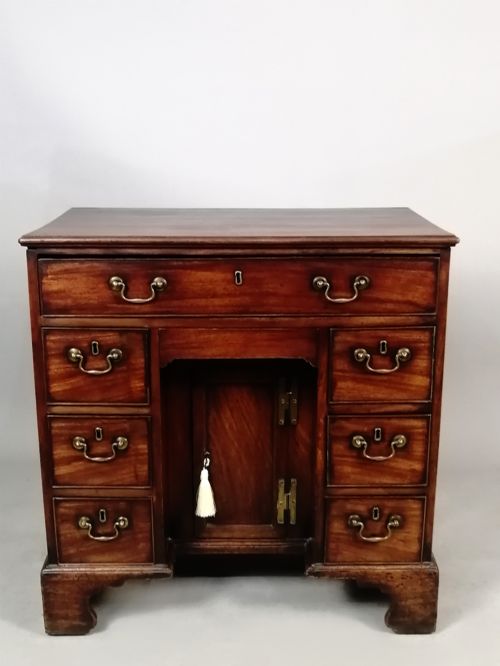
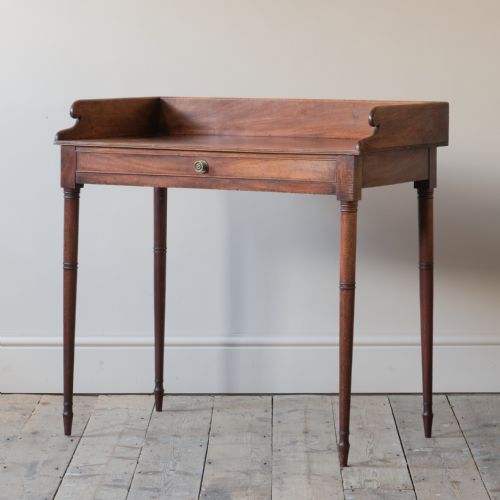
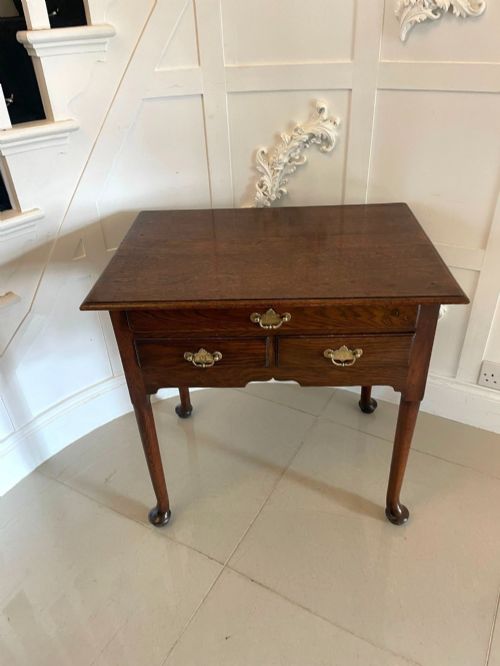
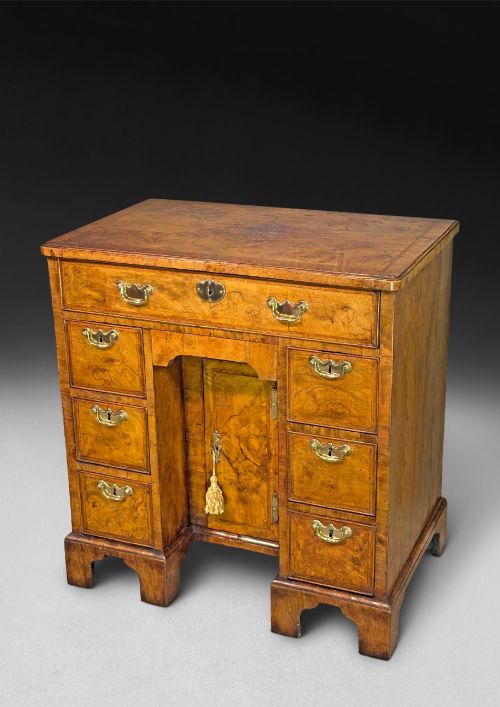
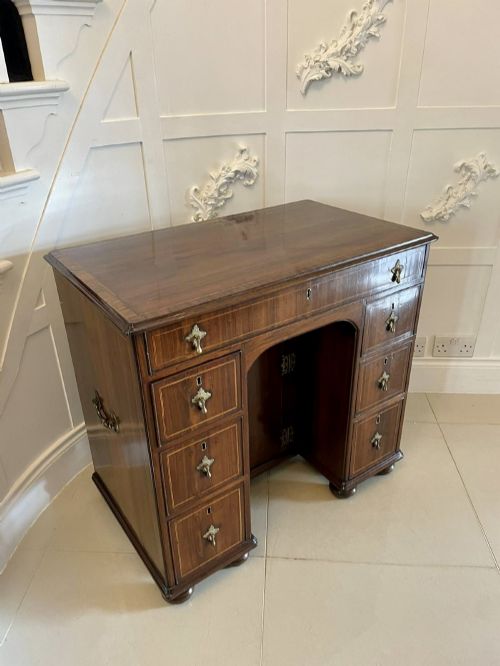
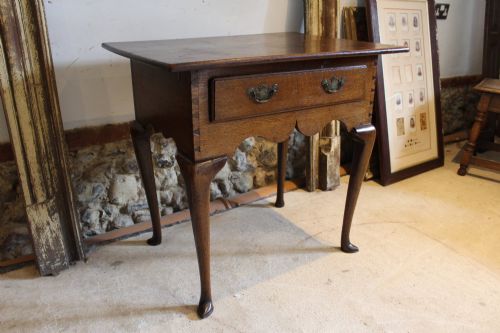
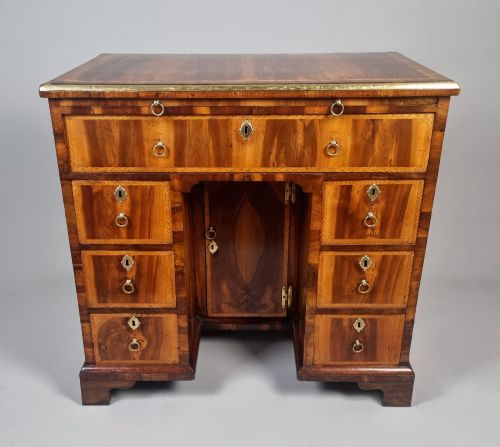
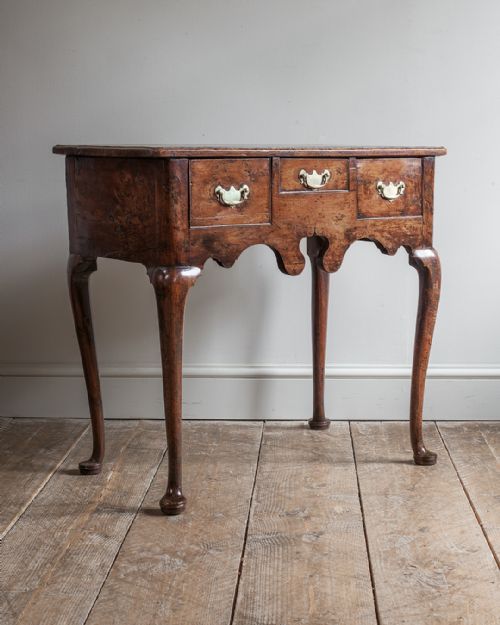
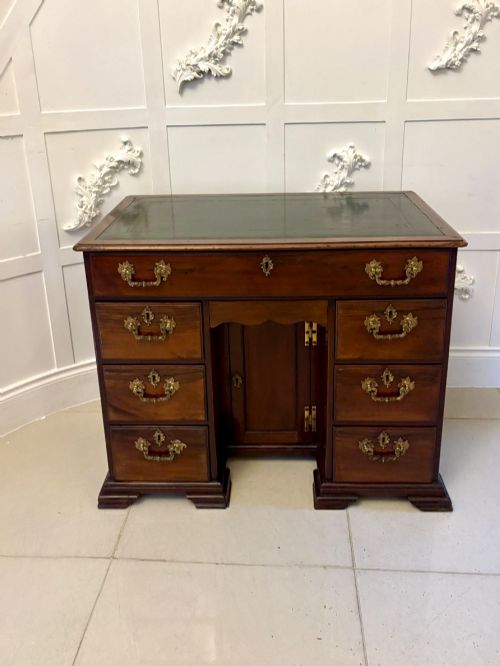
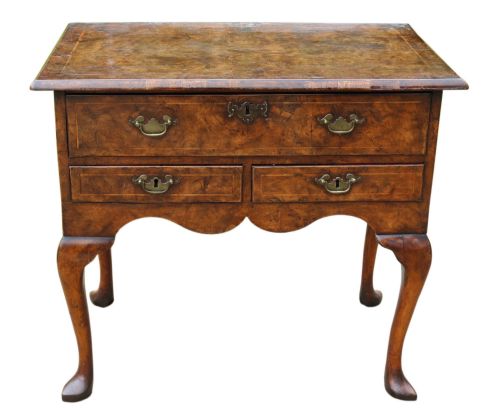
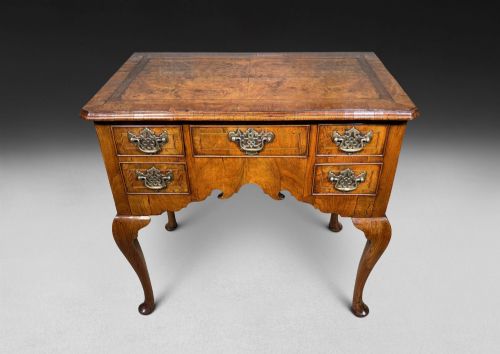
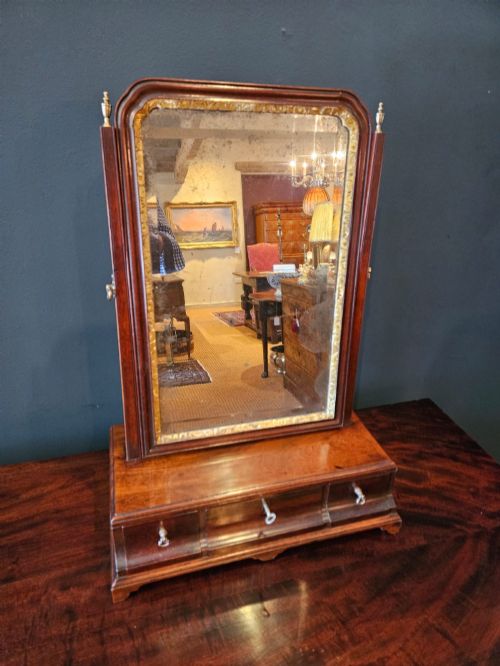
A george i dressing table typically manifests as a lowboy, kneehole desk, or a dedicated toilet mirror originating from the Georgian era. These forms serve private chambers, combining surface utility with concealed storage for personal belongings.
While the search invokes the reign of George I, the records show that pieces span into the George II and George III periods, alongside later mirrors and dressing sets. Buyers encounter lowboys in walnut and oak most frequently, alongside mahogany iterations from later decades.
Materials and Construction
Cabinetmakers utilised figured walnut, oak, mahogany, and occasionally yew wood or burr elm, often selecting veneers to create decorative patterns across drawer fronts. Timber selection dictates the visual weight and warmth of each surface.
Construction relies on traditional joinery, including dovetail joints for drawers and pegged framing. Brass handles and escutcheons punctuate the wood, while supplementary materials like glass appear in pivoting toilet mirrors.
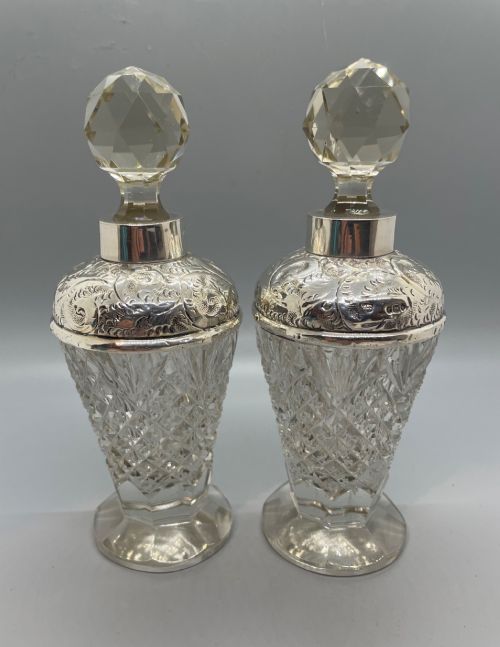
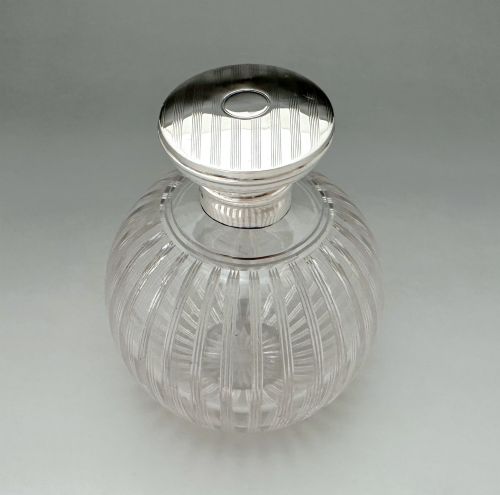
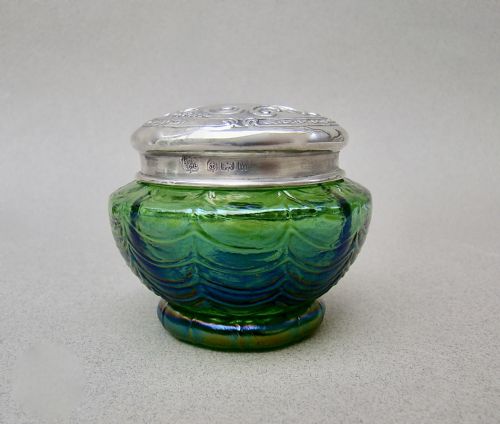
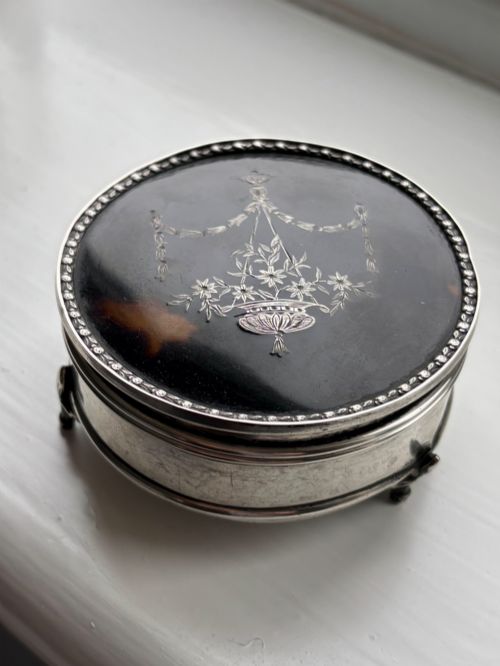
Some silver dressing table boxes retain traces of scented powder tucked deep inside their velvet linings.
Assessing Quality
Quality rests upon the selection of timber figures, such as highly figured walnut or burr elm, paired with the subtlety of cabinet proportions. Original brass hardware and untouched patination elevate an example significantly.
Refinement shows in the crispness of edge mouldings, the precision of dovetailing within the drawer boxes, and the harmonious integration of secondary woods. Lesser examples exhibit replaced elements or heavy restoration that masks the original timber grain.
A. J. Pepper & Co·Ollivant & Botsford·Paul Storr·Mappin & Webb·William Griffiths·Henry Matthews·Gillows
The George I Dressing Table Glossary
- Lowboy
- A small table with one or more rows of drawers, commonly used as a dressing table or side table during the eighteenth century.
- Kneehole desk
- A compact desk or dressing table featuring a central recessed space for the legs, flanked by pedestals of small drawers.
- Toilet mirror
- A small adjustable looking glass mounted on a box frame or stand, designed to sit atop a chest or dressing table.
- Burr elm
- A prized timber harvested from growths on elm trees, displaying swirling, knotty grain patterns utilised for decorative veneer.
George I Dressing Table: Frequently Asked Questions
What is the difference between a lowboy and a dressing table?
A lowboy is a low table with drawers that functions as a compact dressing surface or side table. Many eighteenth-century lowboys served specifically for grooming before dedicated dressing furniture became more specialised.
Larger dressing tables often incorporated compartments, folding sections, or associated tabletop mirrors. Both forms share the domestic role of personal preparation in the bedchamber.
How do I identify a George I piece?
George I pieces date from the early eighteenth century, typically between 1714 and 1727. They frequently feature figured walnut veneers, cabriole legs, and simple, restrained proportions without heavy carving.
Matching secondary woods like oak and pine inside the drawer construction helps confirm the period. Comparing the structural joinery to known examples secures the dating.
Where should I place a dressing table in a modern home?
These tables suit bedrooms or dressing rooms where their compact proportions provide a functional writing or grooming surface. Placing them near natural light enhances the timber grain and assists with daily use.
Pairing a lowboy with a simple stool or chair creates a functional station. Their modest scale allows them to fit comfortably into hallway spaces as side tables too.
Are the brass fittings original?
Original brasses show appropriate wear, patination, and match the shadow marks left in the wood over centuries. Replacement handles often leave filled screw holes behind the backplate.
Examining the interior of the drawer front reveals whether previous backplates had different dimensions. Retaining original hardware adds considerably to the integrity of the piece.