


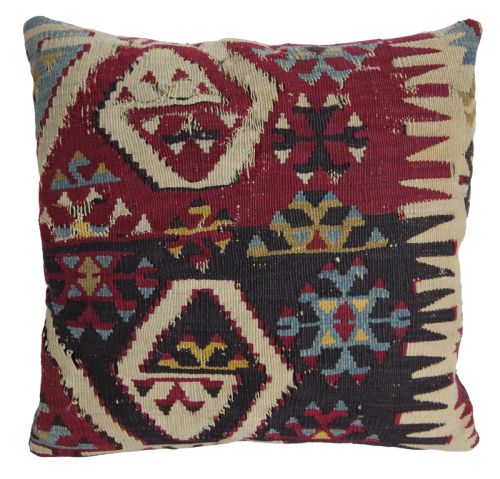

Geometric Woven Cushion Cover
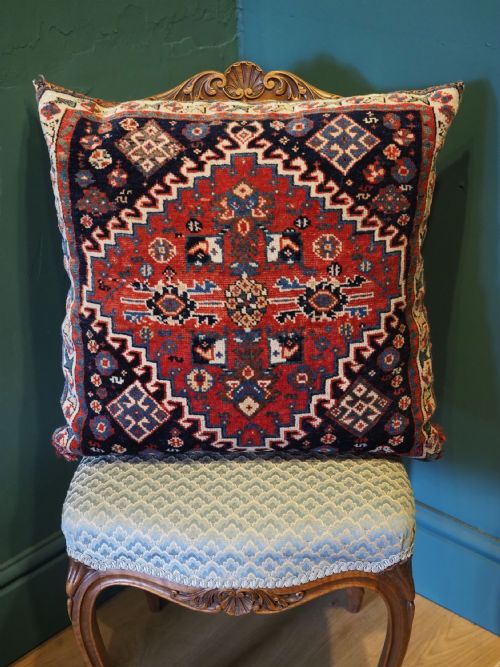
These geometric woven cushion cover pieces transform old tribal bags and kilims into sturdy, patterned furnishings for daily seating.
Geometric Woven Cushion Cover
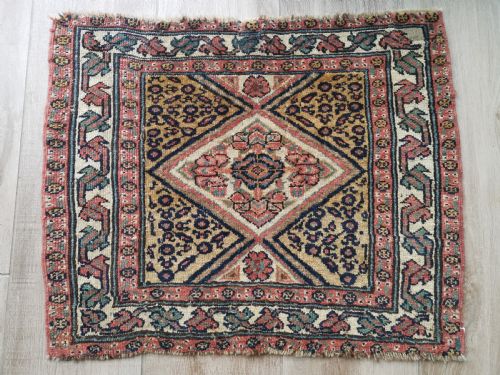
A geometric woven cushion cover draws upon nineteenth-century nomadic textiles, repurposing antique saddlebags, bag faces, and rug fragments into functional soft furnishings. These items originate predominantly from Persian, Anatolian, and Turkmen tribal groups such as the Qashqai, Shahsavan, and Baluch.
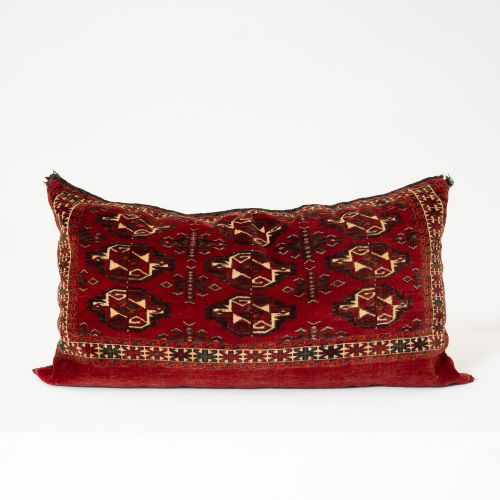
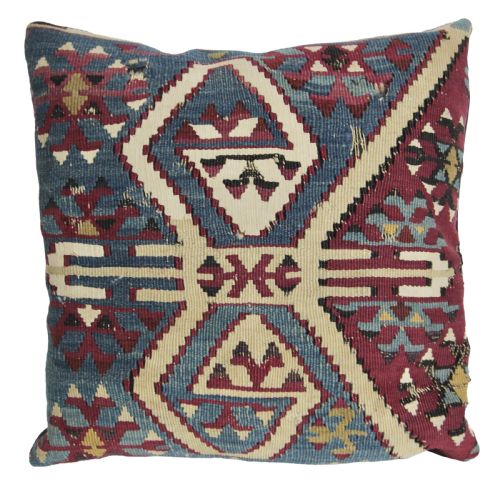
The pieces on this page appear primarily as constructed cushions or pillow forms made from historic flatweaves and pile-woven storage bags. Makers take vintage bag faces and kilim sections, mounting them to form durable cushions suitable for modern interiors.
Dating ranges from the early nineteenth century through to the early twentieth century, capturing a period when tribal weavers utilised traditional geometric motifs. Buyers encounter format variations including square cushions, oblong yastics, and half-saddlebag conversions.
Materials and construction
Makers of the original textiles relied on wool, hand-spun wool, and cotton, dyed with natural colorants to create deep, enduring tones. These fibres provide the dense pile and flatweave structures necessary for daily use on cushions.
Weaving techniques span simple kilim flatweaves, soumak wrapping, and detailed pile knotting, depending on the tribal origin of the bag face. Artisans constructed these utilitarian storage sacks for nomadic life, employing tight structures that endure centuries later as cushion covers.
Listings span periods from eighteen hundred to nineteen twenty, featuring wool, cotton, and natural dyes across Anatolian, Persian, and Turkmen traditions.
Judging the weave and material
Quality rests upon the fineness of the knotting or the tightness of the flatweave, alongside the clarity of the geometric pattern. Higher grades exhibit precise symmetry in tribal motifs and meticulous handling of structural joins during conversion.
The condition of the wool also determines standard, with lustrous, luminous fleece indicating superior animal fibres and careful natural dyeing. Wear remains acceptable on antique textiles, but integrity of the foundational weave separates robust examples from fragile fragments.
The Geometric Woven Cushion Cover Glossary
- Bag face
- The decorative front panel of a nomadic storage sack. These panels form the primary decorative surface of many tribal cushions.
- Kilim
- A flatwoven textile produced without a pile. Kilim cushions offer a smooth, durable texture with sharp geometric designs.
- Soumak
- A brocade-like flatweaving technique involving wrap-threads that create a textured, braided surface. This method adds structural strength and raised pattern work to bag faces.
- Yastic
- A traditional small Turkish sleeping pillow or cushion. These oblong formats often feature distinctive regional tribal patterning.
- Chuval
- A large Turkmen tent-storage bag. Fragments of these functional sacks frequently become decorative cushion covers.
Geometric Woven Cushion Cover: Frequently Asked Questions
How do I clean a vintage cushion cover?
Professional dry cleaning or gentle surface dusting preserves natural wool fibres and historic dyes.
Immersion washing risks dye migration and shrinkage in antique textiles, so specialists recommend minimal intervention.
What periods do these textiles cover?
The available selection spans the nineteenth century up to the early twentieth century.
Weavers produced these tribal objects during nomadic travels long before modern synthetic dyes entered local markets.
Are these covers made from authentic antique rugs?
Yes, artisans construct these cushions using genuine nineteenth-century tribal saddlebags, storage sacks, and rug fragments.
Each cover preserves authentic regional motifs originally woven by Persian, Anatolian, and Turkmen nomads.
How do I identify different tribal patterns?
Tribal designs reflect specific regional weaving traditions, such as Qashqai medallions or Shahsavan soumak banding.
Examining the colour palette, wool texture, and geometric arrangement points directly to the originating nomadic group.