
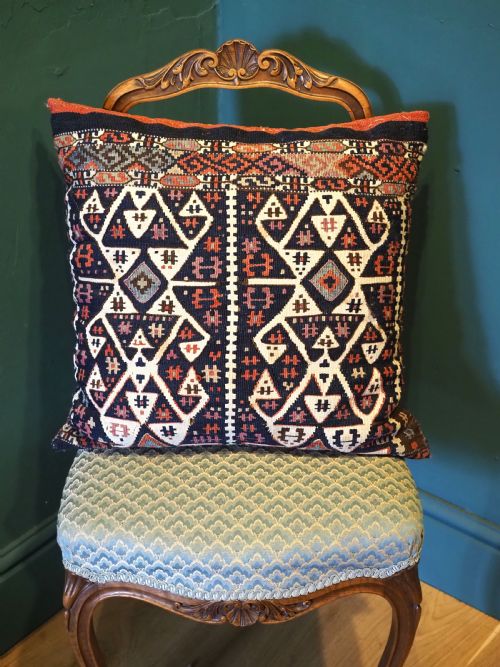


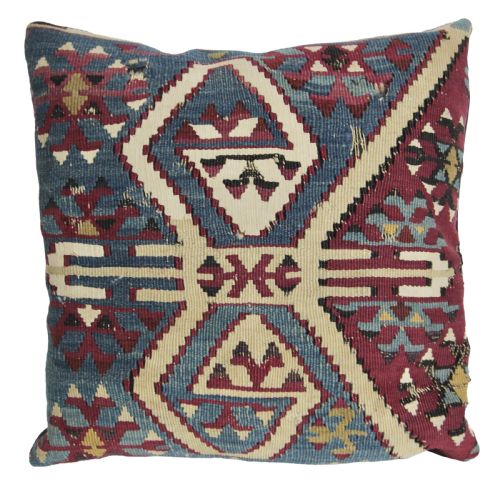

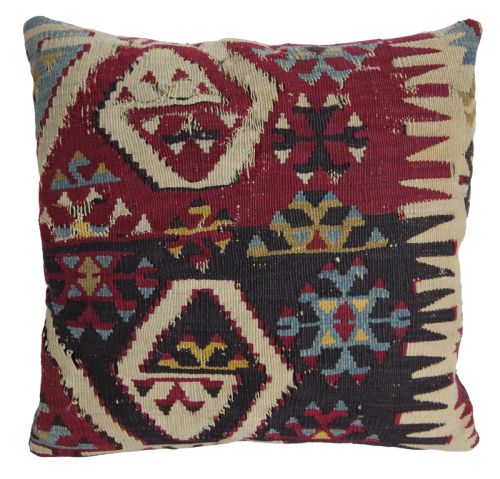


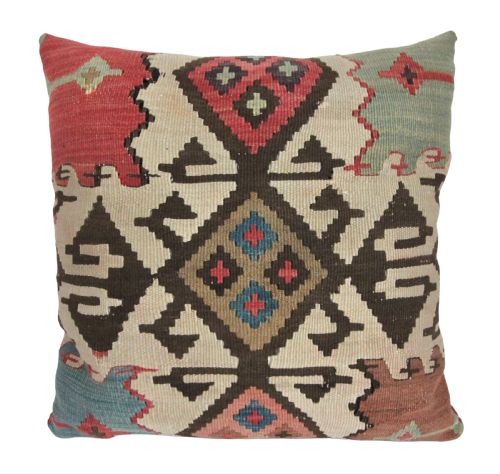
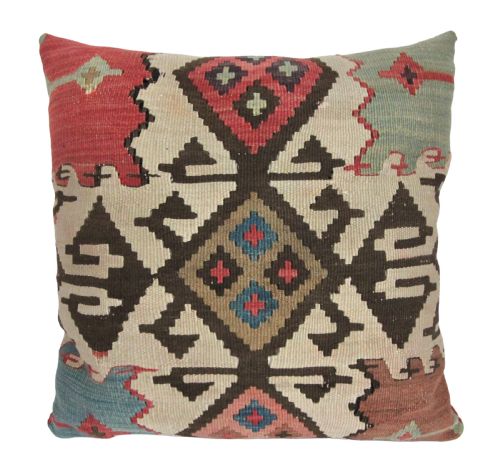


Geometric Turkish Kilim Pillow
These geometric turkish kilim pillow examples bring rugged Anatolian tribal history into modern rooms as striking, durable cushions.
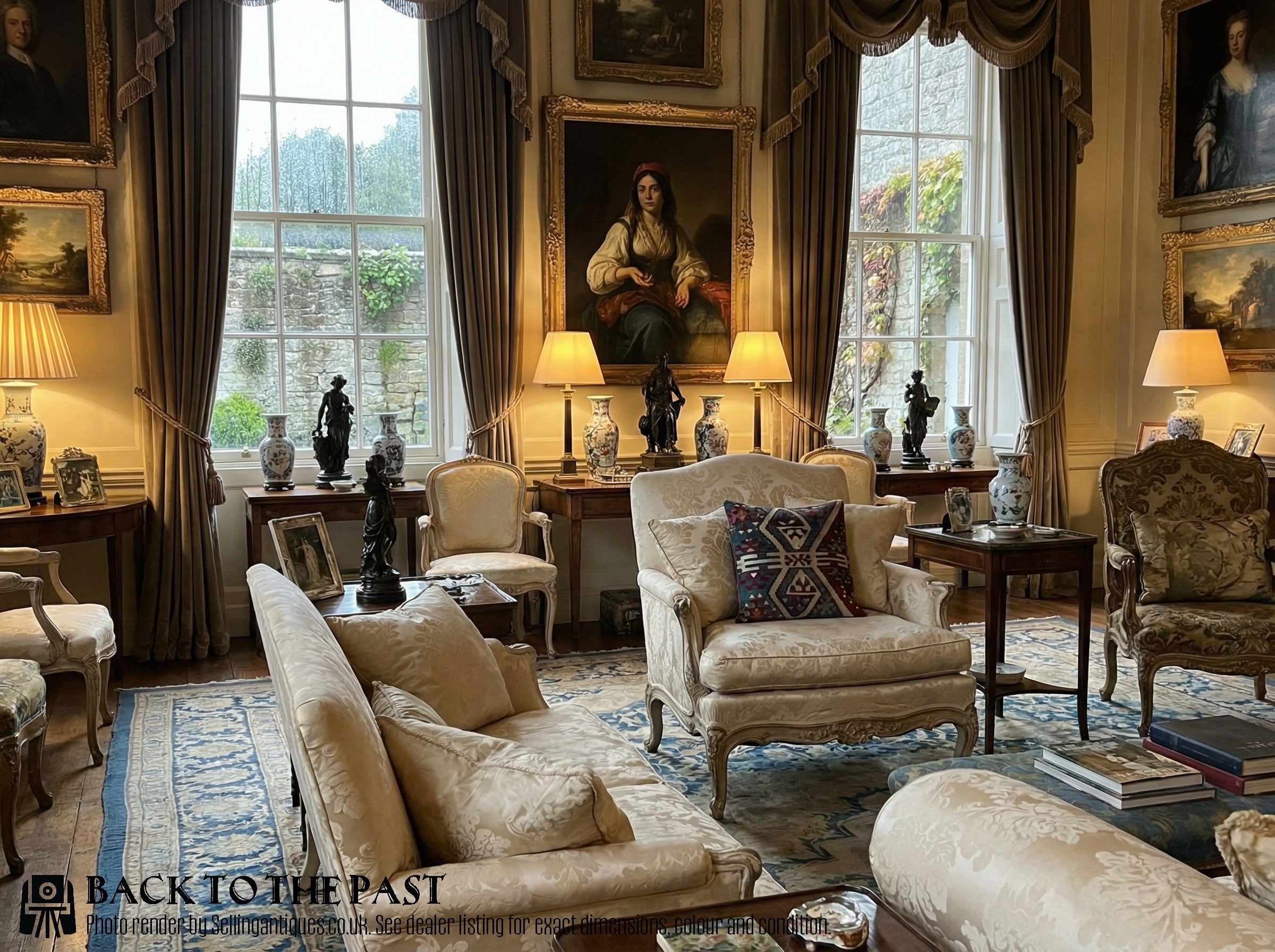
Geometric Turkish Kilim Pillow
A geometric turkish kilim pillow transforms flat-woven nomadic textiles into functional home accessories. These pieces utilise antique bag faces and rug fragments originating from Anatolian tribal traditions.
Buyers browsing this selection most frequently encounter antique kilim cushions dating from eighteen fifty up to nineteen twenty. These cushions repurpose authentic textiles like Malatya saddle bags and tribal bag faces into throw cushions and square floor pieces.
The aesthetic centres on traditional Anatolian patterns and tribal motifs created through flat-weaving techniques. Each cushion represents a fragment of nineteenth or early twentieth century nomadic heritage adapted for contemporary seating.
How they were made
The physical construction relies primarily on wool and cotton fibres woven by hand on traditional looms. Makers utilised durable wool for the patterned flat-weave surface to withstand daily nomadic use.
Nomadic weavers employed slit-tapestry techniques to achieve crisp, sharp geometric shapes without floating threads on the reverse. These traditional methods produced robust bag faces and textiles that later found new life as cushions.
Listings span four distinct periods: eighteen fifty, eighteen seventy, nineteen hundred, and nineteen twenty.
What varies in quality
Quality rests upon the tightness of the weave, the clarity of the geometric motifs, and the integrity of the surviving textile fragment. Finer pieces display precise symmetry and robust wool condition inherited from their original nomadic function.
The distinction between ordinary and superior examples lies in the survival of the original pileless flat-weave structure and the vibrancy of the wool. Pieces cut from sturdy saddle bags retain a denser texture than lighter decorative fragments.
The Geometric Turkish Kilim Pillow Glossary
- Kilim
- A flat-woven carpet or rug made in Turkey and neighbouring regions. This technique produces a smooth surface without pile.
- Anatolian Tribal
- Pertaining to the traditional nomadic and village cultures of the Anatolian peninsula. These groups developed distinct regional geometric design vocabularies.
- Bag Face
- The decorative front panel of a nomadic storage sack or saddle bag. These sturdy panels provide the patterned textile for many antique cushions.
- Slit-Tapestry
- A weaving technique where the weft threads are looped back at the boundary of a colour block. This creates small slits that define sharp geometric patterns.
Geometric Turkish Kilim Pillow: Frequently Asked Questions
How old are these kilim cushions?
The pieces span a chronological range from eighteen fifty up to nineteen twenty, incorporating authentic nineteenth and early twentieth century textiles.
These dates reflect the age of the original flat-woven Anatolian materials rather than the date of final cushion assembly.
What materials are used in them?
The construction relies on natural wool and cotton fibres chosen for durability and traditional aesthetic authenticity.
Nomadic weavers sourced local wool for the patterned flat-woven faces to handle rigorous everyday wear.
Where do the geometric patterns come from?
The designs originate from traditional Anatolian tribal and nomadic weaving traditions across Turkey.
These motifs passed down through generations reflect regional weaving practices and utilitarian bag face layouts.
How should I clean my kilim pillow?
Maintenance requires gentle care appropriate for antique wool and cotton textiles.
Professional specialist cleaning preserves the natural fibres and prevents damage to the historic flat-weave structure.