


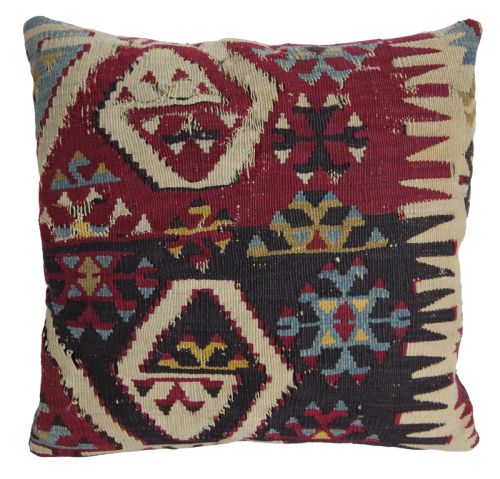


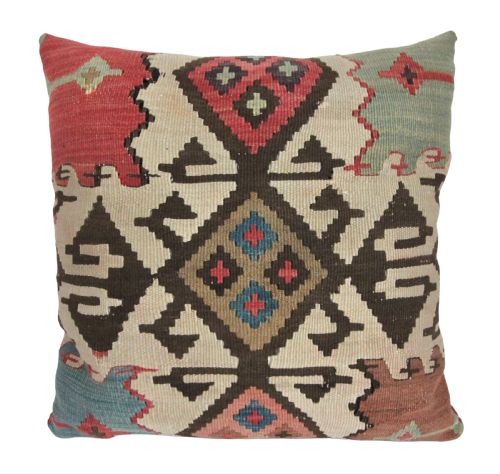

Vintage Oriental Pillow Cover
A vintage oriental pillow cover brings nomadic textile history into a modern room through flatweave fragments and repurposed tribal bags.
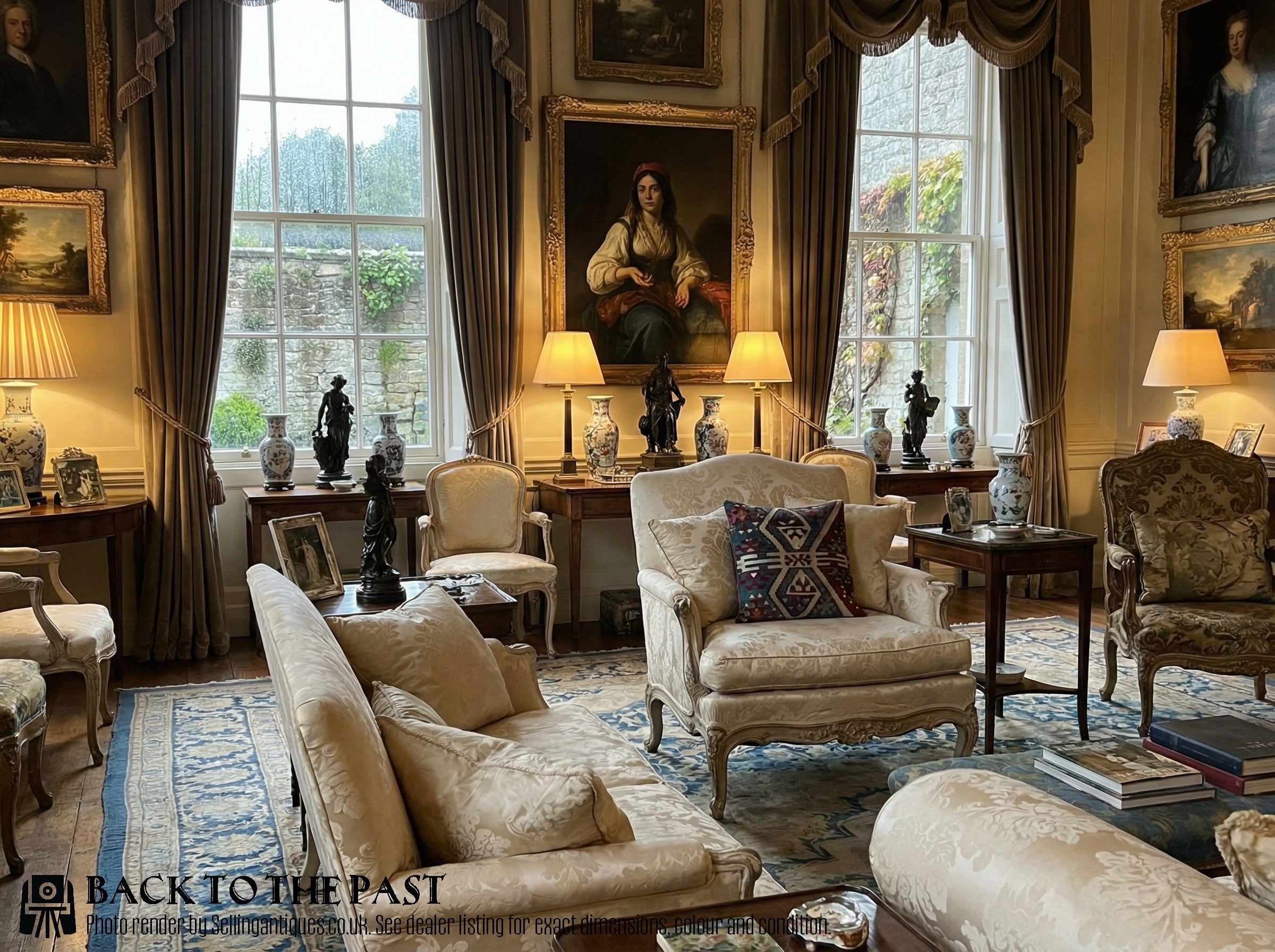
Vintage Oriental Pillow Cover
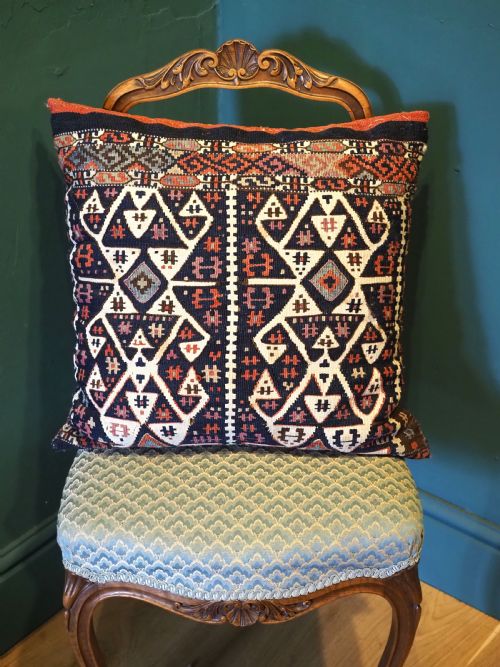
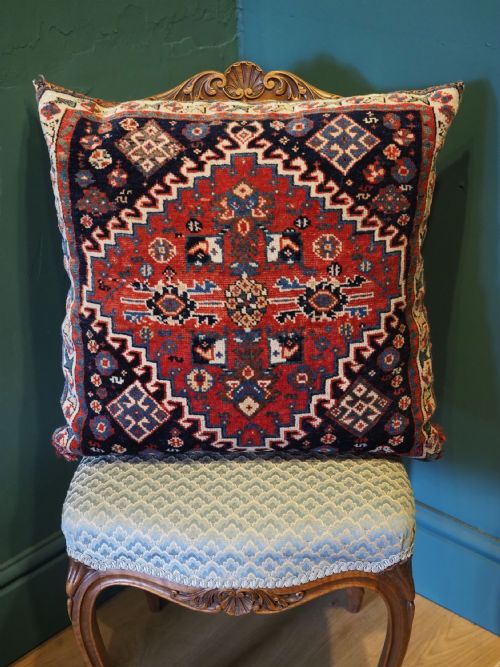
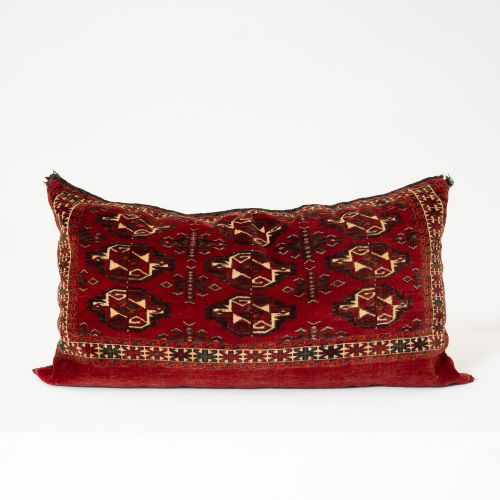
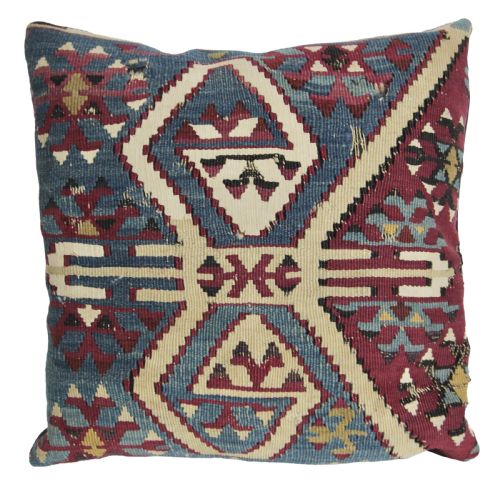
A vintage oriental pillow cover encountered here typically takes the form of a repurposed kilim, saddle bag, or storage bag face. These pieces originate from regional weaving traditions such as Anatolian, Persian, Turkmen, and Baluch groups, spanning the nineteenth and early twentieth centuries. The objects function today as scatter cushions and throw pillows while retaining their original tribal textile construction.
The most common formats on this page are kilim cushions and bag face cushions fashioned from wool and cotton. Items date across various periods from the mid-nineteenth century through to the early twentieth century, including specific pieces designated as Malatya, Qashqai, Ersari Beshir, and Kurdish examples.
Assessing the examples
Quality in these cushions rests on the integrity of the original weave and the preservation of the tribal design. Pieces exhibiting tight, even hand-weaving and clear graphic motifs from identified traditions hold greater visual strength.
The character of the wool and the depth of the palette influence the overall standard of the piece. Well-preserved bag faces and kilim remnants demonstrate the skill of the original weaver more distinctly than heavily worn or clumsily adapted fragments.
Nomadic weavers packed their worldly goods into the very bags that now rest quietly on your sofa as cushions.
The Vintage Oriental Pillow Cover Glossary
- Kilim
- A flatwoven carpet or rug produced without a pile. These textiles form the main flat surface of many traditional cushions.
- Bag face
- The decorative front panel of a nomadic storage bag or saddle bag. These panels are frequently converted into cushion covers.
- Chuval
- A large tent storage bag made by Turkmen weavers. Surviving fragments often find new life as decorative pillows.
- Saddle bag
- A paired bag used for transport on animals, woven in tribal techniques. Sections of these bags provide durable materials for cushions.
- Flatweave
- A textile made by interweaving warp and weft threads without knotting. This technique defines traditional kilims and bag faces.
Vintage Oriental Pillow Cover: Frequently Asked Questions
Are these cushions made from authentic old textiles?
The pieces utilise genuine nineteenth and early twentieth century tribal weavings, such as kilims and bag faces, adapted into cushion form.
This conversion allows historic nomadic textiles to be used in contemporary interiors while preserving their original hand-woven character.
How do I care for a wool kilim cushion?
Wool and hand-spun wool textiles require gentle treatment to maintain their fibres over time. Professional cleaning is recommended for antique items.
Avoiding direct, harsh sunlight helps protect the natural dyes used in traditional Anatolian and tribal weaving.
What is the difference between a kilim and a bag face cushion?
A kilim cushion is constructed from flatwoven rug fragments without pile, showing geometric slit-weave patterns. A bag face cushion comes from the front panel of a nomadic storage sack.
Both styles originate from similar tribal traditions but offer distinct surface textures and structural motifs.
Which tribal groups made these textiles?
The inventory includes examples attributed to Anatolian, Qashqai, Turkmen, Baluch, and Kurdish weavers. Each group utilised specific regional patterns and colour palettes.
Items range from Malatya kilims to Ersari Beshir storage bags and Kurdish bag faces.