

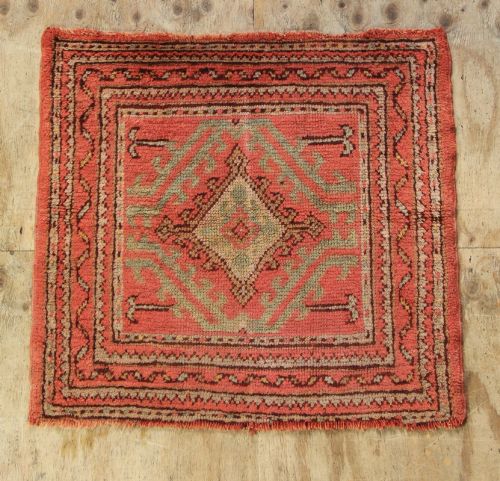


Geometric Turkish Carpet
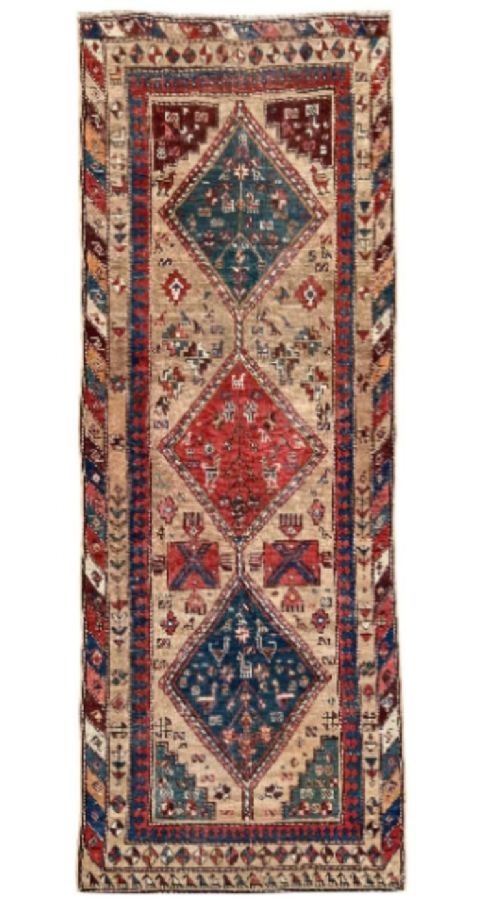
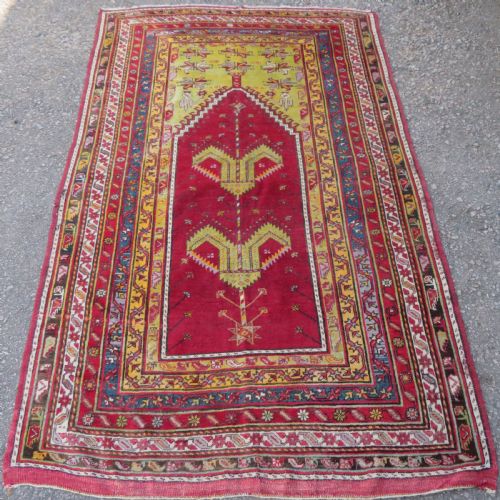
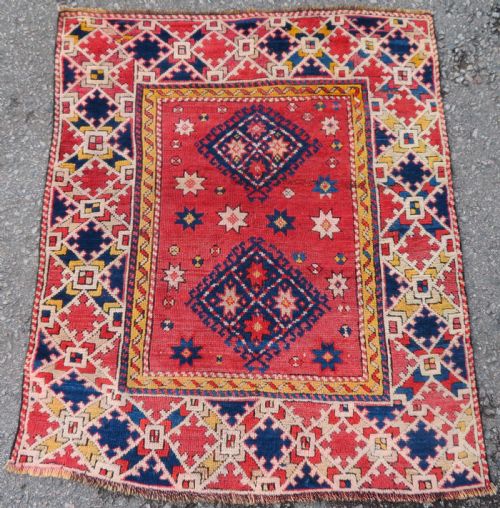
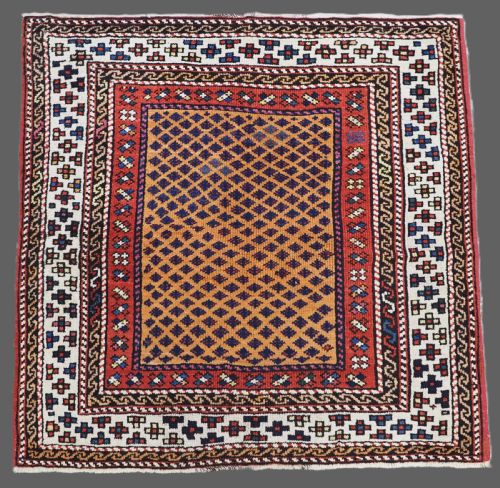
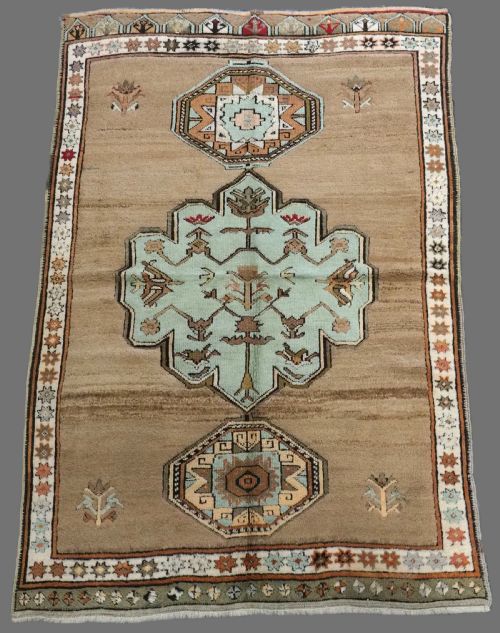
When you search for a geometric turkish carpet, you step into a rich tradition of village and tribal weaving defined by stark medallions, lattice patterns, and angular Anatolian motifs.
Geometric Turkish Carpet
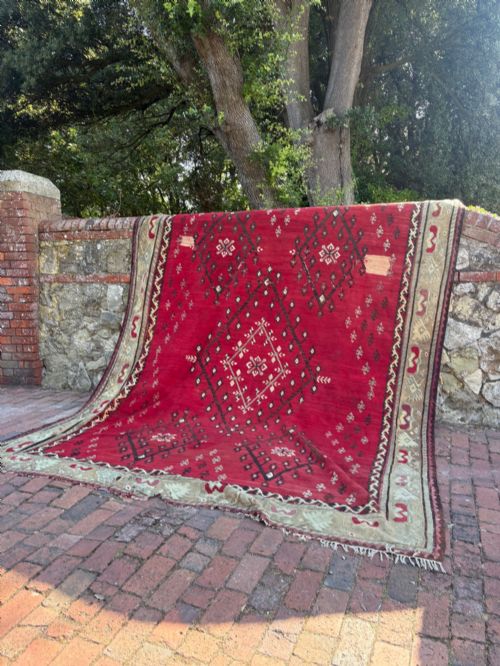
Buyers encounter formats varying from square accent pieces to room-sized carpets, often woven in two parts or featuring distinct tribal markers like star medallions and lattice fields. These floor coverings bridge the gap between utilitarian housewares and striking folk art.
The aesthetic relies on rectilinear precision, where diagonal lines and repeated angular motifs take precedence over floral curves. Whether originating from an urban workshop or a rural loom, each piece reflects the specific geometric vocabulary of its district.
Materials and construction
Weavers relied almost exclusively on natural materials, utilising standard wool, hand-spun wool, and camel wool for the pile and foundation, often paired with cotton for structural warp and weft threads. Hand-spinning imparted subtle irregularities in thickness, giving the pile a varied texture that catches light across the surface.
Production methods encompassed both pile knotting and flatweaving techniques, such as slit-weave kilims and half-kilim runners. The dyestuffs applied to these wools yielded deep, muted tones and soft colours that mellow gracefully over decades of use.
Listings span production dates from the early nineteenth century through the 1930s, highlighting wool, cotton, and camel wool foundations.
Assessing craftsmanship
Quality rests upon the tightness of the knotting or the crispness of the flatweave, alongside the stability of the wool foundation. Finer examples maintain structural integrity and precise geometric alignment even when executed on rustic village looms.
The harmony and preservation of the palette dictate the visual success of the piece. A balanced interaction between soft background tones and saturated geometric motifs separates standard domestic items from superior textile examples.
Konya Karapinar·Kirsehir workshop·Milas village·Oushak production
The Geometric Turkish Carpet Glossary
- Kilim
- A flatwoven textile produced without a pile, utilising interlocking weft techniques to create sharp geometric patterns. These pieces serve as both floor coverings and light-duty wall hangings.
- Prayer rug
- A small format textile featuring a distinct mihrab or niche design at one end, traditionally used for daily Islamic prayer. Collectors prize them for their concentrated symmetrical layouts.
- Runner
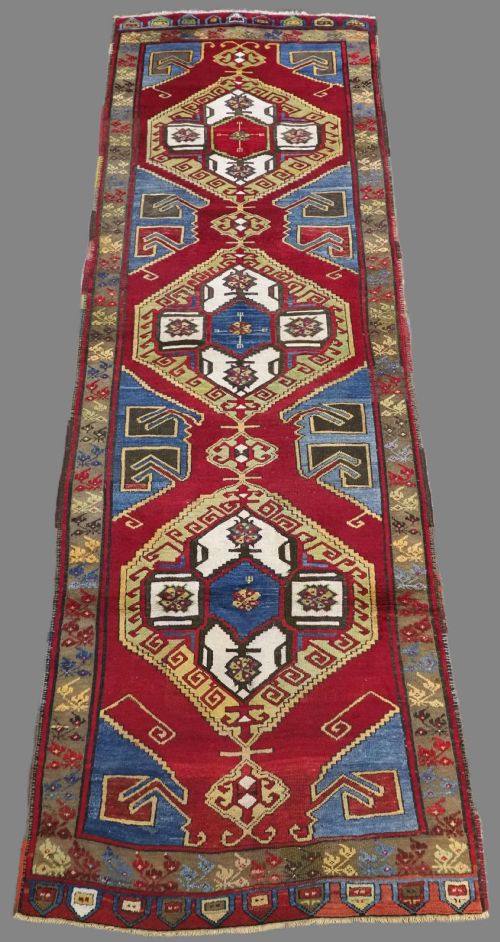
- A long, narrow carpet format designed for hallways, corridors, or alongside larger furniture pieces. These often display a continuous sequence of central medallions.
- Yastic
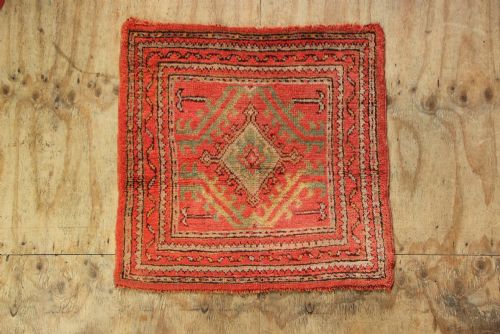
- A small Turkish cushion cover or pillow face, typically dating to the nineteenth century or earlier. They represent miniature versions of larger carpet designs.
- Medallion
- A central ornamental motif dominating the field of the carpet or rug. In Anatolian weaving, these frequently take angular, geometric forms.
Geometric Turkish Carpet: Frequently Asked Questions
How do I identify a village rug?
Village rugs display coarser weaves, heavier hand-spun wool, and less rigid symmetry than city-produced counterparts. Their designs lean heavily into folk traditions, utilising local geometric symbols passed down through generations.
Look for charming irregularities in the borders and abrasash in the wool colour, which indicate small dye lot changes typical of home-based production.
What is a prayer rug used for?
A prayer rug was traditionally laid on the floor to provide a clean surface for ritual daily prayers. The pointed arch design directs the user toward Mecca during worship.
Today, collectors appreciate these pieces as compact works of art that display some of the finest regional weaving and symbolic geometry.
How do I care for an antique wool carpet?
Antique wool rugs require gentle maintenance, starting with regular, low-suction vacuuming without a rotating brush bar. Keeping the textile out of direct sunlight prevents natural dyes from fading prematurely.
Professional cleaning by a specialist familiar with vintage oriental textiles is essential to preserve the structural integrity of the foundation.
Are flatwoven kilims durable?
Flatwoven kilims lack a pile, making them lighter and thinner than knotted carpets. They withstand normal foot traffic well when placed over a quality rug pad to prevent slipping and friction against the floor.
Their sturdy foundation of hand-spun wool and cotton handles daily use admirably, provided they are rotated periodically to ensure even wear.