



Geometric Tribal Rug Fragment
A geometric tribal rug fragment holds the compressed narrative of nomadic life in its wool and dye.
Geometric Tribal Rug Fragment
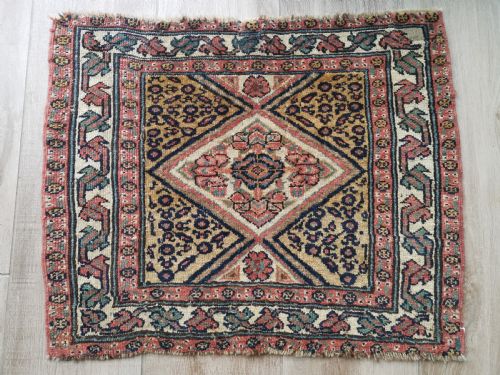
When you search for a geometric tribal rug fragment, you are looking at remnants of nomadic and village weaving traditions from Persia and the Caucasus. These survivals typically take the form of bag faces, storage pouch panels, and runner remnants rather than complete floor coverings. The pieces you are most likely to meet on this page span the mid-nineteenth century to the early twentieth century.
Makers include regional nomadic groups such as the Afshar, Baluch, Jaf, Kurdish, Qashqa'i, Shahsavan, and Tekke Turkmen tribes. Each group brought distinct regional palettes and structural habits to their looms. A fragment lets you study the core design vocabulary of these traditions without needing the scale of a full carpet.
Materials and construction
The primary material is wool, frequently hand-spun, paired with cotton foundations in certain regional weaving traditions. Natural dyes provide the colour palette, yielding tones that settle with age. Weavers knotted or flat-wove these textiles on portable looms set up in camps and villages.
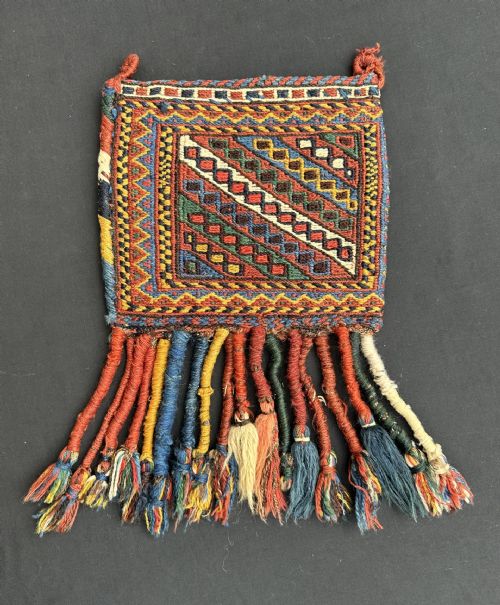
Structures include sumac technique, hand-knotted pile, and slit-tapestry weave. These constructions were made for hard daily use as transport bags, bedding sacks, and storage pouches, which accounts for their survival in fragment form today.
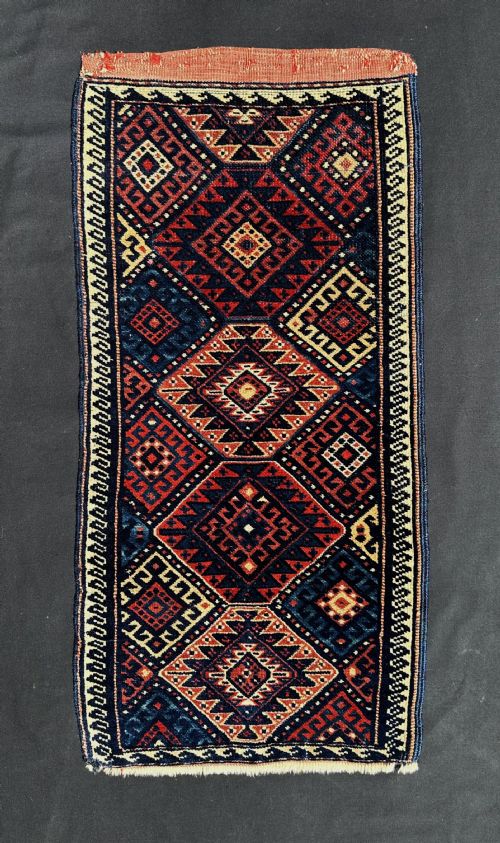
Object types include bagfaces, mafrash panels, pillow covers, and runner fragments from Persian and Caucasian groups.
Quality and handling
Quality rests in the handling of the wool and the depth of the natural dyes. Luminous, high-lanolin wool absorbs light differently across the surface, giving the geometric motifs movement. The crispness of the drawing and the saturation of the palette elevate certain pieces above standard utility items.
The integrity of the remaining structure dictates the strength of a fragment. Tightly packed knots or precise flatweave work indicate disciplined tribal production. The visual punch of a well-balanced medallion or repeating guls remains central to the success of any piece.
The Geometric Tribal Rug Fragment Glossary
- Bagface
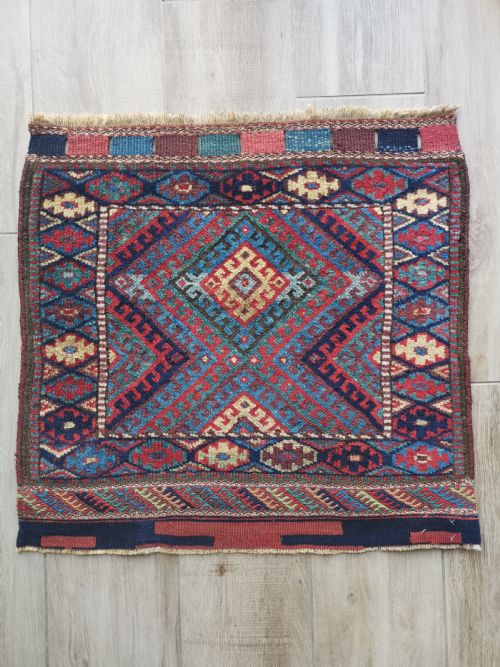
- The decorative front panel of a nomadic transport or storage bag. These faces were sheared from their utilitarian backs when worn, preserving the finest weaving.
- Soumak
- A wrap-faced, non-pile flatweaving technique that creates a durable, textured surface with clear geometric lines. Shahsavan weavers utilised this method for storage chests and panels.
- Gul
- A repeating, octagonal medallion design used extensively by Turkmen and related tribal weavers. Each design relates to specific clan lineages.
- Khorjin
- A traditional pair of saddlebags used for transport on animals. Surviving fragments usually represent one half of the original double structure.
Geometric Tribal Rug Fragment: Frequently Asked Questions
What is a bagface fragment?
A bagface fragment is the decorative front portion of a nomadic storage or transport sack that has been separated from its backing. These sections preserved the most intricate knotting and design work while the utility backs endured heavy wear.
Nomads utilised these bags daily in camps and during migrations before they were eventually divided and collected as textiles.
How do I hang a textile fragment?
Mounting a textile requires spreading the weight evenly across the piece rather than pinning it at single points. Conservation-grade Velcro stitching along a top sleeve allows a backing board to support the fabric safely.
Keep textile fragments away from direct sunlight to protect natural dye compounds from fading over time.
How can I tell tribal groups apart?
Distinguishing tribal groups depends on observing structural habits, wool qualities, and specific motif arrangements. Afshar and Qashqa'i pieces often show distinct medallion layouts, while Turkmen weaving relies heavily on repeating guls.
Palettes also offer clues, as regional dyers drew on local plant and mineral sources available to their specific provinces.
Are these fragments cut from larger carpets?
Most fragments on this page originate from functional bags, salt bags, and storage pouches rather than large floor carpets. These items were constructed as smaller objects from the outset, designed for daily nomadic life.
When a utilitarian sack wore out along the seams, the decorative face was frequently preserved while the damaged parts were discarded.