
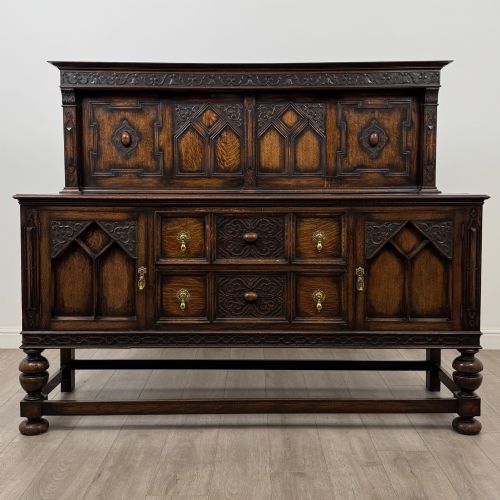
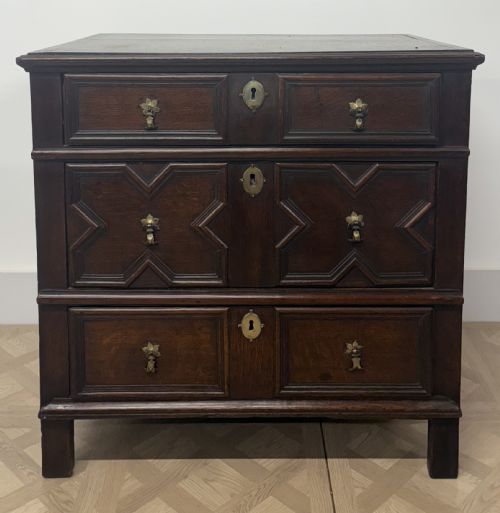
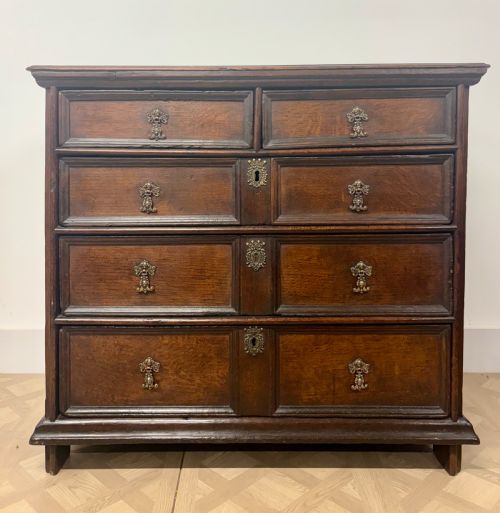
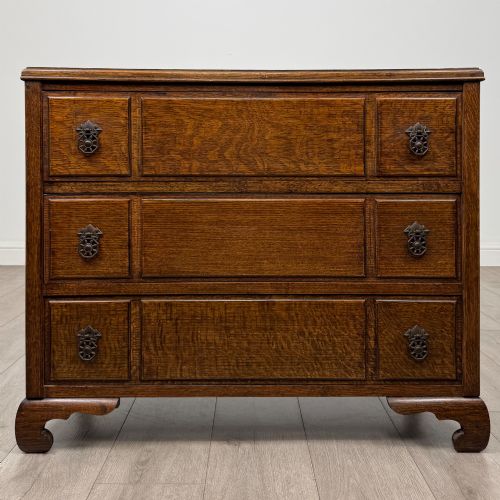




Geometric Panel Oak Dresser
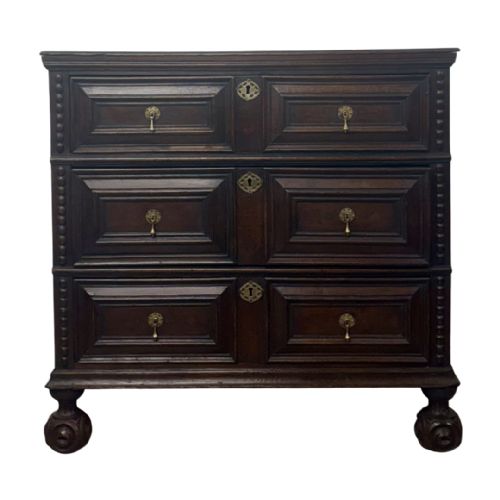
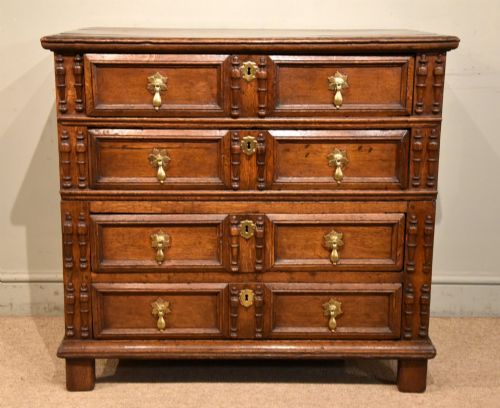
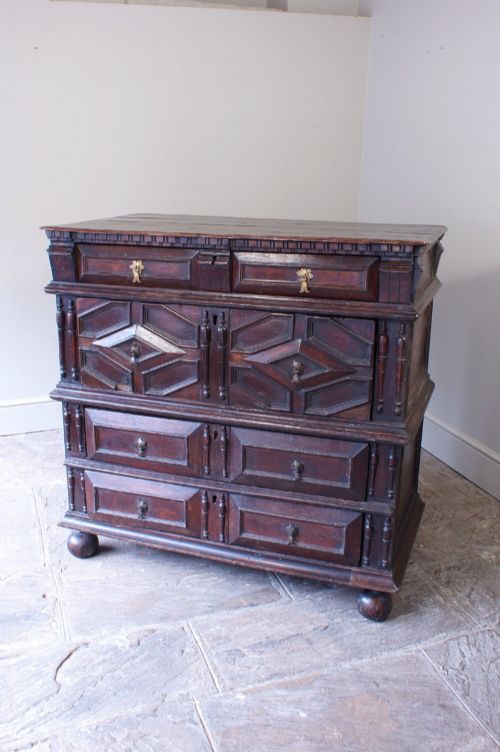
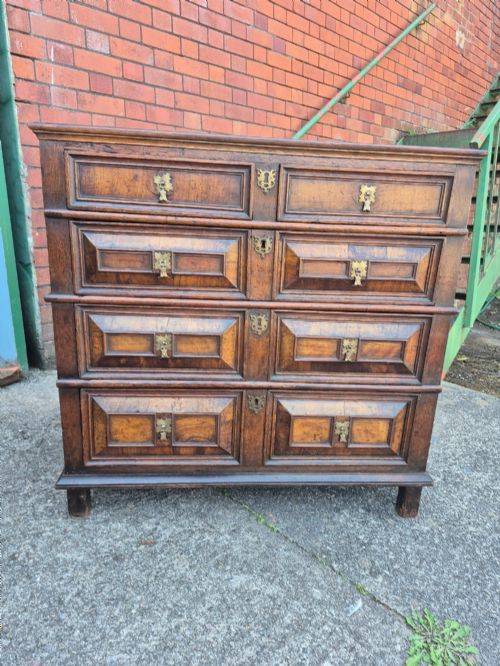
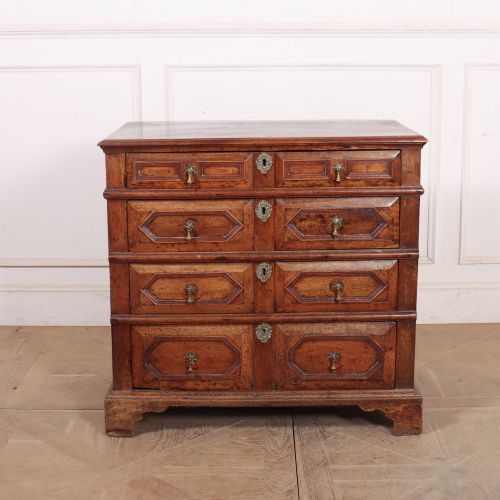
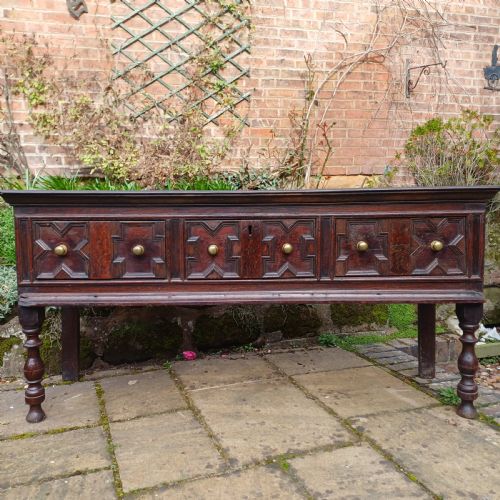
A geometric panel oak dresser brings together sturdy seventeenth-century timbers and tactile raised mouldings that instantly ground a room.
Geometric Panel Oak Dresser
A geometric panel oak dresser represents a sturdy form of storage that combines deep drawers or cupboard bases with rich surface detailing. When searching for a geometric panel oak dresser, buyers encounter authentic seventeenth-century examples alongside later revivals from the Edwardian era and the nineteen-twenties and thirties.
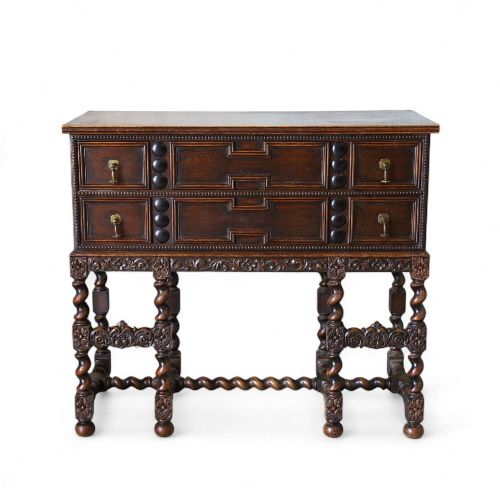
The selection ranges from low dresser bases and servers to tall chests of drawers and two-part cabinets. Seventeenth-century originals stand alongside Carolean revival pieces, offering buyers a choice between centuries-old patina and later craftsmanship.
Oak dominates the selection, frequently paired with secondary woods like walnut, fruitwood, and snakewood on the drawer fronts. These pieces function primarily as practical storage items that also serve as striking focal points in a dining room or hallway.
How they were made
Cabinet makers constructed these pieces predominantly from solid oak, utilising heavy timbers for the main frames and structural carcases. Drawer fronts and panels often received applied mouldings in geometric patterns, sometimes contrasting oak with walnut, fruitwood, or snakewood.
Joinery techniques relied on pegged mortise and tenon joints to secure the heavy frames together without modern adhesives. Surfaces were finished by hand, leaving tool marks and a rich grain that deepened in tone over centuries of use.
Listings span from the seventeenth century through to the nineteen-thirties, featuring oak alongside walnut, fruitwood, and brass hardware.
What varies in quality
The standard of a piece depends heavily on the crispness of the applied geometric mouldings and the complexity of the timber selection. Original seventeenth-century examples with intact walnut or fruitwood veneers command attention for their survival and intricate surface depth.
Proportion and structural integrity separate simpler utility pieces from finer decorative servers and dresser bases. Later revivals vary according to the depth of the carving and the fidelity of the historic revival style applied to the oak carcase.
The Geometric Panel Oak Dresser Glossary
- Geometric panel
- A decorative arrangement of raised wooden mouldings applied to drawer fronts and doors in repeating rectilinear shapes. This technique created dramatic shadow and texture on seventeenth-century furniture.
- Dresser base
- The lower section of a kitchen or dining room dresser, often fitted with drawers and cupboards without the upper plate rack. These sturdy units function well as sideboards.
- Carolean revival
- A nineteenth or twentieth-century furniture style that copies the ornate carving, barley-twist supports, and rich surfaces of the late seventeenth-century reign of Charles II.
- Two-part chest
- A modular chest of drawers constructed in two separate stacked sections to ease transportation. This form frequently appears in seventeenth-century oak furniture.
- Snakewood
- A dense, heavy exotic wood featuring distinctive mottled markings resembling snakeskin, utilised for decorative contrasting in seventeenth-century cabinet making.
Geometric Panel Oak Dresser: Frequently Asked Questions
How do I spot a seventeenth-century original?
Examine the construction methods, timber patination, and tool marks visible on the inner carcase and drawer linings. Original pieces display hand-cut joinery and centuries of natural wear that modern reproductions cannot replicate.
Check for consistency in the wood species and ensure the hardware matches the period of the main structure.
Where should I place a dresser base?
A dresser base fits well in a dining room, hallway, or spacious living area where its storage capacity and surface can be utilised daily. The deep drawers accommodate tableware, linens, or household items.
Ensure the room maintains stable humidity levels to protect the historic oak timbers from drying out.
What is the difference between an original and a revival piece?
Original pieces date from the seventeenth or early eighteenth centuries, carrying the authentic wear and construction methods of that era. Revival pieces were manufactured during the Victorian, Edwardian, or interwar periods in imitation of those older styles.
Revival items often feature cleaner internal mechanics while adopting the distinctive geometric mouldings of the earlier epoch.
How do I care for antique oak furniture?
Maintain the wood by applying a quality beeswax periodically to nourish the dry oak and preserve the historic finish. Avoid placing the furniture near direct heat sources or in strong sunlight.
Dust regularly with a soft, dry cloth to prevent particulate accumulation in the deep geometric panel crevices.