
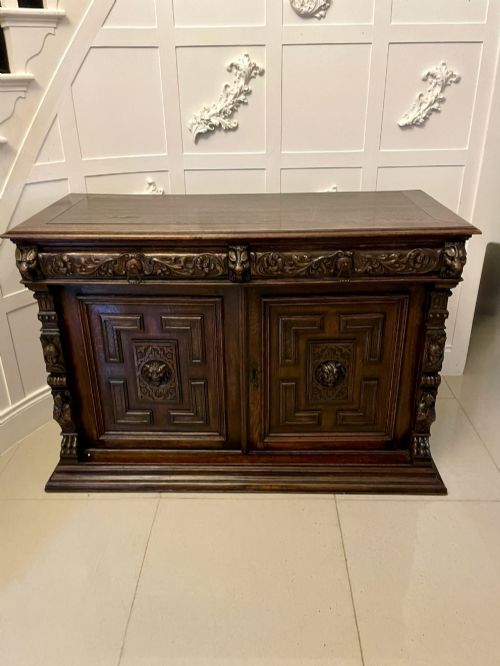
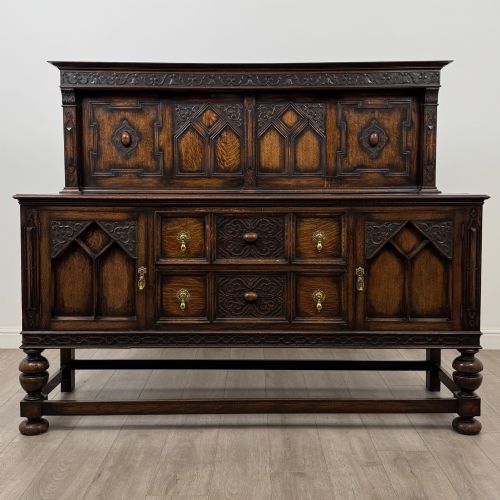
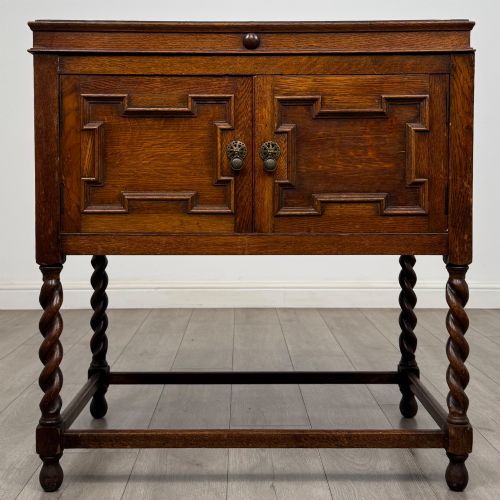
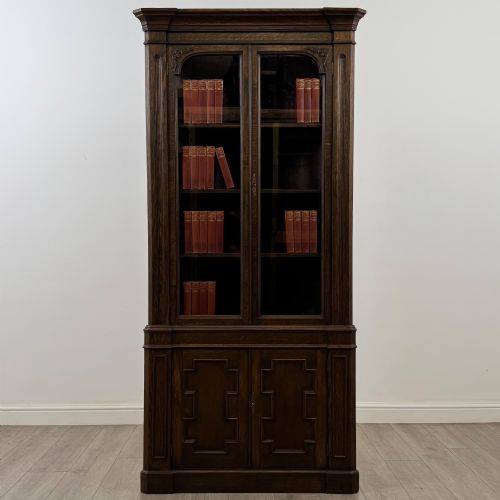

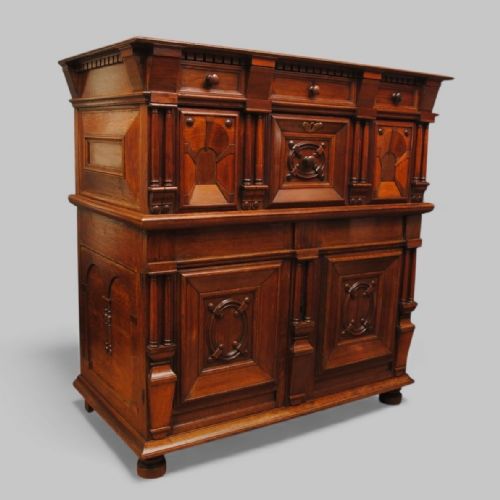


Geometric Panel Oak Cupboard
These geometric panel oak cupboard pieces offer robust timber storage with structured surface ornament, drawing buyers who appreciate seventeenth-century and revival design.
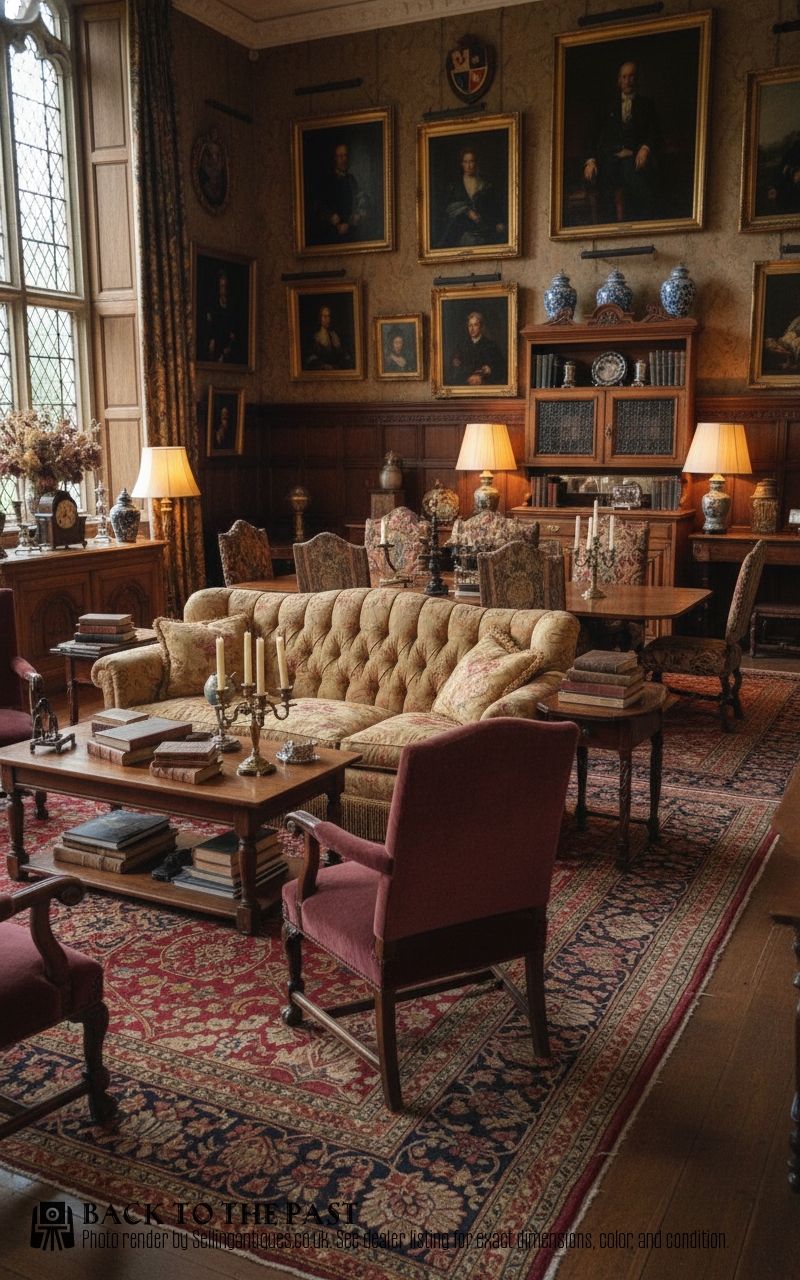
Geometric Panel Oak Cupboard
When searching for a geometric panel oak cupboard, a buyer encounters forms ranging from compact side cabinets and table cabinets to substantial sideboards, dressers, and two-part cupboards. The examples span periods from the seventeenth century through the eighteenth and nineteenth centuries, into the Edwardian era and nineteen-twenty.
The most frequent versions met on this page are Jacobean style oak dressers, sideboards, and cupboards dating from the Edwardian period and nineteen-twenty, alongside eighteenth-century dresser bases and seventeenth-century chests.
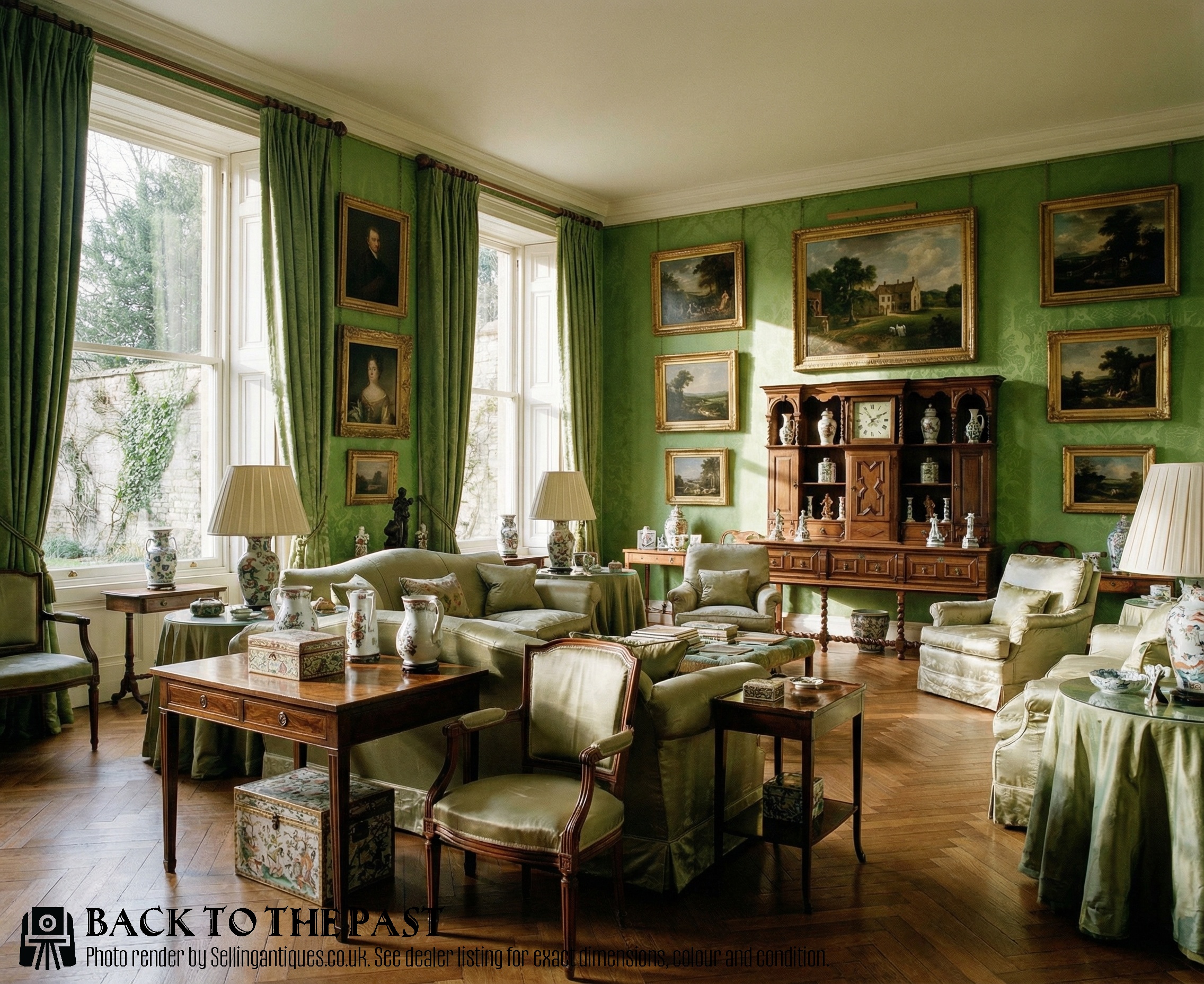
How they were made
Construction relies primarily on solid oak, frequently paired with secondary or decorative timbers such as walnut, fruitwood, and snakewood, alongside oak veneer. Joinery incorporates moulded fronts and geometric panel configurations.
Surface details utilise applied mouldings to create structured patterns on doors and drawer fronts. Hardware incorporates brass fittings, while glazing appears in leaded glass door variants.
Listings include oak, walnut, fruitwood, snakewood, brass, and leaded glass across seventeenth-century to nineteen-twenty periods.
What varies in quality
Quality rests on the crispness of the moulded geometric panels and the thoughtful integration of contrasting timbers like fruitwood and snakewood. Pieces that retain their original brass hardware and well-figured oak surfaces stand higher in the range.
Structural harmony between the primary timber carcase and applied decorative elements determines the overall standard of the cabinetwork. Finer examples display precise joinery without crude alterations to the original panel layout.
The Geometric Panel Oak Cupboard Glossary
- Geometric panel
- A decorative arrangement of raised or sunken mouldings applied to doors and drawer fronts in symmetrical patterns. This technique defines the visual rhythm of seventeenth-century and revival case furniture.
- Jacobean style
- A revival aesthetic drawing on early seventeenth-century English design characteristics. Pieces in this style typically feature heavy mouldings, panelled construction, and dark oak finishes.
- Snakewood
- A dense, heavily figured exotic timber utilised for contrasting inlay and decorative highlights. It appears alongside fruitwood on seventeenth-century moulded-front pieces.
- Welsh two-part dresser
- A traditional form comprising a lower base of cupboards or drawers surmounted by upper plate shelves. These pieces combine utilitarian kitchen storage with display capacity.
Geometric Panel Oak Cupboard: Frequently Asked Questions
What periods do these cupboards date from?
The pieces span several centuries, including seventeenth-century examples, eighteenth-century Georgian and Flemish items, and nineteenth-century interpretations. Edwardian and nineteen-twenty revivals also feature prominently.
These later revival works sit alongside genuine earlier furniture, reflecting enduring interest in heavy oak cabinetmaking traditions.
What timber types are used in construction?
Oak forms the primary structural and visible material across the majority of pieces. Walnut, fruitwood, and snakewood appear as decorative veneers and contrasting details.
Brass hardware and leaded glass doors are also integrated into specific cabinet and sideboard designs.
How do dressers differ from side cabinets?
Dressers typically combine base storage cupboards or drawers with upper shelving for displaying plates and treen. Side cabinets and sideboards provide enclosed surface and internal storage without upper plate racks.
Both forms utilise heavy timber construction and panelled doors.
Where were these storage pieces used?
They functioned primarily in dining rooms, halls, and kitchens for storing household provisions, textiles, and tablewares. Table cabinets and corner cabinets offered compact storage in smaller domestic spaces.
Their robust timber construction suited heavy daily use across various rooms.