
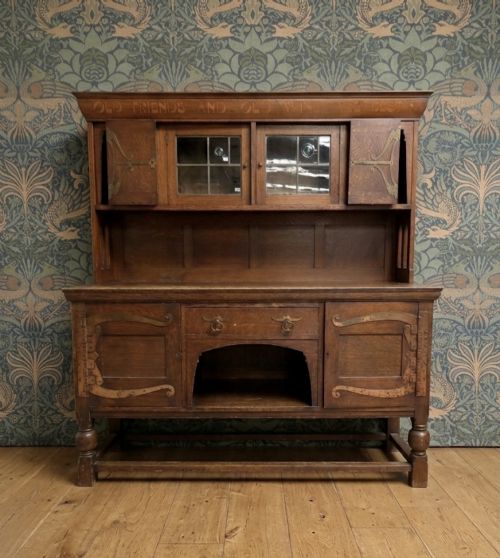

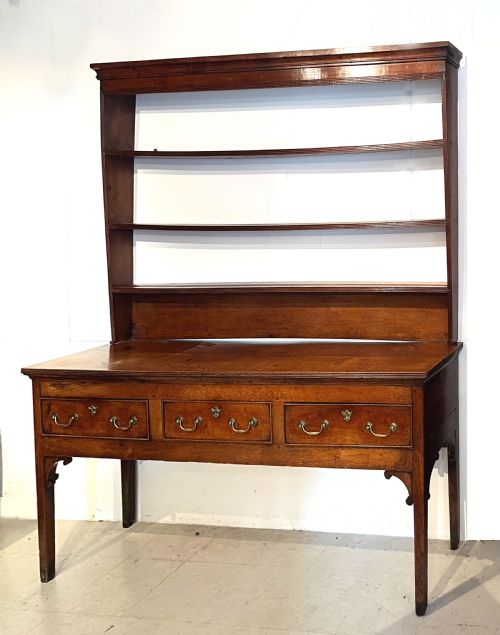


Oak Buffet with Hutch
An oak buffet with hutch brings sturdy timber and practical display space into a room, offering both closed storage and shelving for everyday dining ware.
Oak Buffet with Hutch
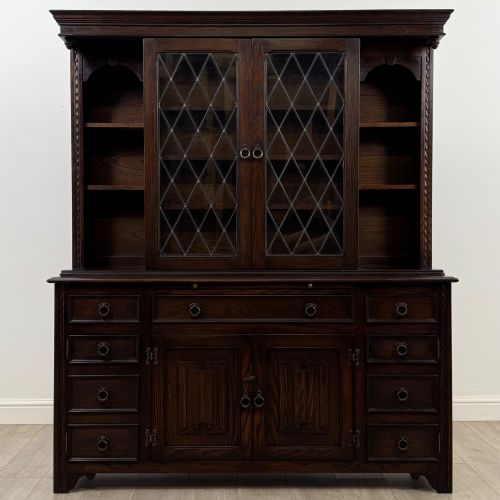
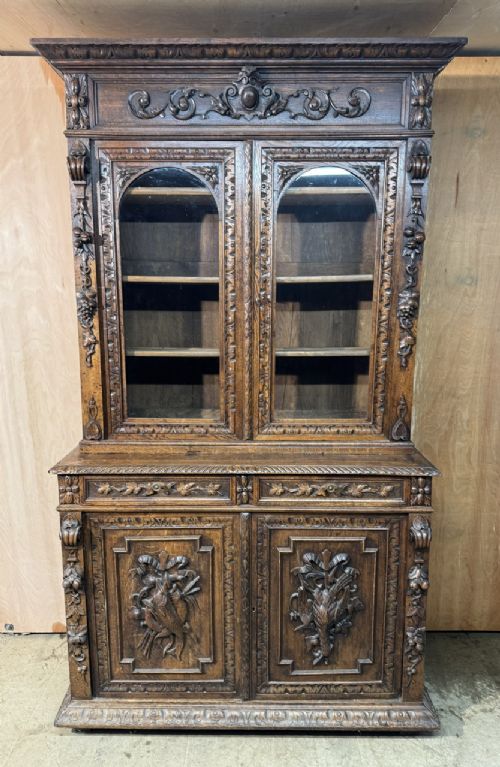
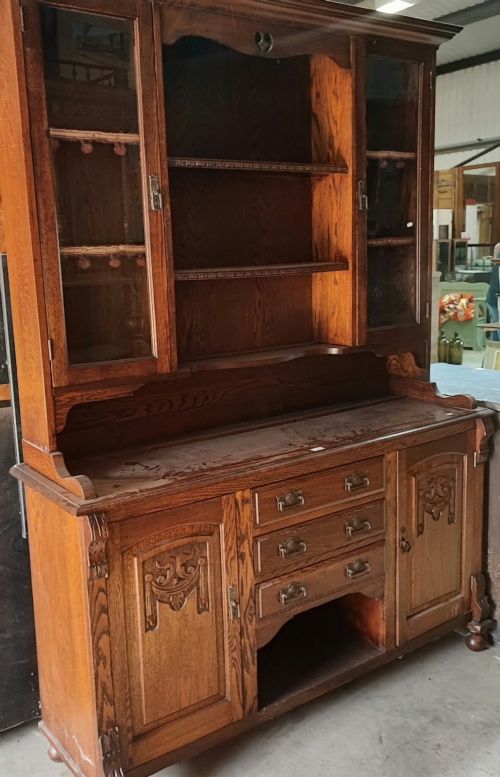
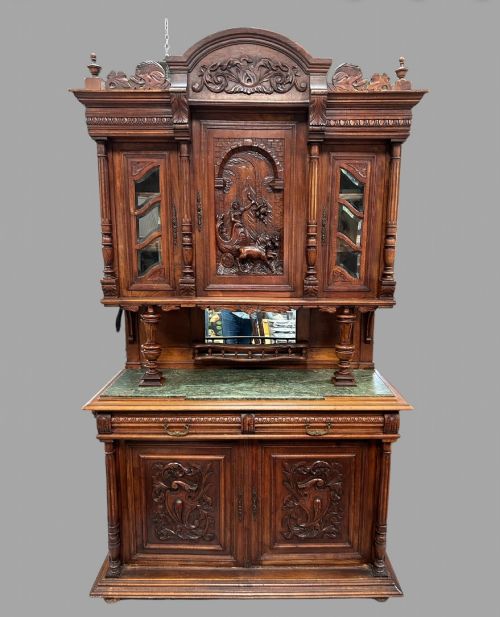
When you search for an oak buffet with hutch, you encounter sturdy timber storage units that combine a lower cabinet or sideboard with an upper display rack. The pieces available here span from mid eighteenth century examples up through Victorian, Arts and Crafts, and Georgian style revivals.
You meet various forms including Welsh dressers, sideboards with racks, and cabinets featuring leaded glass doors. The dominant material across these listings is oak, occasionally accompanied by walnut or mahogany accents.
Regional variations include English Country, French Provincial, and Georgian styles, showing how different makers adapted the form. The upper hutch typically serves to display plates, whilst the lower buffet conceals bulkier items.
Construction and Materials
Makers built these pieces primarily from solid oak, sometimes integrating pine, walnut, or mahogany for secondary parts. Hardware elements such as brass and iron provide structural reinforcement and functional handles.
Construction techniques involve traditional joinery, panel doors, and geometric carvings applied to the timber surfaces. Certain Victorian and Arts and Crafts examples incorporate glass, including leaded glass panels within the upper doors.
Some nineteenth century dressers include carved wooden figures of kings standing guard beside the plates.
Judging Quality and Craftsmanship
Quality reveals itself in the crispness of geometric carvings and the selection of timber grain, particularly seen in tiger oak variants. Heavier, more imposing examples often display superior structural integrity and thoughtful proportions.
The integration between the lower buffet and the upper hutch dictates visual balance. Finer pieces maintain harmony across the entire elevation, whereas lesser examples can appear disjointed in their joinery.
Ambrose Heal for Heal & Son·Shapland and Petter
The Oak Buffet with Hutch Glossary
- Welsh dresser
- A traditional furniture form combining a base of drawers or cupboards with an open plate rack above. This configuration serves both kitchen storage and display functions.
- Breakfront
- A cabinet design where the central section projects forward from the flanking sides. This architectural feature adds depth and shadow to the facade.
- Tiger oak
- Oak timber exhibiting distinctive flecking and tiger stripe patterns in the grain. Makers prized this figure for decorative effect on prominent surfaces.
- Leaded glass
- Glass panes held together by strips of lead cames within a window or door frame. This technique creates geometric or patterned designs across cabinet doors.
- Geometric carvings
- Relief patterns composed of lines, squares, and repeating shapes cut directly into the wood. Such ornamentation characterises earlier seventeenth and eighteenth century pieces.
Oak Buffet with Hutch: Frequently Asked Questions
What is an oak buffet with hutch used for?
These pieces provide dual storage by combining a closed lower cabinet with open shelving above. They suit dining rooms and kitchens for holding dinnerware, linens, and serving dishes.
The upper rack traditionally displays plates and platters, whilst the lower buffet conceals heavier items out of sight.
How do I date an antique oak dresser?
Dating relies on observing construction methods, hardware types, and stylistic details like geometric carvings or leaded glass. Eighteenth century examples often show hand-planed surfaces and simpler country joinery.
Later Victorian and Arts and Crafts pieces introduce distinct revival styles, machine assistance, and specific timber selections like tiger oak.
Are these pieces heavy to move?
Solid oak construction makes these units exceptionally heavy and robust. Many traditional designs separate into an upper rack and a lower buffet to ease transport.
Securing the hutch to the wall is often recommended once placed in position to ensure stability.
How should I care for antique oak furniture?
Maintain the timber by keeping it away from direct heat sources and strong sunlight, which can dry out the oak. Apply natural waxes sparingly to nourish the surface.
Avoid using abrasive cleaning products or excessive moisture, using a dry or slightly damp cloth for routine dusting instead.