




Geometric Panel Dresser
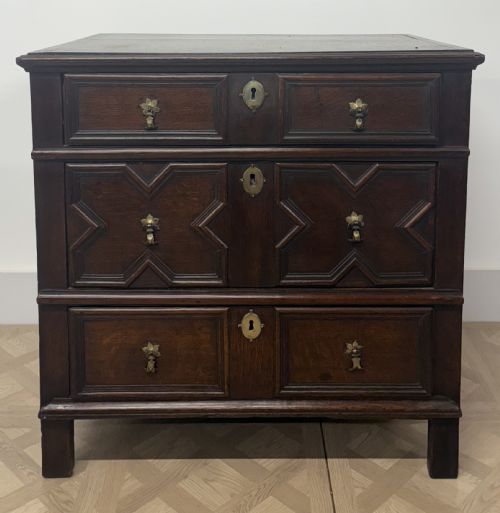
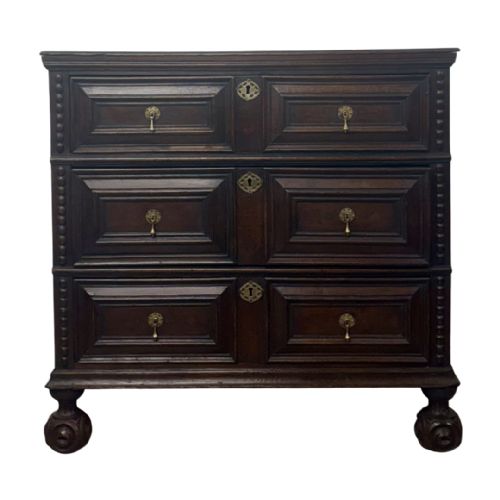
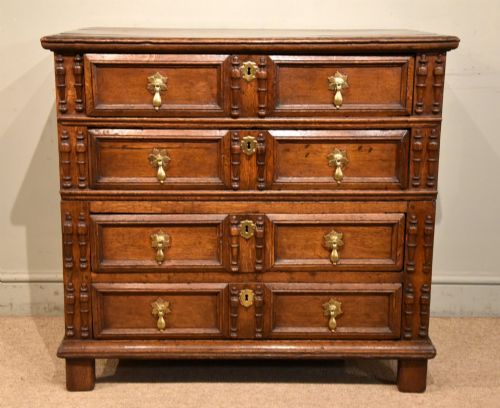
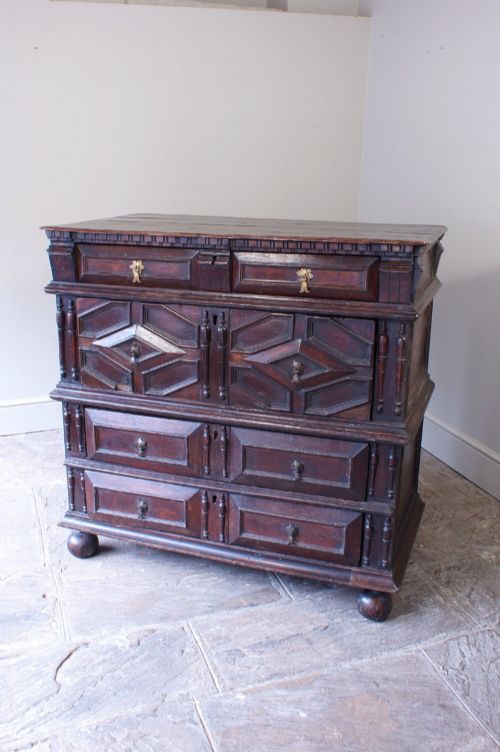
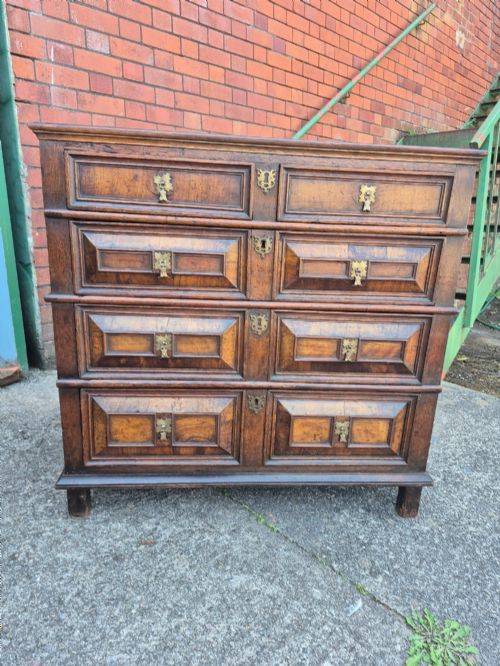
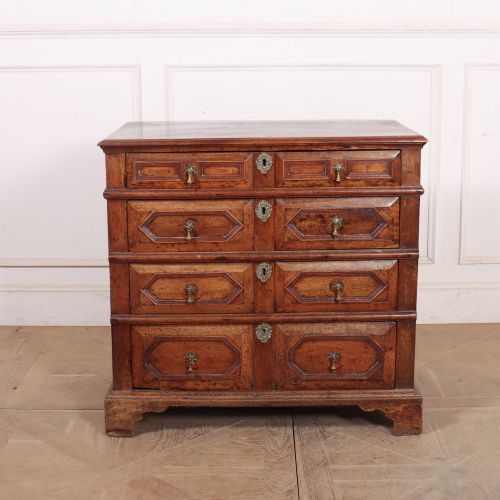
A geometric panel dresser brings substantial seventeenth-century presence into a room, offering robust storage through deeply moulded drawer fronts.
Geometric Panel Dresser
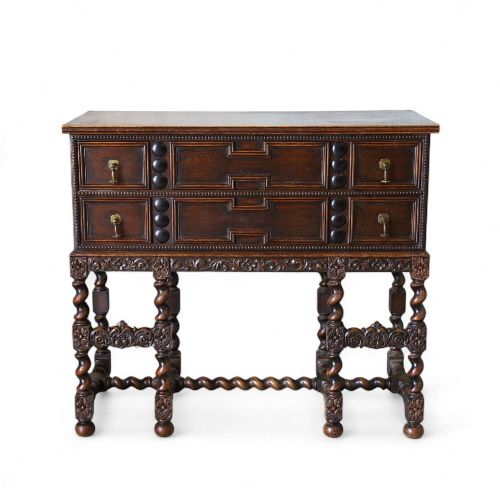
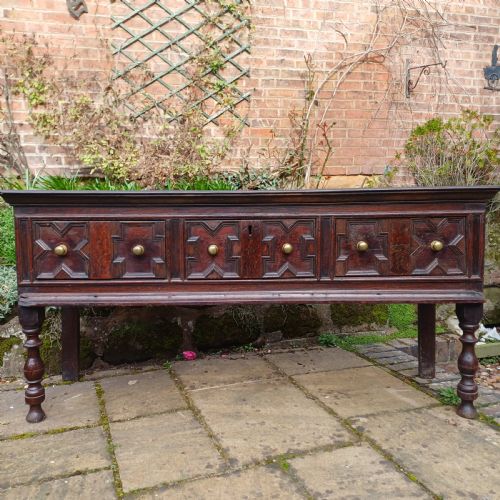
A geometric panel dresser combines the low-profile storage of a chest of drawers or dresser base with striking geometric moulding across the front. When buyers search for a geometric panel dresser, they encounter authentic pieces originating from the seventeenth century alongside later revivals from the Edwardian period and the early twentieth century.
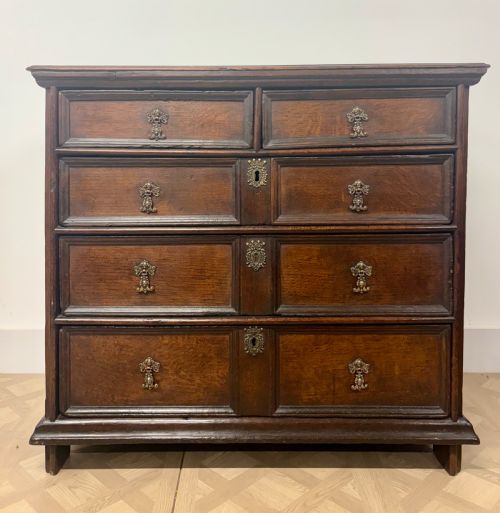
The survival rate is strongest for pieces built during the seventeenth century, specifically under Charles II and the Restoration period, often constructed as two-part chests or low dresser bases. Oak dominates the form, supplemented by walnut, fruitwood, and occasional cedar wood, establishing a dark, richly textured surface.
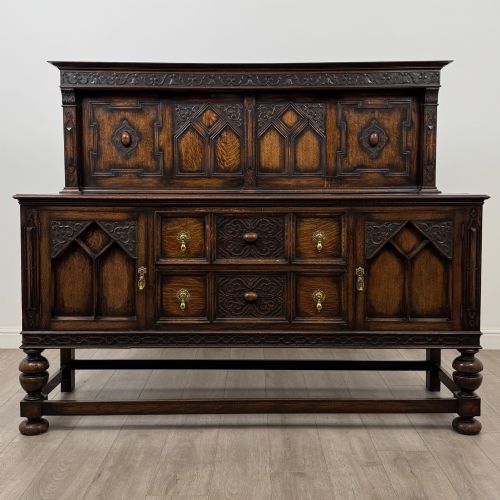
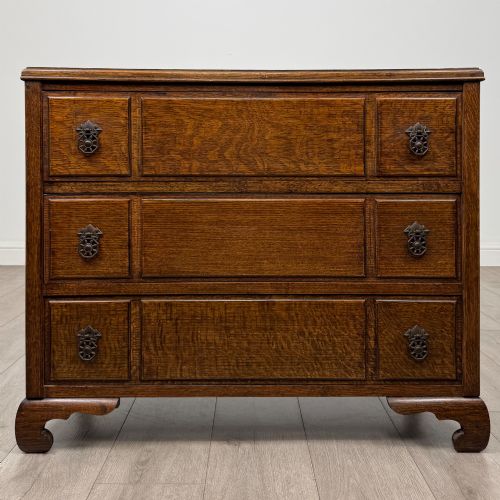
Later iterations spanning the nineteenth and twentieth centuries adopt Jacobean and Carolean revival styles, incorporating barley-twist supports and carved details while retaining the foundational geometric drawer arrangement.
Materials and construction
Makers relied primarily on native oak, pairing solid planks with applied geometric mouldings made from fruitwood, walnut, or snakewood to create contrasting surface patterns. These applied mouldings required precise joinery, adhering smaller geometric blocks and mitred strips directly onto the drawer fronts.
Hardware consists of brass drops and plates, complemented by iron hinges and fittings on doors and cabinets. Carved ornamentation, panel mouldings, and leaded glass doors appear on related sideboards and bookcases from subsequent periods.
Listings feature periods spanning from the seventeenth century through to the 1930s, constructed in oak, walnut, fruitwood, and cedar.
Understanding quality differences
Quality rests heavily on the crispness of the geometric mouldings and the integrity of the timber used for the drawer fronts and panels. Original seventeenth-century examples with intact walnut or fruitwood decoration demonstrate superior craftsmanship compared to later revival pieces.
The cohesion of the two-part structure and the retention of period brass hardware influence the integrity of the piece. Oak surfaces that display deep, unblemished grain patterns and minimal timber replacement hold greater distinction.
The Geometric Panel Dresser Glossary
- Geometric moulding
- Applied wooden strips arranged in repeating geometric patterns on drawer fronts. This technique defined seventeenth-century case furniture.
- Dresser base
- A low sideboard or serving table featuring drawers and sometimes cupboards beneath the main top surface. These form the foundation of many early dining arrangements.
- Charles II period
- The reign spanning the mid to late seventeenth century, associated with the Restoration of the monarchy. Furniture from this era displays pronounced carving and geometric enrichment.
- Two-part chest
- A cabinet constructed in two separate stacking sections to facilitate transport. This method was standard for heavier oak storage units.
- Barley-twist
- A turned wooden support resembling a spiral rope. This decorative column style appears frequently on revival sideboards and dressers.
Geometric Panel Dresser: Frequently Asked Questions
What is a geometric panel dresser?
A geometric panel dresser is a heavy storage piece featuring drawers adorned with raised geometric mouldings. These items range from seventeenth-century originals to twentieth-century revival interpretations.
They provide deep drawer space while serving as focal points due to their intricate moulded fronts.
How do I date a geometric panel dresser?
Dating relies on identifying timber types, joinery methods, and the style of the hardware. Seventeenth-century pieces typically utilise solid oak with walnut or fruitwood mouldings and hand-cut joints.
Revival pieces from the Edwardian era or the 1920s and 1930s often show machine-cut elements and cleaner interior timber.
Were these pieces used in the kitchen?
Early versions served various domestic functions for storing textiles, documents, and dining apparatus rather than strictly kitchen use. Lower dresser bases functioned as surfaces for serving food or displaying plate.
Over time, the terminology shifted between dressers, sideboards, and chests of drawers depending on the regional layout of the home.
How do I care for antique oak furniture?
Maintain the timber by keeping it away from direct heat sources and sudden humidity changes. Regular application of suitable wax preserves the lustre of the oak and protects the applied mouldings.
Avoid commercial polishes containing silicone, which can penetrate the grain and damage historical finishes.