

Geometric Oak Table
A geometric oak table brings solid timber construction together with surface pattern, offering practical utility alongside strong architectural lines.

Geometric Oak Table
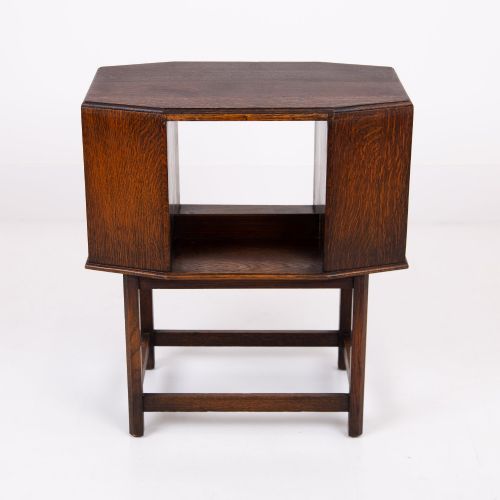
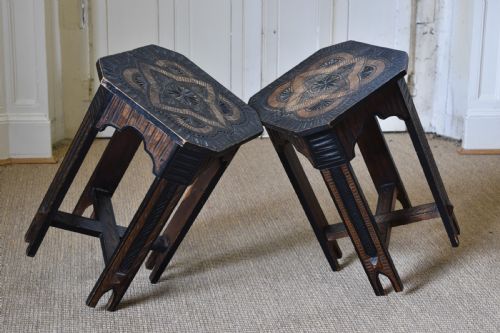
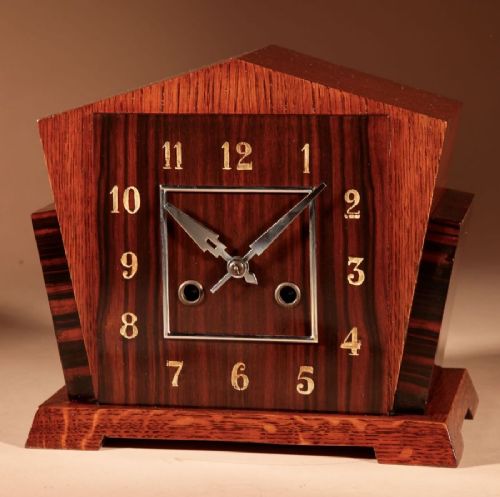
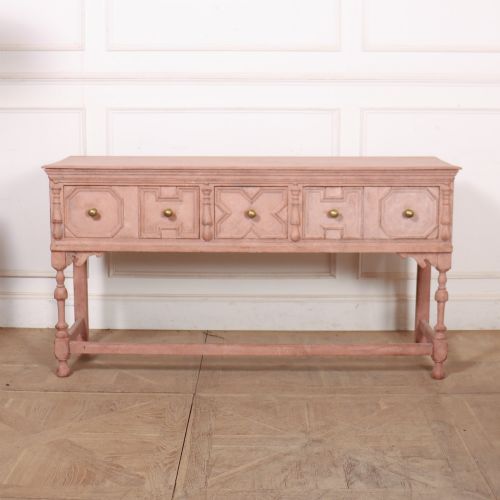
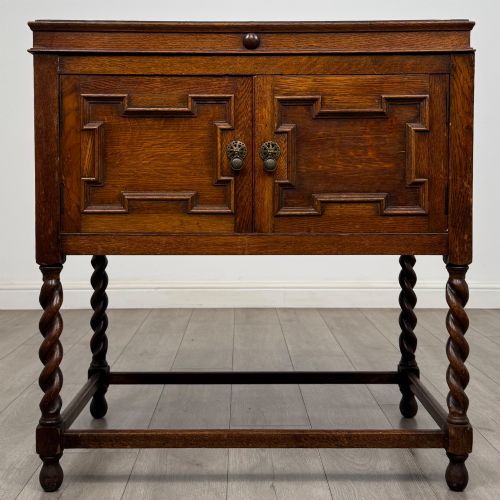
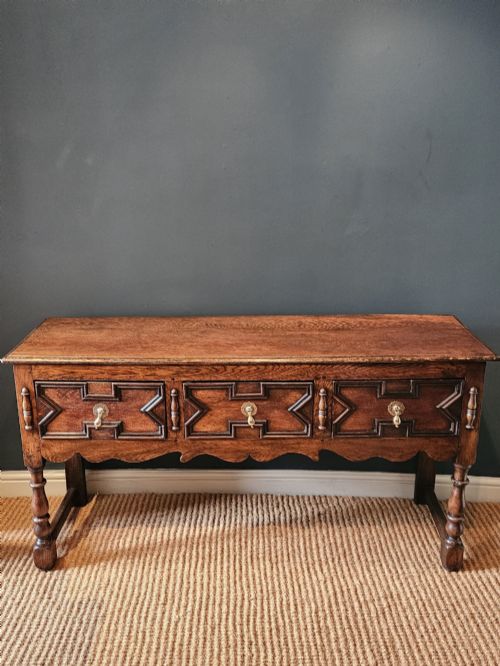
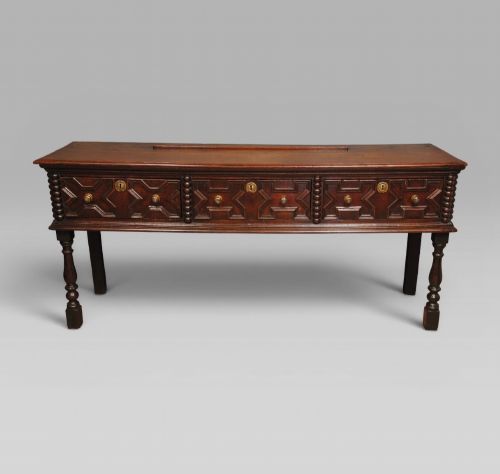
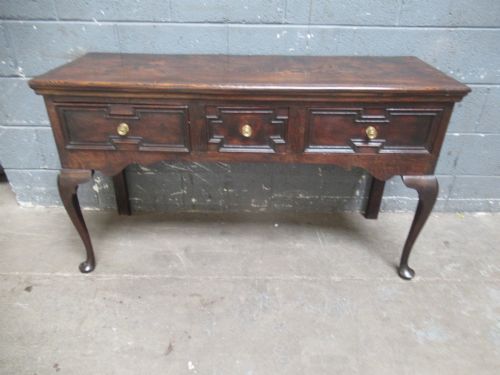
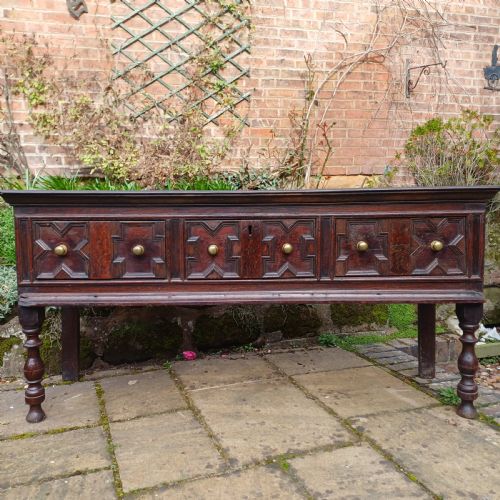
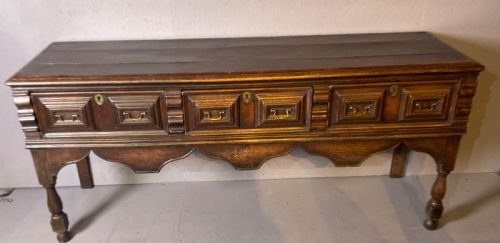
A geometric oak table encompasses lowboys, occasional tables, and servers built from timber and defined by surface patterns or moulded drawer fronts. When searching for a geometric oak table, buyers encounter examples ranging from seventeenth-century joined furniture to later revivals from the twentieth century.
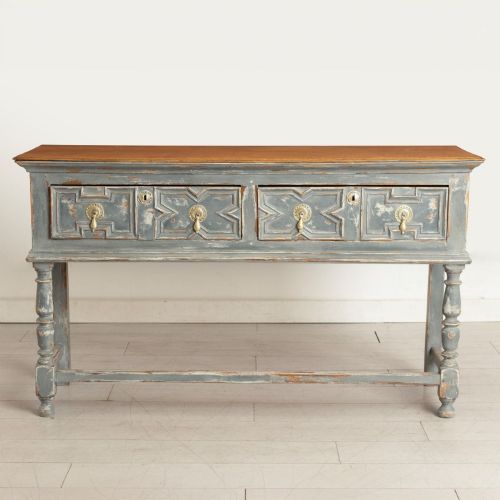
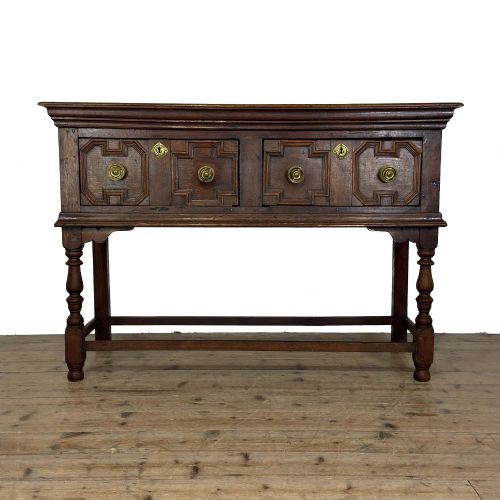
The form appears primarily as side tables, coffee tables, and dresser bases where timber grain and constructed geometry dictate the aesthetic. Seventeenth-century originals feature applied mouldings on drawer fronts, while later nineteenth and twentieth-century versions interpret these linear patterns through parquetry and chip carving.
How they were made
Makers constructed these pieces using solid oak boards joined with traditional methods, often incorporating secondary timbers for internal framing. Surfaces display geometric decoration created through applied mouldings, intersecting mitred strips, or parquetry inlay set directly into the timber top.
Finishes rely on natural polish or wax applied over the timber grain, highlighting the figures of the oak alongside occasional contrasting woods like walnut or ebony. Construction prioritises rigid frame assembly to support the panelled and moulded elements characteristic of the style.
Geometric Oak Table Retail Price Guide 2026
Typical asking prices for geometric oak table among the pieces listed under this phrase on Sellingantiques today, from the lower quarter to the upper quarter. They describe what is for sale here now, not the wider market.
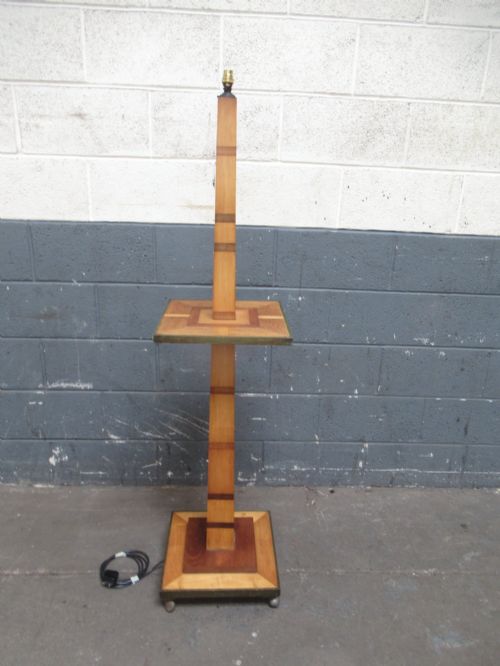
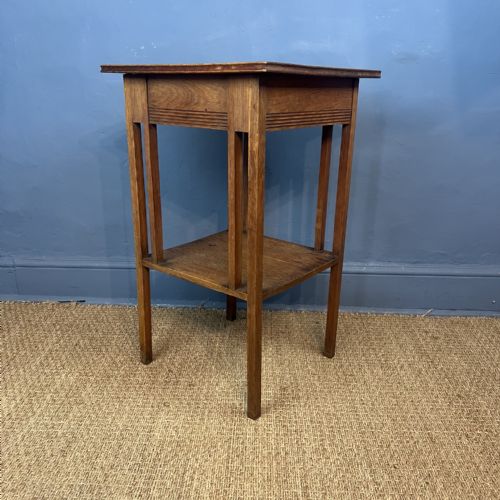
Listings feature oak tables spanning from the seventeenth century through to Art Deco and modern revival periods.
What varies in quality
Quality rests upon the crispness of the geometric mouldings and the precision with which the timber sections intersect. Superior examples maintain structural integrity in the joints and retain their original surface patination without excessive intervention.
The depth and complexity of the applied decoration distinguish finer craftsmanship from simpler utilitarian pieces. Timber selection also plays a role, with quartersawn oak displaying distinctive figuring that elevates the visual impact of the geometric arrangement.
The Geometric Oak Table Glossary
- Geometric moulding
- Raised wooden strips applied in repeating angular patterns to drawer fronts or cabinet doors. This technique creates texture and shadow across the flat surfaces of seventeenth-century furniture.
- Parquetry
- Geometric mosaic woodwork formed by small veneer or solid timber pieces laid down in repeating patterns. It frequently decorates the tabletops of nineteenth and twentieth-century examples.
- Dresser base
- A low rectangular table fitted with drawers beneath the main surface, often featuring panelled or moulded fronts. These pieces served practical storage functions in domestic interiors.
- Lowboy
- A small oak side table standing on legs, typically equipped with one or more drawers. The form developed during the late seventeenth century and continued through the eighteenth century.
- Quartersawn
- Timber cut radially from the growth rings to produce a stable board with prominent medullary ray figuring. This cut was favoured for high-quality oak furniture construction.
Geometric Oak Table: Frequently Asked Questions
How do I date an oak table?
Dating relies on examining construction methods, tool marks, and hardware styles visible on the piece. Earlier examples display hand-riven timber and pegged joints, whereas later revivals utilise machine-cut components.
Surface wear and the ageing of the oak timber provide further clues to the period of manufacture. Comparing the moulding profiles against established historical periods helps confirm the likely date.
Where should I place a side table?
These tables fit easily into hallways, living rooms, or bedrooms as functional surface areas for lamps and everyday items. Their compact footprints allow them to sit alongside seating or beneath wall mirrors.
Keeping them away from direct heat sources protects the oak timber and prevents the geometric mouldings from drying out or shrinking.
How do I care for antique oak?
Maintaining these surfaces requires occasional application of quality beeswax to nourish the timber and preserve the natural sheen. Avoid silicone-based polishes that can build up and dull the grain over time.
Microfibre cloths remove dust effectively without scratching the polished finish or catching on raised geometric elements.
What is the difference between periods?
Seventeenth-century originals feature heavy joined construction with hand-cut geometric mouldings applied to structural drawer fronts. Later nineteenth-century interpretations often lean towards eclectic revival styles utilising parquetry and contrasting woods.
Twentieth-century pieces blend traditional oak materials with modernist design influences, resulting in cleaner lines and alternative surface treatments.