
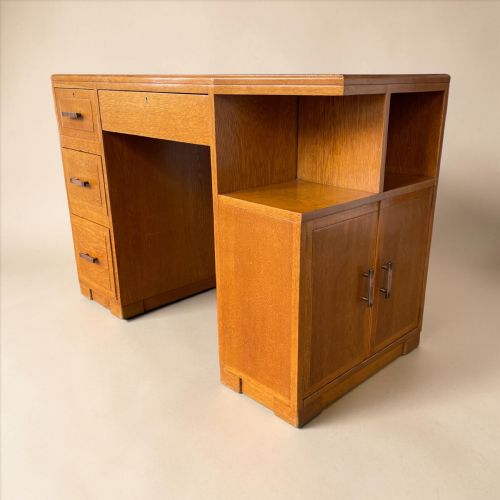
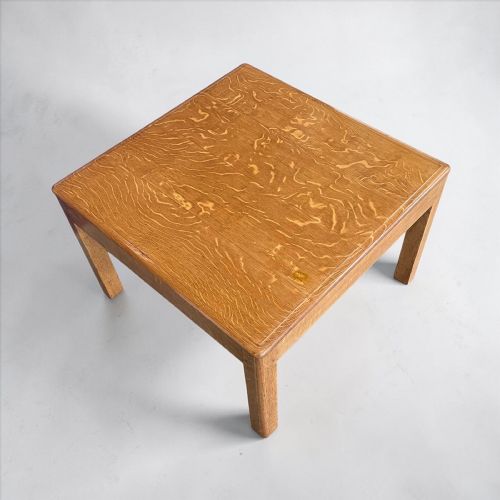


Modernist Oak Table
These modernist oak table designs combine clean lines with sturdy timber, offering robust surfaces shaped by Art Deco sensibilities.
Modernist Oak Table
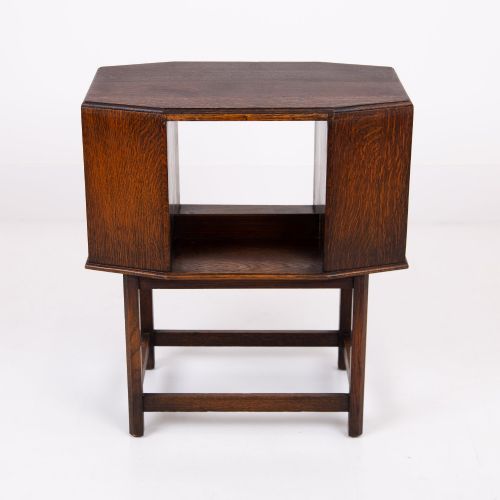
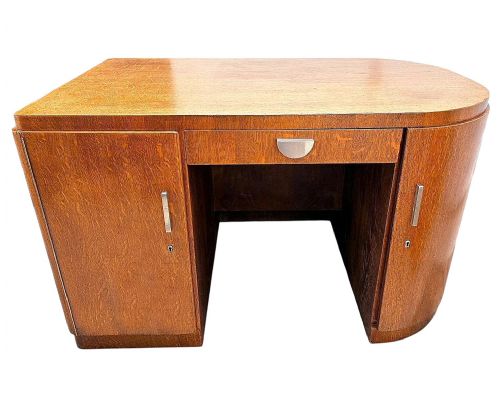
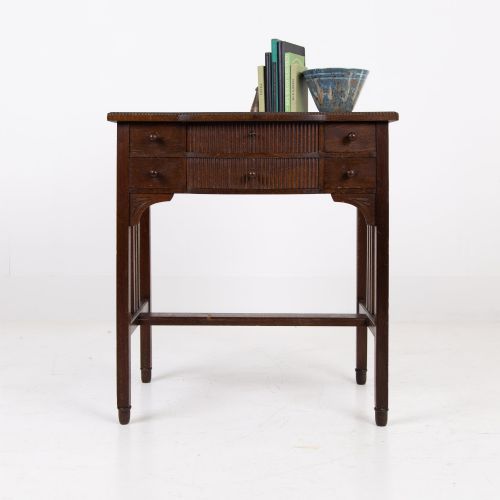
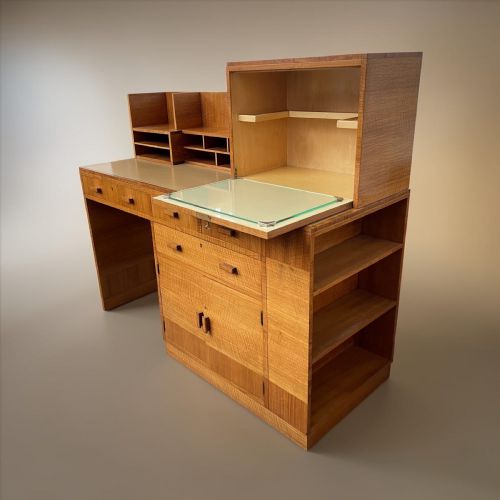
A modernist oak table represents a distinct shift toward functional simplicity in domestic furniture, drawing on Art Deco ideals from the nineteen twenties and nineteen thirties. These tables appear in forms such as coffee tables, side tables, console tables, and desks, often incorporating clever storage like book troughs or multiple drawers.
The versions most commonly met on this page date from the nineteen twenties and nineteen thirties, originating from British workshops and French designers. They reflect a period when designers prioritized utility without sacrificing the warmth and grain of oak timber.
How they were made
Cabinet makers constructed these pieces primarily from solid oak and blonde oak, occasionally applying a limed finish to lighten the wood tone. Techniques relied on sturdy joinery to support clean geometric profiles characteristic of the period.
Makers integrated contrasting elements such as metal, chrome, glass, and brass into the wooden frames. These mixed materials provided the sleek accents demanded by modernist aesthetics while maintaining structural integrity.
The listings span the nineteen twenties and nineteen thirties, featuring materials such as oak, chrome, glass, and brass.
What varies in quality
The distinction between standard production and finer pieces often lies in the sophistication of the joinery and the selection of timber grain. Pieces utilising blonde oak or limed oak with well-matched veneers demonstrate a higher level of workshop execution.
Integration of secondary materials like brass handles, chrome framing, or inset glass panels dictates the refinement of the design. Superior examples display seamless transitions between the oak structure and these metallic or glass accents.
Gomme·Heal's·Betty Joel·Étienne Kohlmann
The Modernist Oak Table Glossary
- Limed oak
- Timber treated with a specialised paste or finish to create a whitish, aged grain effect. This technique highlights the natural pores of the wood.
- Blonde oak
- A lighter shade of oak timber selected for its pale, honeyed tone. It became particularly popular during the interwar period.
- D end
- A table configuration featuring semicircular ends joined to a central section. This shape allows flexibility in placement and use.
- Book table
- A low table incorporating integrated shelving or troughs for publications beneath the main surface. It combines storage with a compact footprint.
Modernist Oak Table: Frequently Asked Questions
How do I care for limed oak?
Limed oak surfaces require gentle cleaning with a dry or barely damp cloth to preserve the white pigment settled in the grain. Avoid harsh chemical polishes that can strip the specialised finish.
Keep the timber away from direct heat sources and strong sunlight to prevent the wood from drying out or discoloring over time.
Where were these tables made?
The pieces originate primarily from British and French workshops operating during the nineteen twenties and nineteen thirties. Makers ranged from prominent London department stores to individual designers.
Stylistic influences cross the English Channel, resulting in both restrained British domestic forms and more avant-garde French reception pieces.
Are these tables suitable for daily use?
Sturdy oak construction ensures these tables handle everyday demands quite well, whether serving as a desk or a coffee table. Their durable timber frames withstand regular placement of books, lamps, and daily items.
Protecting the surface from excessive moisture and heat rings helps maintain the original finish and structural longevity.