


1930s Book Table
A 1930s book table brings clever storage and striking geometric lines together, making it a practical centrepiece for any room.
1930s Book Table
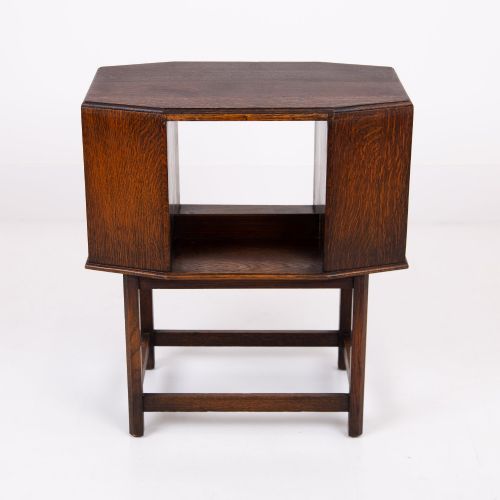
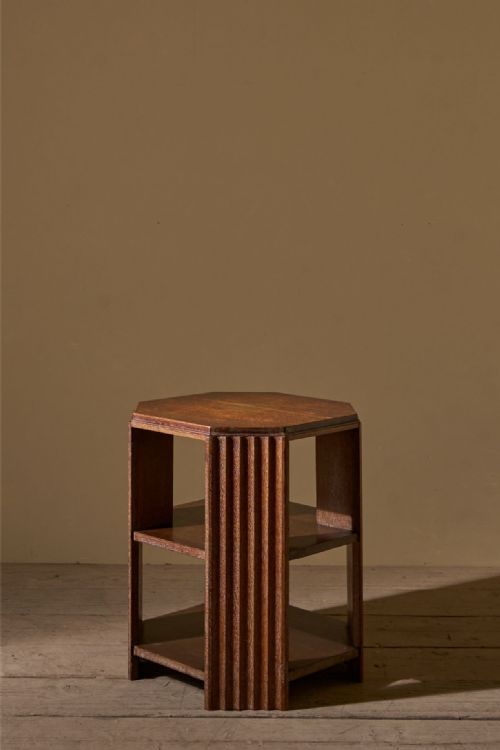
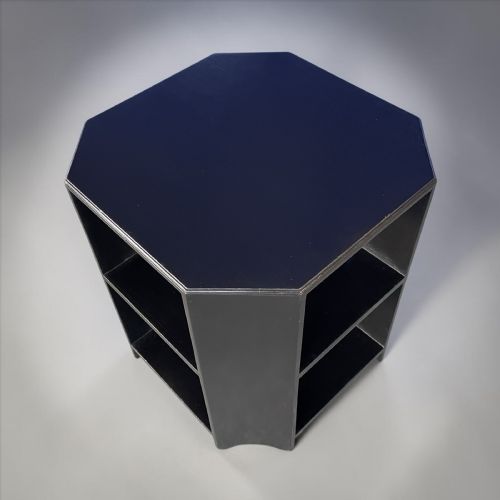
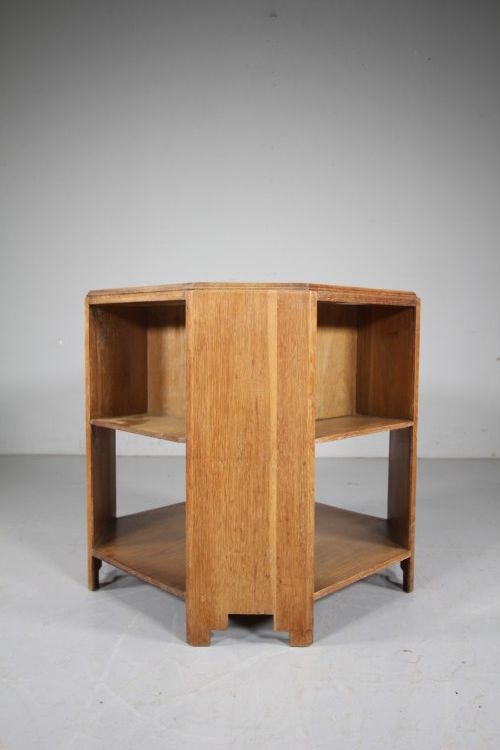
A 1930s book table combines a functional surface for drinks or lamps with built-in shelves for reading material, serving as a compact piece of furniture for the home. Most examples appearing on this page belong to the Art Deco period, embracing clean geometry and practical design.
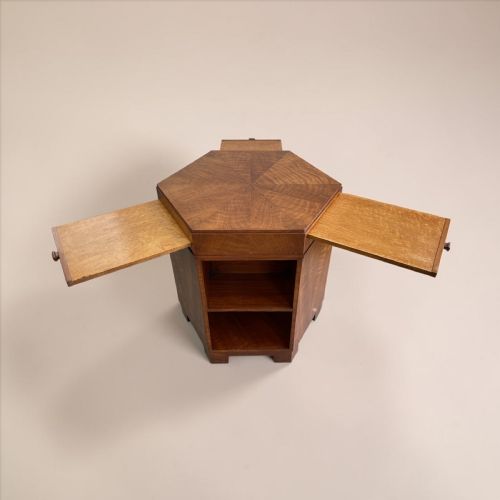
The forms vary from octagonal side tables and library tables to tiered revolving versions and pieces with central storage shelves. Originating largely from English workshops, these items reflect an era that prized space-saving innovation alongside modern styling.
Buyers will encounter occasional tables and side tables that integrate bookcases directly into their structure, often influenced by makers such as Heals. These pieces suit modern living rooms and studies just as well as they suited interwar interiors.
How they were made
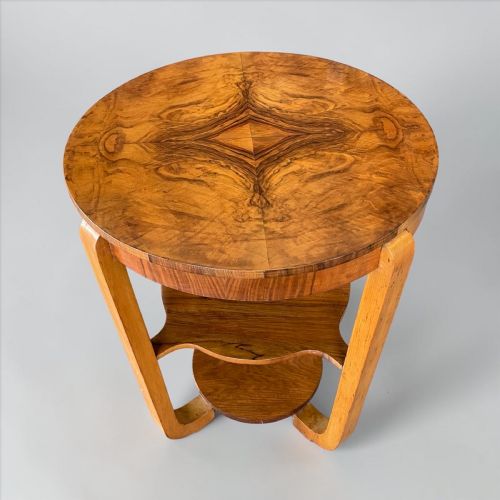
Cabinet makers of the period relied heavily on oak, walnut, and burr walnut veneer, applying polished wooden surfaces over sturdy carcases. Selected pieces incorporate ebonised wood, satinwood, or chrome details to heighten the contrast and visual rhythm typical of the style.
Veneering techniques allowed craftsmen to display richly figured wood grain across flat panels and curved tiers, while limed finishes gave oak a pale, contemporary texture. Structural elements such as revolving tiers and built-in shelving compartments required precise carpentry to ensure smooth daily use.
Forms span library tables, octagonal side tables, and revolving skyscraper book tables.
What varies in quality
The distinction between standard examples and finer pieces lies in the choice of timber and the handling of the veneer. Heavily figured walnut and burr walnut cross-banding elevate the visual appeal far beyond plain surfaces.
Construction details also dictate the tier of quality, seen in the smoothness of a revolving three-tiered mechanism or the crispness of modernist oak joinery. Pieces associated with notable firms or specific design types generally exhibit superior proportion and finishing.
Heals
The 1930s Book Table Glossary
- Art Deco
- A design style characterised by sleek lines, geometric shapes, and modern materials that dominated the interwar period. It influenced everything from architecture to small occasional furniture.
- Burr Walnut Veneer
- A thin slice of wood taken from a walnut tree's growth knot, prized for its swirling, highly decorative grain patterns. Craftsmen applied these veneers to tabletops and cabinet fronts for visual impact.
- Limed Oak
- Oak treated with a finish that settles into the open grain, creating a pale, whitened appearance. This treatment was popular in modern interwar interiors to lighten heavy dark timbers.
- Cross-Banding
- A border technique where strips of veneer are laid perpendicular to the main grain of the furniture. It creates a neat, framed edge around tabletops.
1930s Book Table: Frequently Asked Questions
What is a 1930s book table?
A 1930s book table is a dual-purpose piece of furniture that combines a surface for lamps or drinks with integrated storage shelves for books and magazines. These items emerged from an era focused on space-saving design and modern living.
Most examples reflect the geometric aesthetics of the Art Deco period, utilising rich woods and clean lines to fit neatly beside seating areas.
How were these tables used originally?
In interwar homes, these tables kept reading material close to hand in libraries, studies, and sitting rooms without requiring separate bookcases. The surface provided space for a table lamp or decorative items.
Revolving versions and tiered designs allowed users to access volumes easily from different seating positions around the room.
How do I style a book table today?
A book table functions well beside a sofa or armchair, holding daily reading material in the lower shelves while keeping the top surface free for a lamp or small objects. Its compact footprint makes it suitable for both spacious rooms and smaller apartments.
The distinct geometric styling allows the piece to anchor an interior scheme focused on mid-century or vintage design.
How do I identify Art Deco furniture?
Art Deco furniture is recognised by its symmetrical forms, streamlined silhouettes, and celebration of modern materials like chrome alongside traditional woods. Decoration relies on the natural grain of figured walnut or oak rather than heavy carved ornamentation.
Details often include stepped tiers, octagonal shapes, and contrasting ebonised accents that give the pieces a forward-looking character.