


Geometric Lattice Area Rug
These antique rugs and carpets bring disciplined geometric lattice area rug patterns into a room, offering structured tribal designs woven over the past two centuries.
Geometric Lattice Area Rug
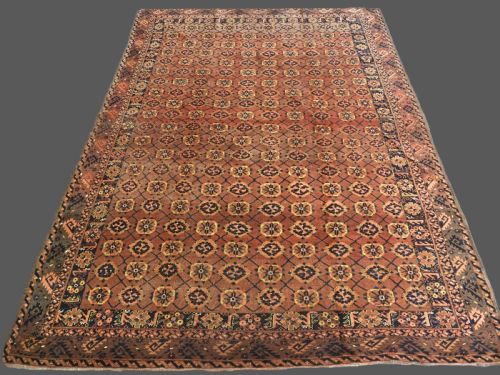
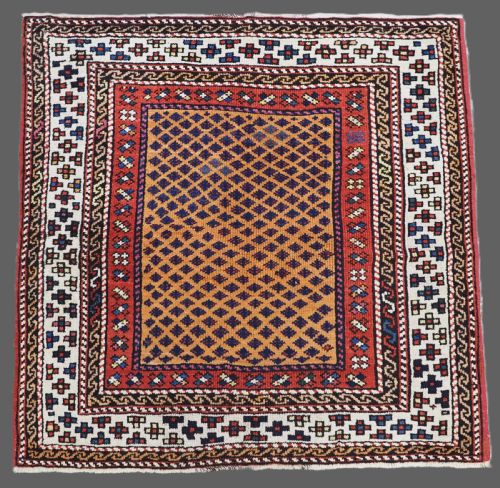
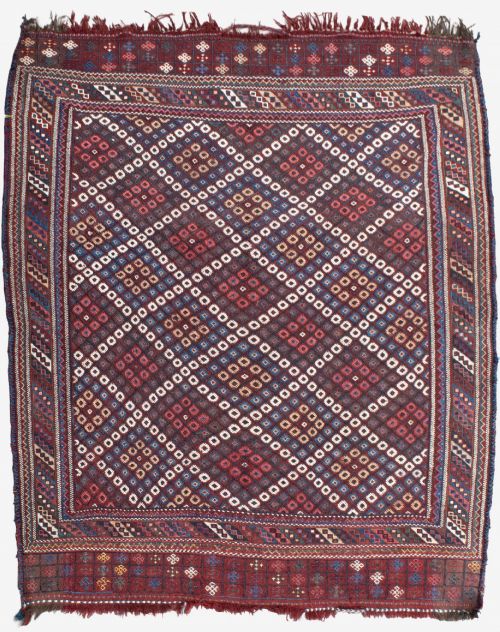
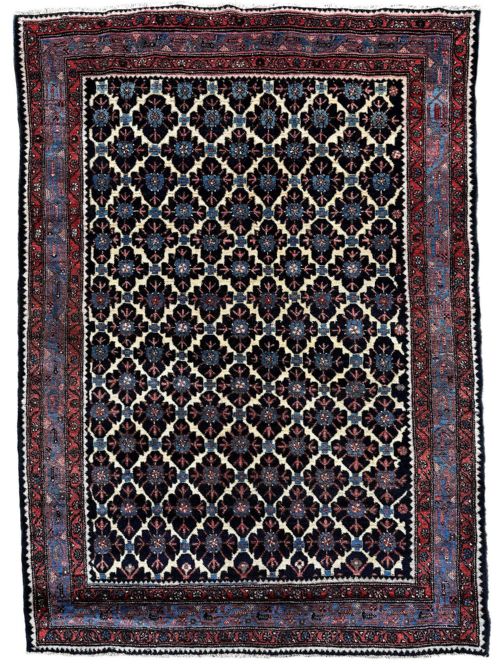
A geometric lattice area rug brings structured pattern to a floor through repeated networks of diamonds, stars, and calyx motifs. The pieces gathered here span tribal and village traditions from the Caucasus, Persia, Anatolia, and Central Asia.
Most examples date from the late nineteenth and early twentieth centuries, manifesting through various regional weaves such as Shirvan, Baluch, and Yomut. Buyers encounter formats ranging from small square rugs to long runners and room-sized carpets.
The underlying structure relies on repeating grid systems that anchor the field, whether populated by floral lattices or austere tribal markers. Each region adapts the lattice framework through local colour palettes and distinctive knotting densities.
Materials and construction
Weavers constructed these textiles primarily using wool foundations and pile, often supported by cotton for structural warps and wefts in specific village or workshop origins. The wool itself was frequently hand-spun, creating irregular textures that absorb dyes with subtle tonal variations.
Makers utilised natural dyes to achieve rich colour saturation across fields of ivory, yellow, and deep red. These organic colorants interact uniquely with hand-spun fibres, resulting in the gentle abrash shifts observed across older surfaces.
Materials documented across the collection include hand-spun wool, cotton foundations, and traditional natural dyes.
Evaluating distinction
Quality separates along the precision of the lattice geometry and the depth of the dye palette, where crisp line work commands higher regard. The handling of natural dyes dictates whether a field vibrates with life or settles into flatness.
Finer knot counts and handled proportions distinguish master tribal weaving from everyday utility pieces, ensuring structural integrity alongside visual rhythm.
The Geometric Lattice Area Rug Glossary
- Lattice
- A symmetrical network of intersecting lines forming repeated geometric compartments across the field. This framework organises the primary motifs.
- Abrash
- A natural variation in colour shading caused by changes in dye batches or hand-spun wool lots. It creates a subtle banded effect across the rug.
- Soumac
- A flat-weave technique where coloured weft threads wrap over and under the warp threads. This method produces a textured, durable surface without a cut pile.
- Mina Khani
- A traditional repeating floral lattice pattern linked by curved stems. It frequently appears in Persian and Baluch village weaving.
- Sofreh
- A specialised tribal spread or cloth used for dining or kneading dough. These flat-woven pieces often display strong geometric organisation.
Geometric Lattice Area Rug: Frequently Asked Questions
What is a geometric lattice area rug?
It is an antique floor covering defined by an organised grid of repeating shapes like diamonds, stars, or floral markers.
These patterns originate primarily from nineteenth and early twentieth-century tribal and village workshops across the Caucasus, Persia, and Central Asia.
How do I identify regional styles?
Regional identity appears through specific colorways, border arrangements, and structural motifs inherent to traditions like Shirvan, Baluch, or Qashqai.
Examining the handling of the lattice and the wool preparation offers further clues to the origin of the weaving.
Are these rugs suitable for daily use?
Traditional wool and cotton construction provides natural durability for moderate foot traffic in domestic spaces.
Placing a proper underlay beneath the textile protects the foundation fibres and prevents slipping on hard floors.
What causes colour variations in the wool?
Variations stem from traditional natural dye methods and the use of hand-spun wool batches processed at different times.
This characteristic, known as abrash, adds visual depth and authenticity to older tribal carpets.