

Full Length Dressing Glass
A full length dressing glass offers a practical and elegant addition to any room, giving you a complete reflection in a freestanding frame.
Full Length Dressing Glass
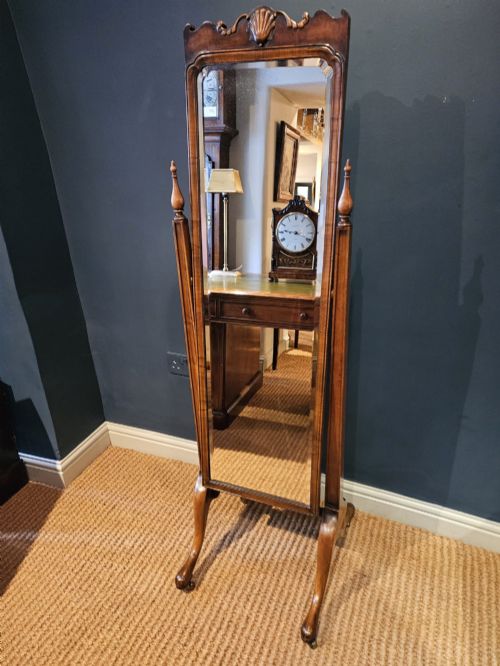
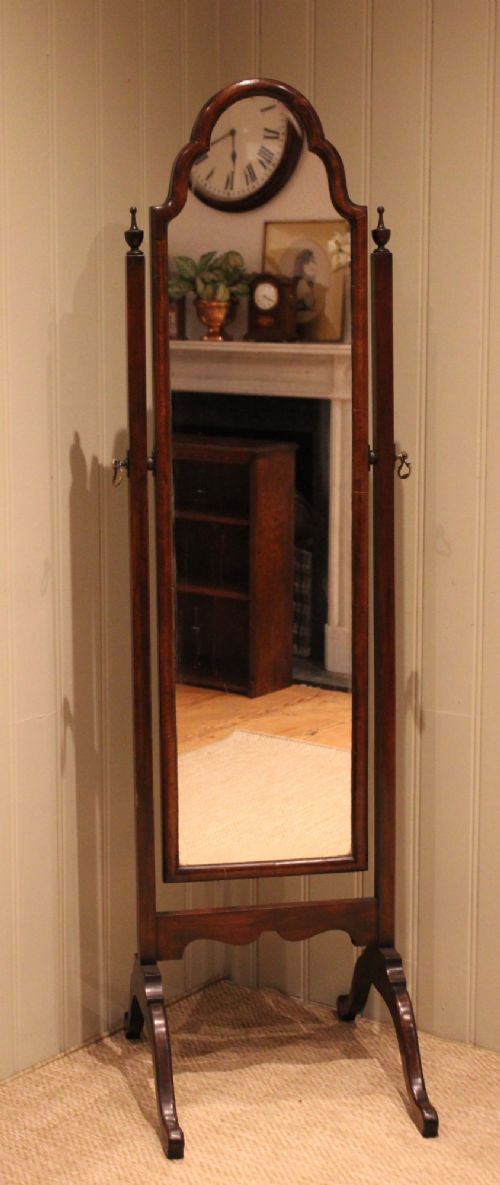
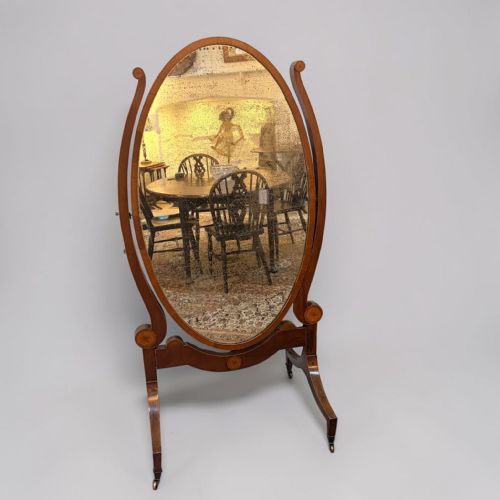
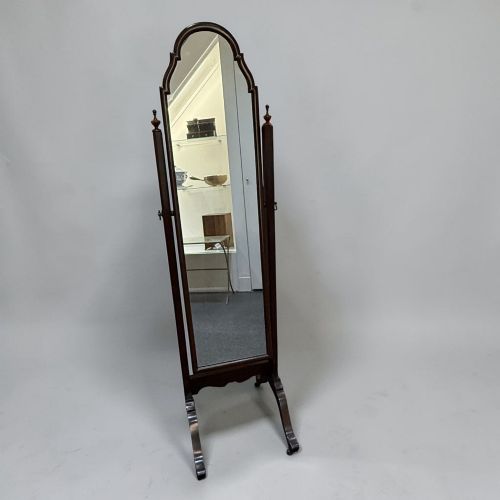
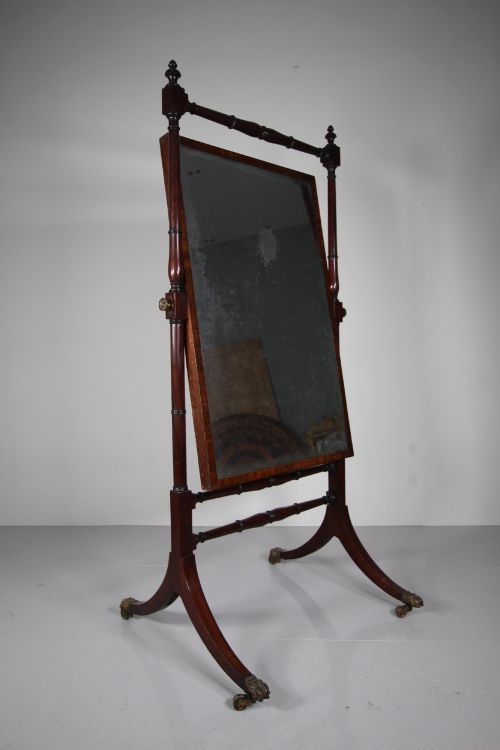
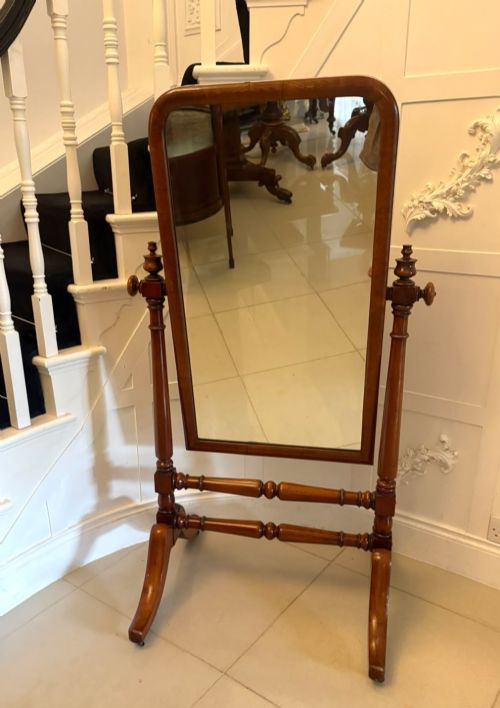
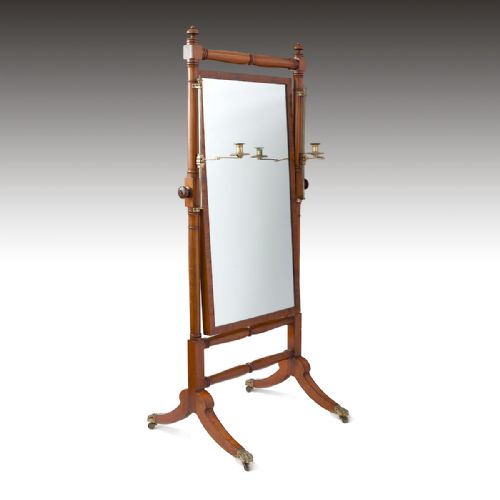
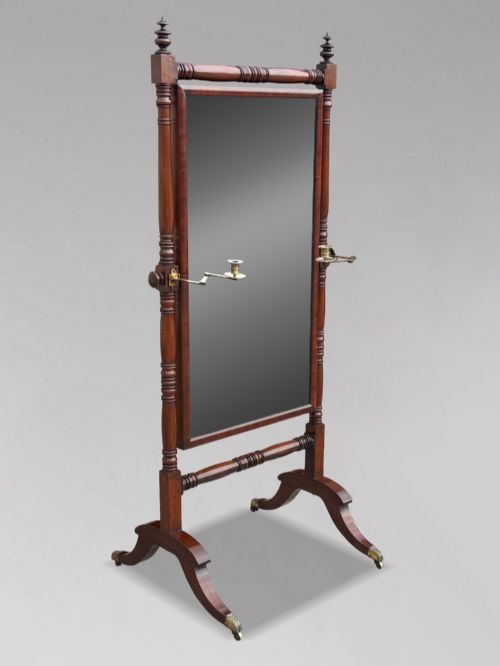
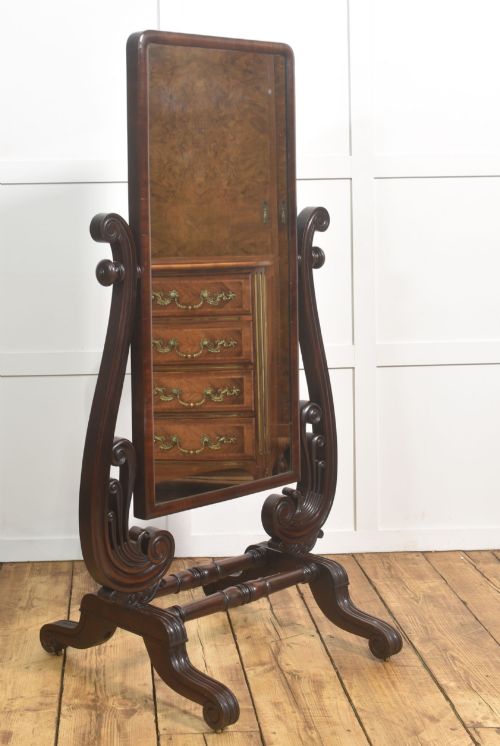
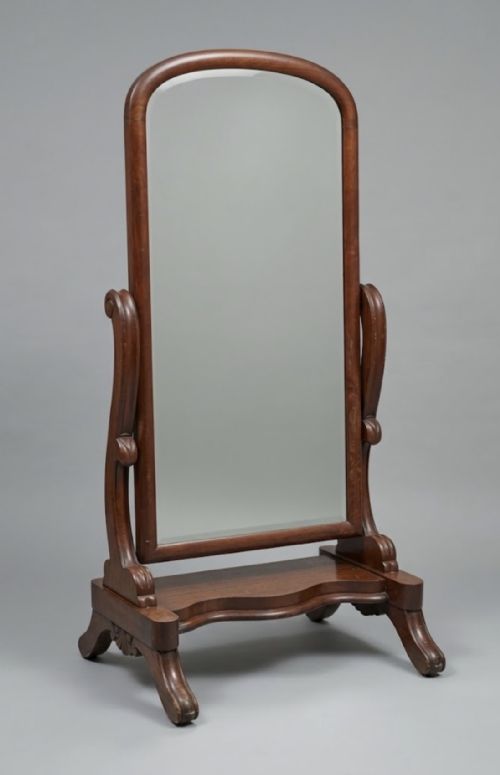
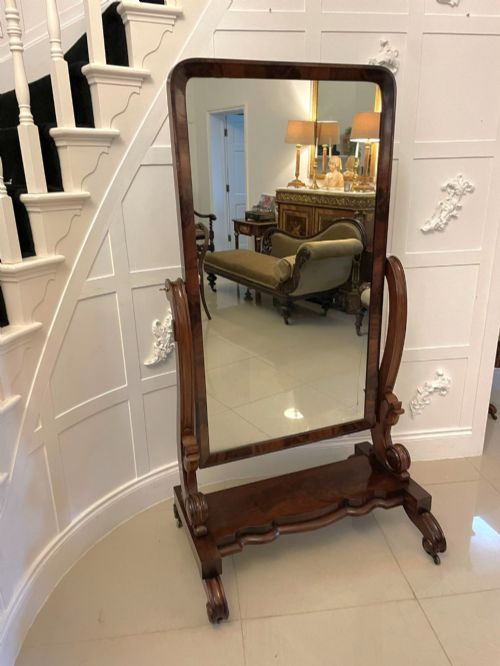
A full length dressing glass stands upright on the floor, held within a pivoting frame that allows the user to tilt the reflective plate to various angles. When searching for a full length dressing glass, a buyer encounters substantial freestanding pieces designed to show a person from head to toe.
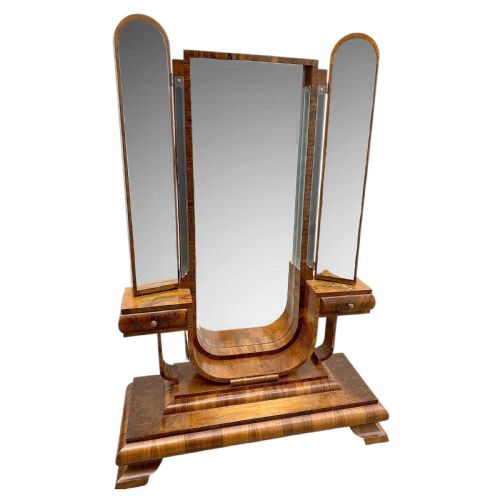
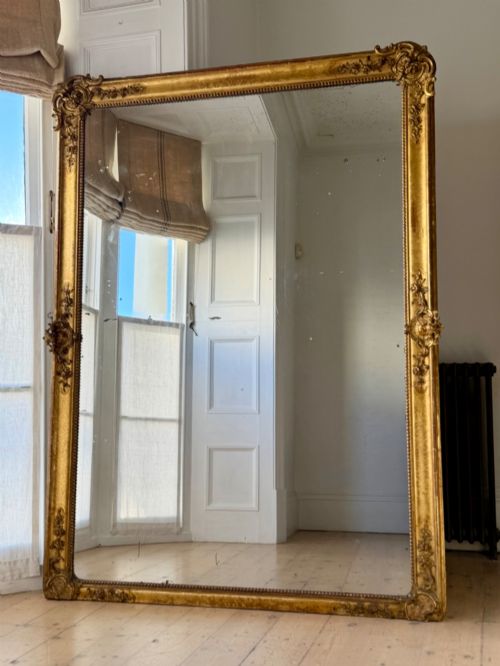
Mahogany frames from the nineteenth century dominate the selection, alongside walnut, giltwood, and satin birch examples spanning the Victorian, Regency, and Edwardian periods. Most pieces function as cheval mirrors, resting on sturdy floor-standing legs or trestle supports rather than hanging upon a wall.
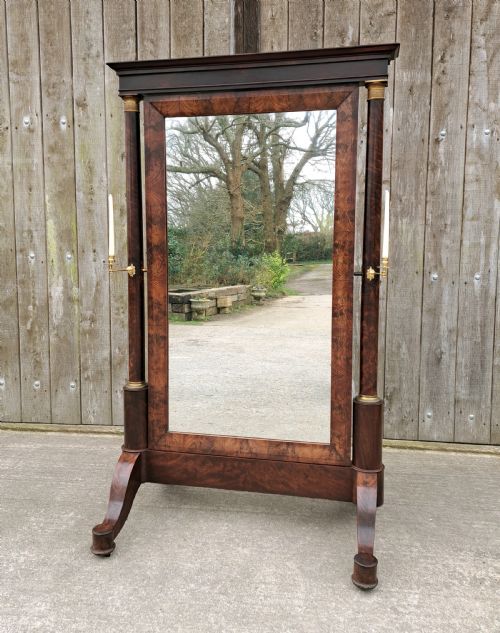
The assortment includes pieces attributed to prominent cabinet makers such as Gillows, alongside grand country house mirrors and French Empire variations. Buyers frequently find large proportions intended for bedrooms or dressing rooms, where timber frames and pivoting brass pins define the traditional form.
Materials and construction methods
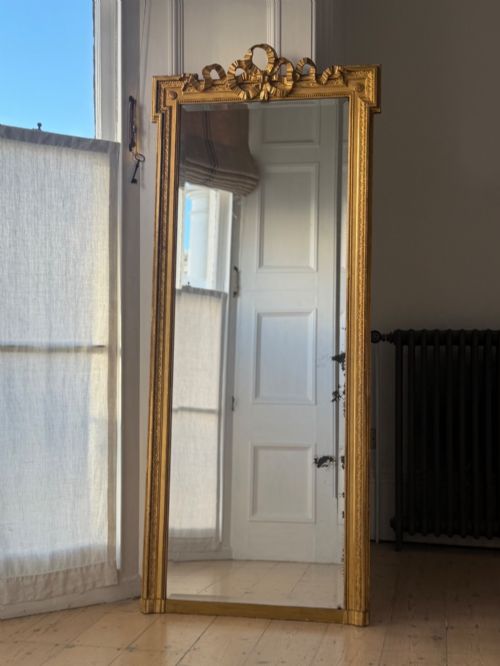
Cabinet makers utilised solid and veneered timbers, particularly flame mahogany and burr walnut, joined to sturdy upright supports and panelled bases. Giltwood and gesso finishes appear on decorative frames, often enriched with carved details and gold leaf.
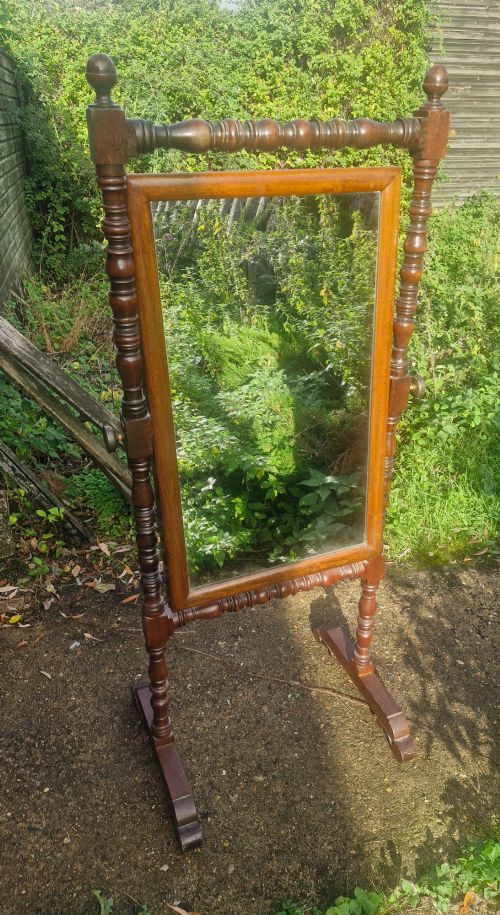
Mirror glass plates are secured within wooden rebates, supported by pivoting brass pins or screw mechanisms fitted to the side standards. Barley twist turnings, marquetry inlays, and carved scrollwork demonstrate the traditional joinery techniques employed across the nineteenth and early twentieth centuries.
Full Length Dressing Glass Retail Price Guide 2026
Typical asking prices for full length dressing glass among the pieces listed under this phrase on Sellingantiques today, from the lower quarter to the upper quarter. They describe what is for sale here now, not the wider market.
Some Victorian mirrors feature hidden compartments behind the glass plate for storing jewellery.
Judging the quality of a full length dressing glass
The calibre of a full length dressing glass rests on the selection of timber, the weight of the frame, and the crispness of the carved ornamentation. Superior examples display dense flame mahogany or finely figured walnut with solid construction that prevents excessive wobble when the mirror tilts.
Original mirror plates with honest ageing and heavy brass pivot hardware elevate a piece above later replacements. The fluency of the carving on the upright supports and the stability of the floor-standing base distinguish workshop pieces from standard commercial production.
Gillows
The Full Length Dressing Glass Glossary
- Cheval mirror
- A freestanding full-length mirror mounted on a pivoted frame between two upright pillars. This design allows the glass to swing freely so the user can adjust the viewing angle.
- Tilt dressing glass
- A smaller mirror mounted on a tabletop stand or a larger floor frame equipped with thumbscrews or pivot pins. The mechanism permits the glass to incline forward or backward.
- Giltwood
- Timber carved and coated with a thin layer of gold leaf over gesso. This finish creates a bright metallic lustre seen on decorative nineteenth-century frames.
- Barley twist
- A spiralling decorative turning carved into wooden upright supports or legs. It adds textural movement and visual interest to the structural columns.
- Flame mahogany
- A distinct wood veneer cut from the fork of the mahogany tree, showing a fiery, undulating grain pattern. Cabinet makers favoured this figure for its decorative impact on large surfaces.
Full Length Dressing Glass: Frequently Asked Questions
What is a cheval mirror?
A cheval mirror is a large freestanding dressing glass mounted in a frame that pivots on vertical pins. This allows the user to tilt the glass to adjust the angle of reflection.
The name derives from the French word for horse, referencing the four-legged trestle support common to early examples.
How do I date a dressing glass?
Dating relies upon timber selection, hardware, and stylistic details such as Regency scroll supports or Victorian barley twist columns. Examining the construction of the backboards and the thickness of the mirror glass provides further chronological clues.
Earlier nineteenth-century pieces often feature heavy flame mahogany and robust brass fittings, while Edwardian and later versions show lighter timbers and simpler turning.
Where should I place a floor standing mirror?
These mirrors suit bedrooms, dressing rooms, and spacious hallways where they catch natural light and provide a full-length reflection. Positioning the piece opposite a window helps brighten the surrounding space.
Ensure the floor surface is level so the freestanding frame remains stable when pivoting.
Are the mirror plates original?
Many antique mirrors retain their original glass, which often exhibits light foxing, minor speckling, and gentle distortion. Replacement glass is common due to the fragile nature of large nineteenth-century plates.
Original plates show authentic signs of age that complement the patina of the surrounding wood frame.