
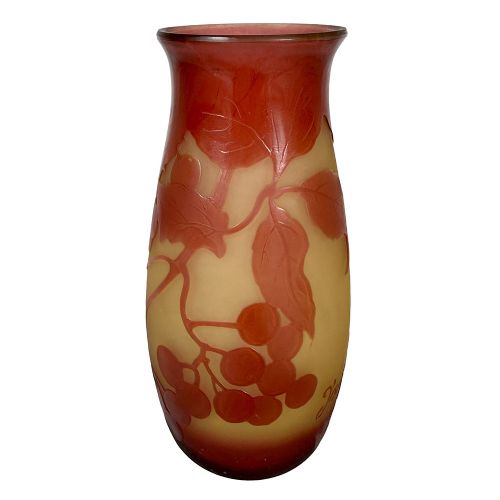
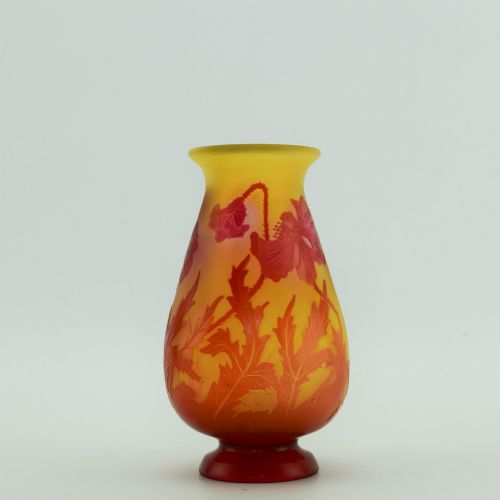
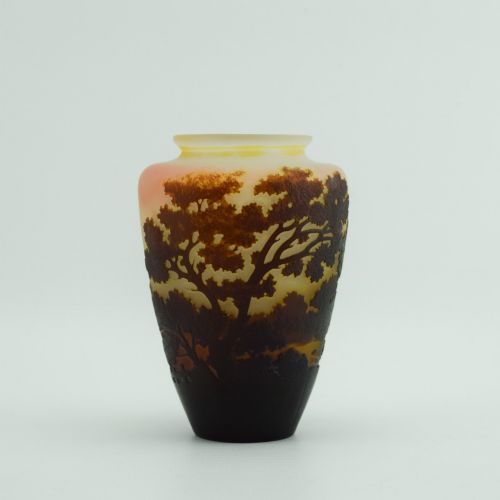

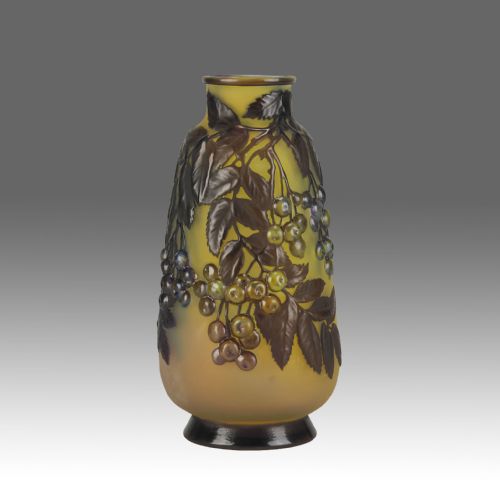


Frosted Yellow Glass Vase
These frosted yellow glass vase examples capture the organic line and layered colour of turn-of-the-century French glassmaking.
Frosted Yellow Glass Vase
A frosted yellow glass vase brings together the natural motifs and sculptural forms of the Art Nouveau and Victorian art glass periods. These vessels span from the late nineteenth century into the 1920s, representing the peak of French and English cameo and satin glass production.
Most pieces encountered in this selection take the form of cabinet vases and larger floral vessels decorated with botanical subjects such as poppies, cornflowers, and irises. Makers utilised acid-etching and enamelling to create textured surfaces that diffuse light across the yellow glass body.
Collectors seek these works for their distinct integration of floral imagery with the matte finish of cameo and frosted surfaces. Every frosted yellow glass vase reflects the artistic ambitions of workshops operating in Nancy and beyond during the early twentieth century.
Materials and methods
Makers formed each frosted yellow glass vase using layered glass blanks that were subsequently shaped by hand. Acid-etching removed specific strata of glass to reveal contrasting colours beneath the matte exterior.
Artists added surface detail through hand-painted enamel and cameo techniques, defining floral stems and landscape elements directly onto the glass. The satin texture was achieved by treating the exterior with acid to reduce reflection and soften the yellow tone.
Materials recorded across the selection include cameo glass, acid-etched glass, enamel, and satin glass.
Judging quality in glass
Quality rests in the depth of the cameo carving and the precision of the acid-etching across the yellow glass. Finer vessels display multiple layers of glass that give the floral motifs a realistic, three-dimensional presence.
The sophistication of the hand-painted enamel work and the crispness of the maker signature further distinguish superior examples. Subtlety in the shading of the yellow ground indicates greater technical mastery by the workshop.
Gallé·Daum Nancy·Daum Frères·Legras·Thos. Webb And Sons·Paul Nicolas
The Frosted Yellow Glass Vase Glossary
- Cameo Glass
- Glass vessels created by fusing two or more layers of different colours and carving away portions to create a raised design. This technique requires considerable skill to avoid cutting through the thin outer stratum.
- Acid-Etched Glass
- Glass decorated by applying acid to eat away exposed areas, producing frosted details or layered depth. The method allows for precise control over the texture and relief of botanical designs.
- Satin Glass
- Glass given a velvety, matte finish by exposure to acid vapour or hydrofluoric acid. This treatment softens the appearance of the underlying yellow glass.
- Enamelled Glass
- Glass decorated with powdered glass pigments fused by heat onto the surface. Artisans use this method to add fine coloured details such as flower petals and leaves.
Frosted Yellow Glass Vase: Frequently Asked Questions
How do I care for my vase?
Clean the glass gently using lukewarm water and a soft cloth without harsh detergents. Avoid immersing pieces with delicate enamel work in water for extended periods.
Display the vessel away from direct sunlight to preserve the stability of the yellow glass and any painted enamel details over time.
How do I date these pieces?
Examine the signature style and the specific manufacturing technique used on the surface. Pieces from the early twentieth century often display cameo signatures associated with the Art Nouveau period in France.
Compare the floral motifs and colour palette with documented examples from workshops active between 1890 and 1920 to narrow the production window.
What is cameo glass?
Cameo glass is formed by fusing layers of different coloured glass together and carving away the outer strata. This leaves a raised design standing proud of the contrasting background.
The process demands exceptional control from the artisan to maintain even depth across delicate botanical subjects.
Where were these pieces made?
The majority of these glass vessels originated in France, particularly around the city of Nancy, which became a centre for Art Nouveau design. Other examples came from established English glasshouses such as those in Stourbridge.
Regional techniques often distinguished French cameo work from English satin and Burmese wares of the late Victorian era.