

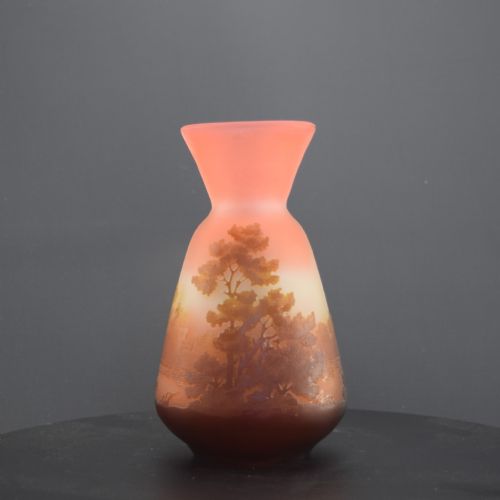
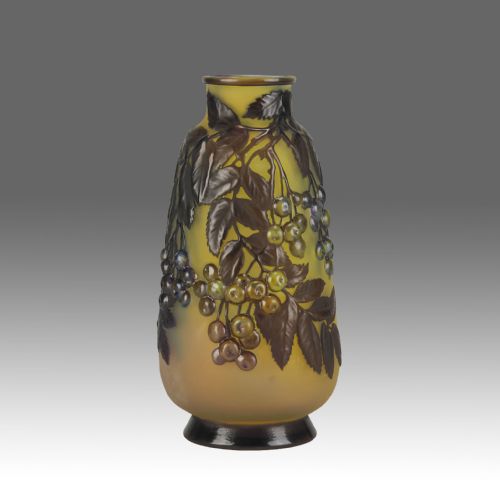


Galle Cameo Glass Vase
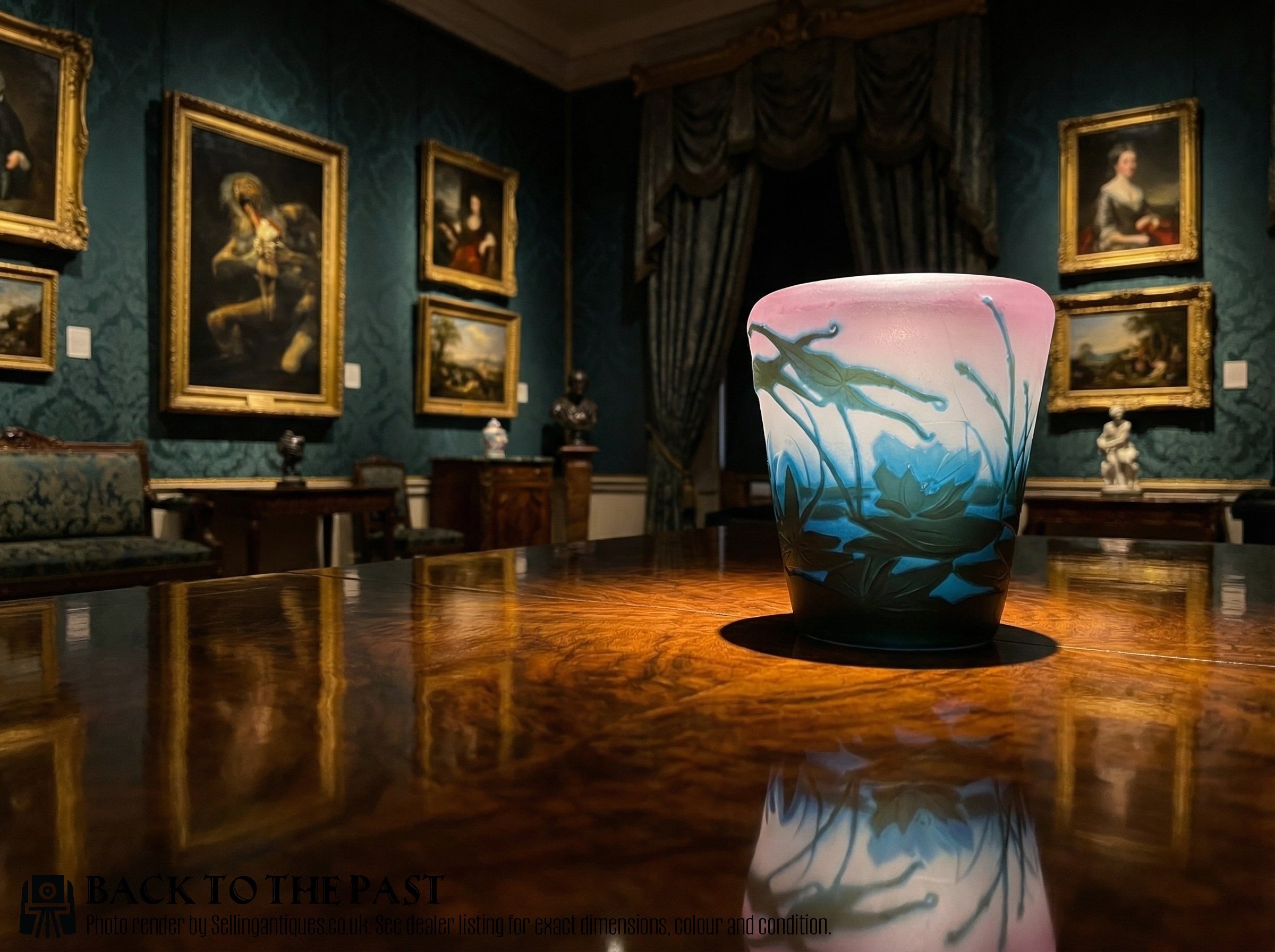
A galle cameo glass vase brings the fluid botanical forms and landscapes of French Art Nouveau straight into a room.
Galle Cameo Glass Vase
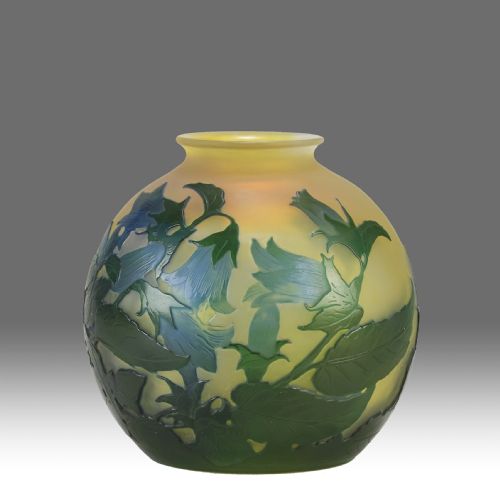
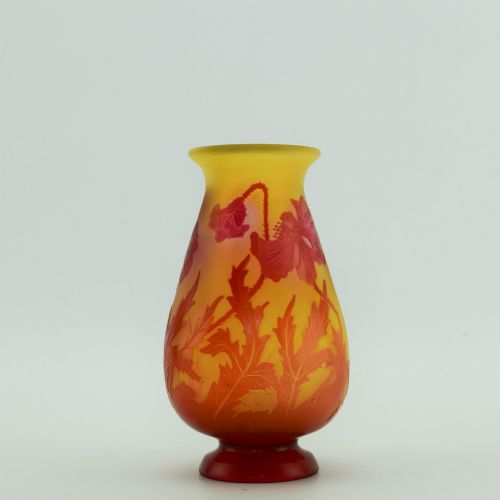
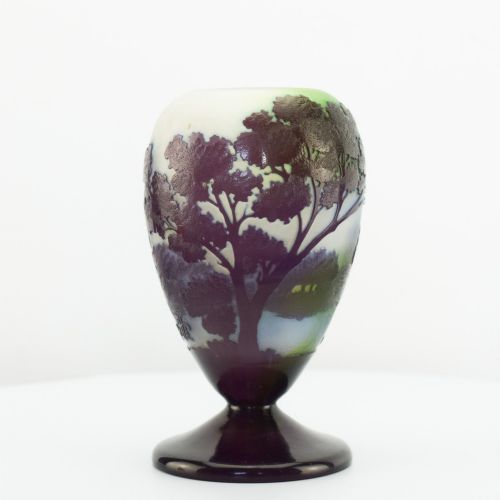
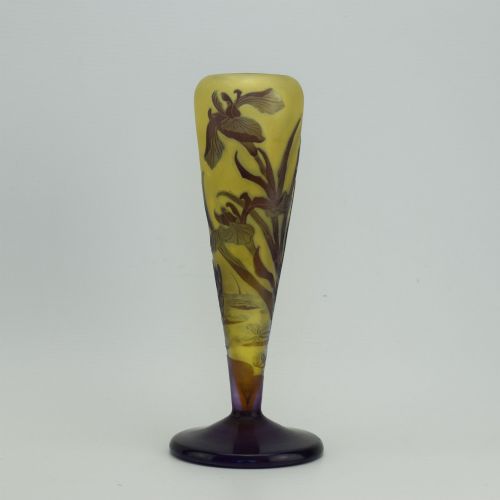
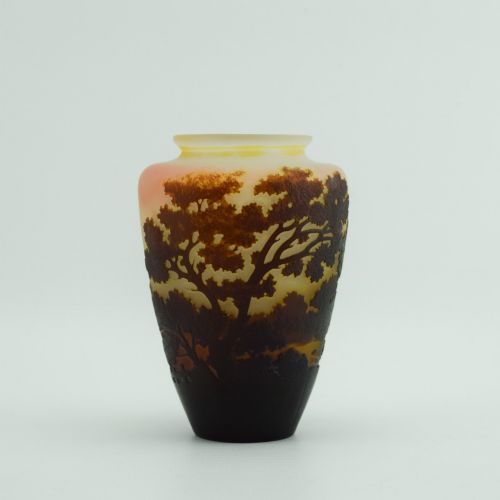
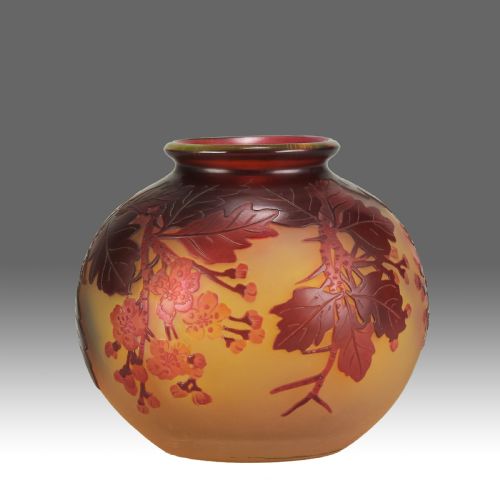
A galle cameo glass vase is a sculpted vessel shaped by natural motifs, capturing botanical subjects and scenic views within the glass. Collectors encounter these works across periods spanning the early twentieth century, carrying distinct plant or landscape imagery.
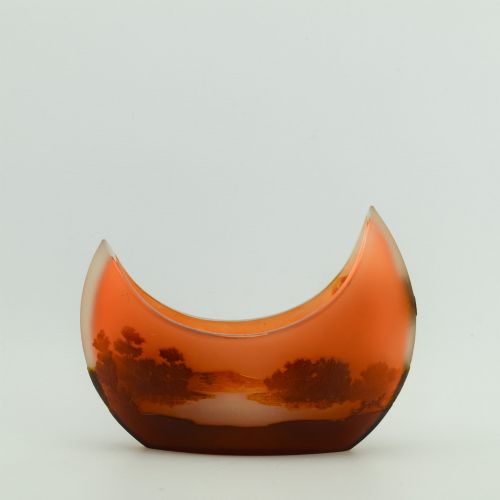
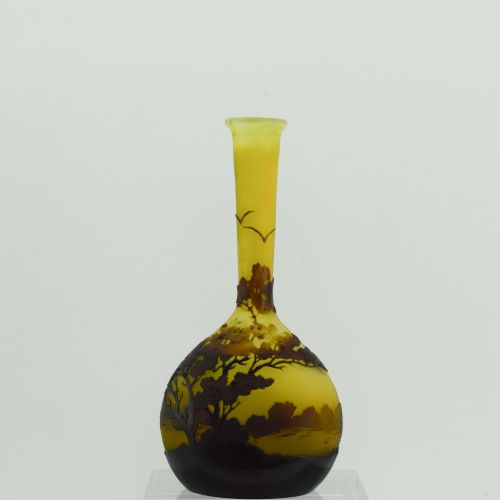
The forms on this page take various shapes, from standard upright profiles to banjo and crescent silhouettes. Floral subjects such as hydrangea, iris, and cornflowers appear frequently alongside wooded and aquatic scenes.
How they were made
Makers utilised blown glass as the foundation, layering different coloured batches to build depth within the vessel wall. Acid-etched glass techniques then cut away the outer layers to reveal the contrasting design beneath.
Certain pieces received fire polished finishing to soften the carved edges and impart a smooth lustre to the surface. Frosted glass backgrounds often provided contrast against the sharper relief of the overlaid motifs.
Galle Cameo Glass Vase Retail Price Guide 2026
Typical asking prices for galle cameo glass vase among the pieces listed under this phrase on Sellingantiques today, from the lower quarter to the upper quarter. They describe what is for sale here now, not the wider market.
Listings demonstrate forms produced across the early twentieth century, including standard vases alongside distinct banjo and crescent silhouettes.
What varies in quality
The finesse of the carving determines visual hierarchy, separating pieces with sharp relief from those with shallower depth. Multi-layered glass builds complex colour transitions that elevate the visual weight of the landscape or floral subject.
Emile Gallé
The Galle Cameo Glass Vase Glossary
- Cameo Glass
- Glass vessels formed with multiple layers of contrasting colours, then carved or etched to create a raised design. This technique allows light to pass through thinner sections for tonal variation.
- Acid-Etched Glass
- Glass decorated by applying acid to eat away exposed surfaces while protected areas remain intact. This process creates the controlled relief characteristic of the style.
- Blown Glass
- Glass shaped by inflating molten material on the end of a blowpipe. This foundational method creates the initial hollow vessel before surface carving begins.
- Frosted Glass
- Glass treated to diffuse light and produce a matte, non-reflective surface. This finish often serves as a background field for clear cameo motifs.
- Art Nouveau
- An international style of the early twentieth century inspired by natural forms and curved organic lines. It heavily influences the floral and landscape subjects found on these vases.
Galle Cameo Glass Vase: Frequently Asked Questions
What subjects appear on these vases?
Botanical studies dominate the output, featuring plants like clematis, wisteria, and cornflowers rendered across the surface. Landscapes and aquatic scenes also feature prominently, often incorporating trees, water lilies, and dragonflies.
Specific floral varieties help identify different design runs, while crescent and banjo silhouettes alter how the landscape wraps around the vessel.
How do I date a galle cameo glass vase?
Pieces span the early decades of the twentieth century, with distinct periods represented from nineteen hundred through nineteen thirty. Stylistic shifts in the motifs and signature placement assist in narrowing the timeframe.
Earlier examples often lean heavily into classic Art Nouveau flora, while later variations explore different scenic compositions.
Where should I display my vase?
Place the vessel near a natural light source to allow illumination through the multi-layered glass. Sunlight highlights the acid-etched details and brings out the contrast in colour layers.
Positioning the piece away from heavy traffic areas protects the delicate relief work from accidental impact.
How do banjo vases differ from standard shapes?
Banjo vases feature a flattened, rounded body that tapers into a slender neck resembling the musical instrument. This specific silhouette provides a distinct canvas for landscape scenes.
Standard upright vessels offer a uniform circumference that showcases wrapping floral motifs without distortion.