
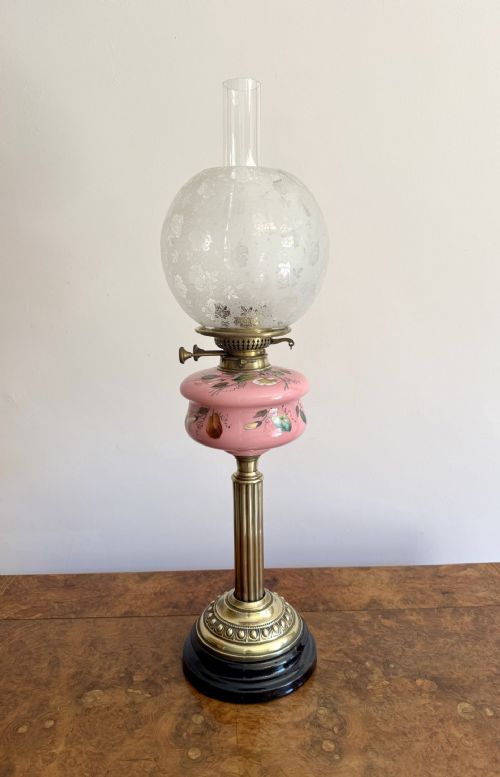
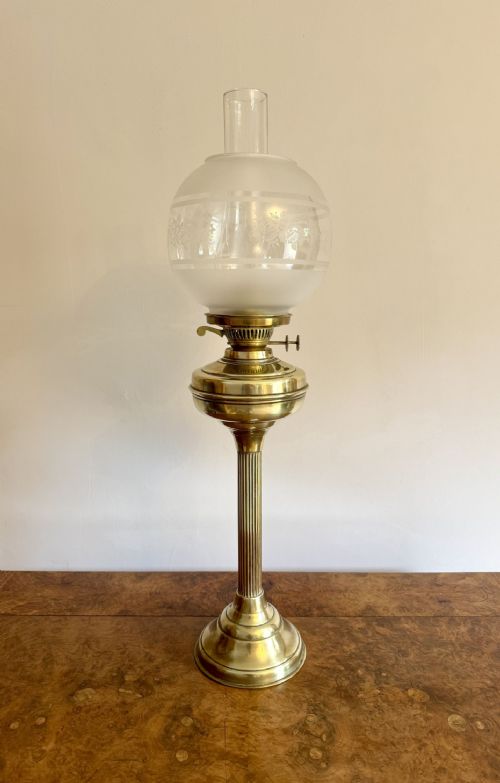


Frosted Glass Oil Lamp
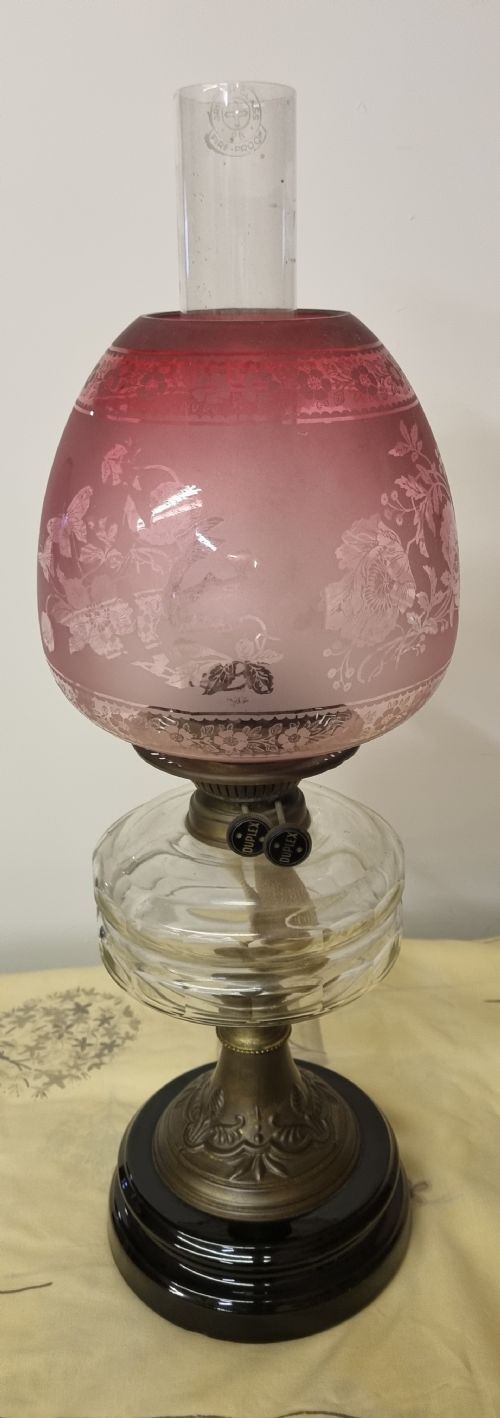
These frosted glass oil lamps bring period atmosphere and soft illumination into a room, combining tactile nineteenth-century materials with functional design.
Frosted Glass Oil Lamp
When searching for a frosted glass oil lamp, buyers encounter pieces primarily originating from the Victorian era and the broader nineteenth century, alongside turn-of-the-century Edwardian examples. The selection spans table lamps, telescopic variants, hanging lights, and individual lamp shades or globes.
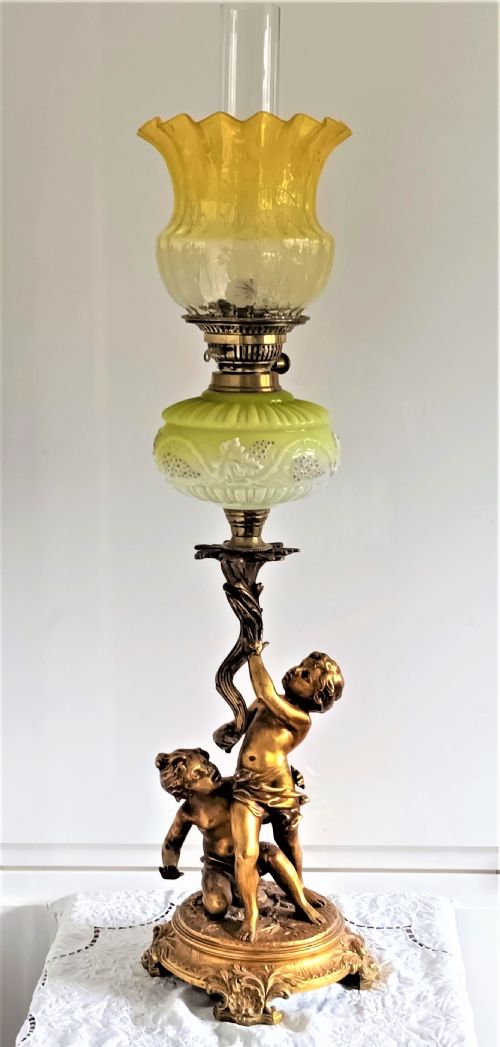
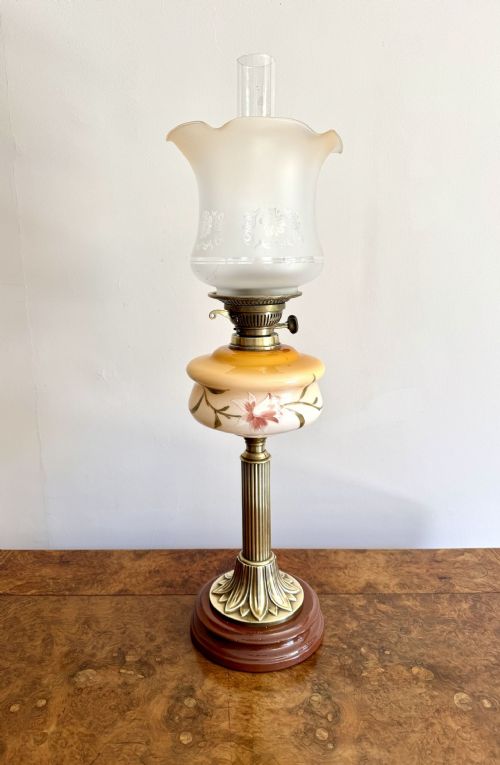
Most pieces pair a glass font or shade with materials like brass, ceramic, or silver plate. You will find standard duplex and paraffin burners alongside decorative glass bodies featuring green, blue, pink, or opaline tones.
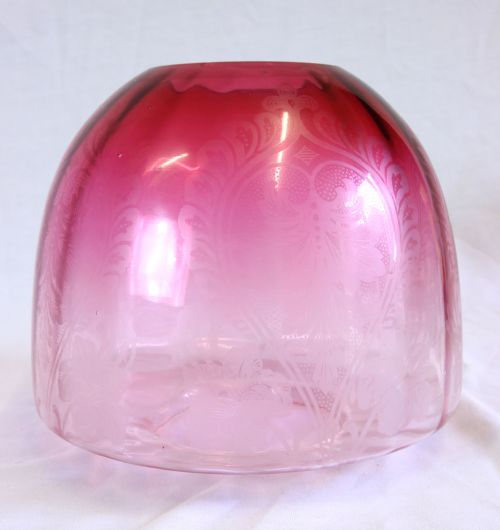
The forms range from reeded column brass stands to elaborate porcelain combinations from factories like Sitzendorf. Shades often feature etched or cut glass designs alongside the characteristic frosted finish.
How they were made
Makers utilised brass, bronze, and silver plate for the structural columns, heavy bases, and burner mechanisms. These metal elements were often cast, embossed, or patinated to provide a sturdy support for the heavy glass reservoirs.
The glass elements - including fonts, shades, and globes - were produced through techniques such as moulding, cutting, etching, and frosting. Cranberry, opaline, and tinted glass variants required specific mineral additives during the melting process to achieve their distinct hues.
Makers such as Messengers and Harrods once retailed these items, proving that high street shopping in the past involved heavy brass lighting.
What varies in quality
Quality rests heavily on the weight and finish of the metal mountings and the crispness of the glass decoration. Heavy brass stands and finely cast bronze components indicate superior manufacture compared to lighter, plain assemblies.
The artistic execution of the glass, whether through delicate etching, smooth frosting, or rich colour saturation, distinguishes standard production from finer output. Maker attribution, such as signed burners by makers like Hinks or Messenger, also elevates a piece.
The Frosted Glass Oil Lamp Glossary
- Duplex
- A type of twin-wick burner mechanism popular in the Victorian period that produced a brighter flame than single-wick designs. It often bears maker stamps.
- Opaline
- An opaque or semi-translucent glass, often pale in colour, used for lamp bodies and shades. It diffuses light with a soft, milky appearance.
- Colza
- A type of vegetable oil utilised as fuel in nineteenth-century lamps before paraffin became dominant. Hanging lights often utilised this specific fuel system.
Frosted Glass Oil Lamp: Frequently Asked Questions
How do I operate an old oil lamp?
Operating these lamps involves filling the font with a suitable liquid fuel and allowing the wick to saturate before lighting. The wick height is adjusted via the burner thumbwheel to control the flame.
Most period lamps require standard paraffin or modern lamp oil rather than original fuels like colza. Care must be taken to trim the wick evenly to prevent smoke.
Are these lamps safe to use today?
Many period lamps remain functional for burning oil if the burner mechanism and font are intact and leak-free. Modern users often retain them for decorative ambient lighting rather than daily illumination.
Alternatively, numerous examples have been safely converted to electricity by professional electricians to allow domestic use with standard bulbs.
How do I clean frosted glass shades?
Cleaning requires warm water and mild soap, applied gently with a soft cloth to avoid damaging the frosted or etched surface. Abrasive cleaners and harsh scrubbers must be avoided entirely.
Metal components should be wiped separately with appropriate dry or lightly oiled cloths, ensuring moisture does not linger on vulnerable brass or silver plate.
How can I date a Victorian oil lamp?
Dating relies on stylistic markers, patent dates stamped onto the brass burner mechanisms, and the specific combination of materials used. Victorian pieces often feature heavy brass casting, reeded columns, or distinct aesthetic movement motifs.
Later Edwardian or turn-of-the-century examples sometimes incorporate lighter stands or integrated Art Nouveau floral detailing on the bronze or brass mounts.