


Victorian Standing Lamp
When you search for a victorian standing lamp, you find floor-standing illumination and small tables designed to hold a light source.
Victorian Standing Lamp
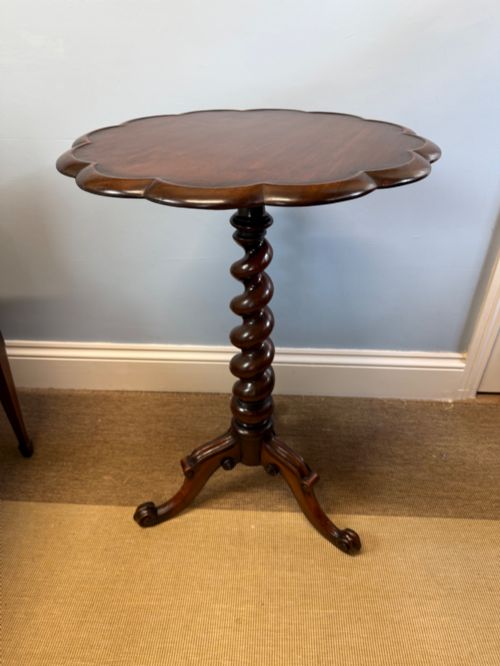
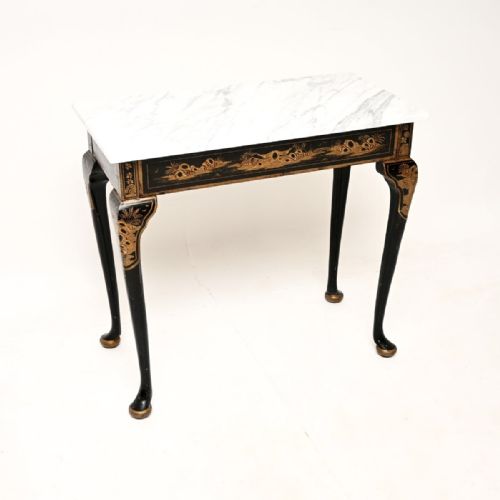
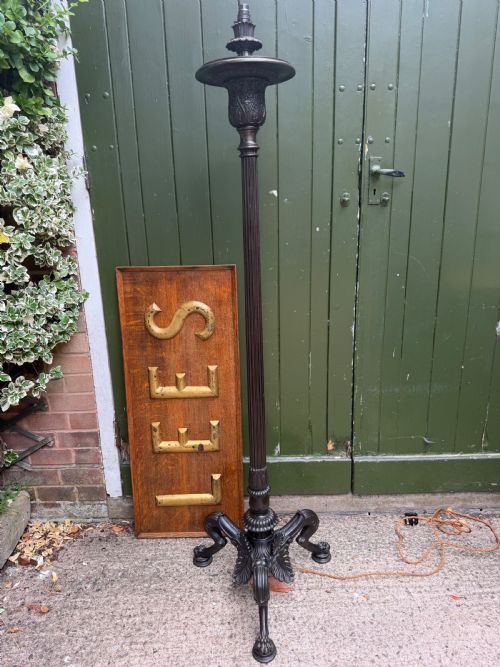
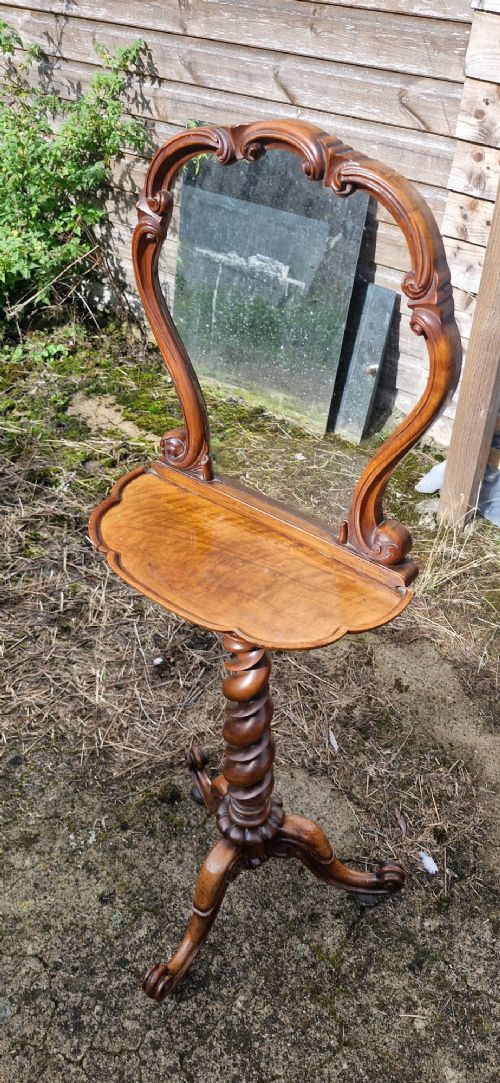
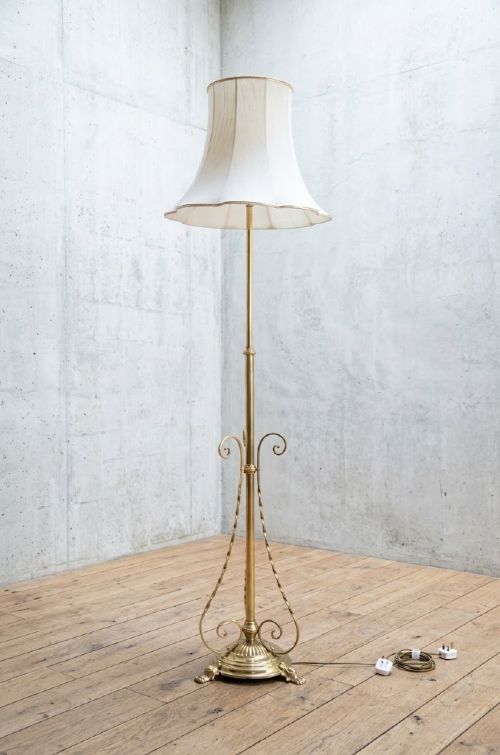
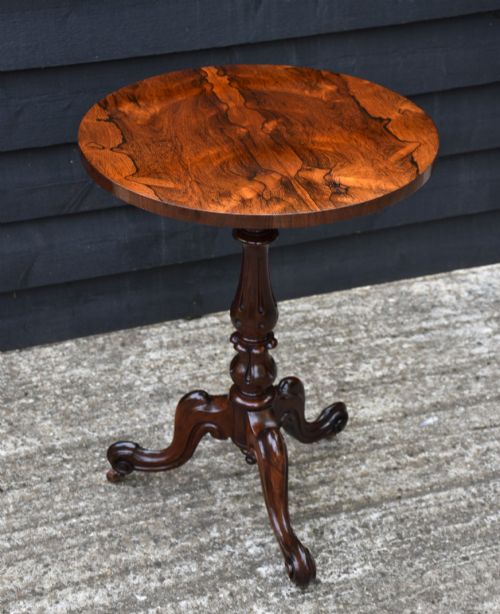
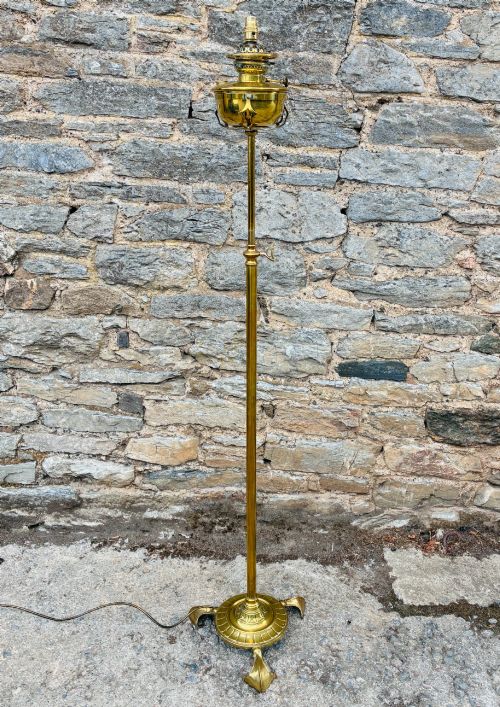
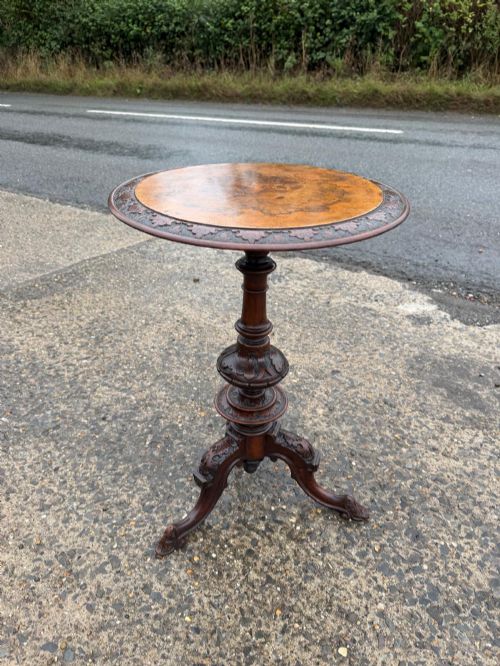
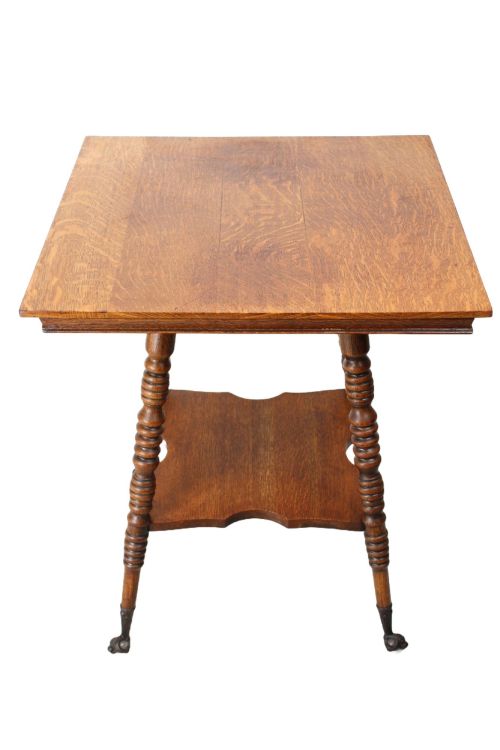
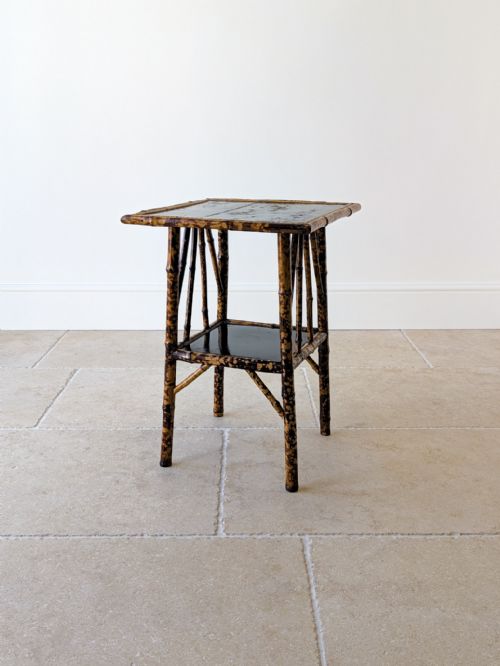
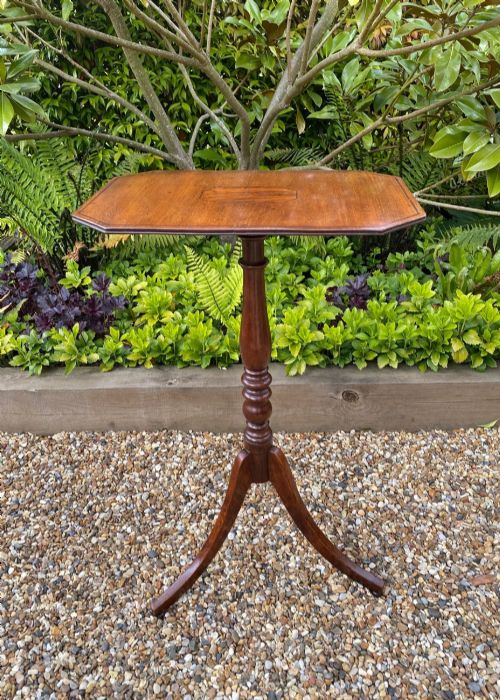
A victorian standing lamp encompasses both tall standard lamps designed for floor placement and compact lamp tables created to support portable illumination. The tall formats include adjustable brass oil standards and cast-iron floor lights of classical design. The smaller formats appear as occasional tables, wine tables, and side tables in varied timbers.
The pieces on this page originate predominantly from the nineteenth century, spanning decades from eighteen-fifty through to nineteen-hundred. You will encounter standard lights with telescopic columns alongside circular and octagonal occasional surfaces. Many original oil-burning standards now operate with electricity following period conversion.
Makers and retailers recorded in the archive range from Gillows and Hindley and Sons to Liberty of London and William Birch. Styles stretch from Arts and Crafts and Aesthetic Movement to Chinoiserie and Georgian Revival. Walnut, mahogany, oak, and brass dominate the material record.
How they were made
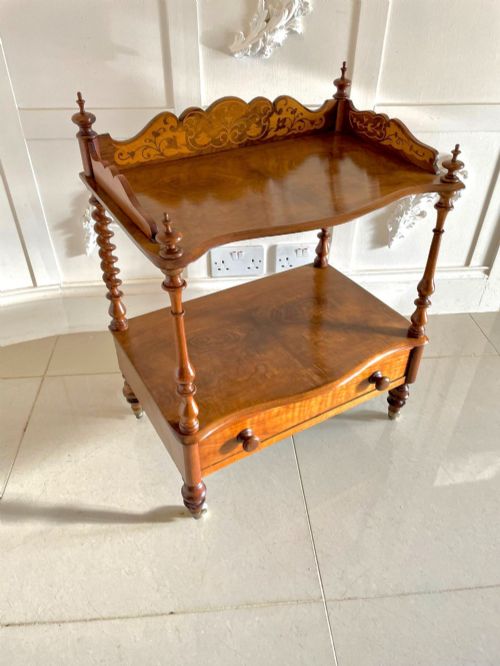
Makers utilised dense timbers such as mahogany, walnut, rosewood, and oak for table structures, frequently incorporating burr wood veneers and marquetry inlay. Brass and bronze formed the structural shafts and decorative mounts of tall floor lamps, often paired with glass reservoirs and shades.
Joinery methods combined traditional framing with turned components like barley twist supports and tripod legs. Metal standard lamps employed cast-iron bases for stability and brass mechanisms to permit height adjustment on telescopic columns.
What varies in quality
The grade of timber selection and complexity of veneer work dictate the standing of wooden lamp tables, with burr walnut and marquetry representing higher execution. In metal standards, the weight of the cast base and the precision of the brass telescopic mechanism define the build.
Attribution to documented workshops such as Gillows or Liberty elevates the standing of a piece above standard commercial production. The presence of original elements like crystal reservoirs and coloured glass shades alters the integrity of surviving oil lamps.
Gillows·Hindley and Sons·William Birch·Druce and Co
The Victorian Standing Lamp Glossary
- Standard lamp
- A tall floor-standing lighting fixture designed to illuminate a room from a vertical shaft. These often feature adjustable height mechanisms.
- Lamp table
- A small occasional table specifically proportioned to hold a portable light source or oil lamp. They appear in circular, square, and octagonal top formats.
- Telescopic
- A vertical shaft construction allowing the upper section to extend upwards. This mechanical adjustment controls the overall height of the light.
- Marquetry
- Decorative veneer work forming pictorial or geometric patterns using varied coloured wood pieces. Craftsmen applied this technique to tabletop surfaces.
- Tripod
- A three-legged support base commonly fitted to wine tables and occasional lamp tables. This configuration ensures stability on uneven floor surfaces.
Victorian Standing Lamp: Frequently Asked Questions
How do I light a converted oil lamp?
Converted standard lamps operate through standard electrical wiring rather than burning oil. A concealed cable runs through the original column to connect with a modern wall socket.
You control the light using a wall switch or a fitted lamp holder switch, depending on how the conversion was wired. The glass reservoir and burner remain as decorative elements of the period structure.
Where should I place a lamp table?
Lamp tables function effectively beside armchairs and sofas to support reading illumination and small objects. Their compact footprints suit corners and narrow hallway spaces.
Position them away from direct heat sources and strong sunlight to protect nineteenth-century wood veneers and polished timber finishes.
How do I adjust a telescopic standard lamp?
Telescopic brass standards use a central key or screw mechanism to lock the sliding inner shaft at your chosen height. Loosen the fitting gently before raising the column.
Tighten the mechanism securely once the desired height is reached to prevent the upper shaft from slipping down under the weight of the fitting.
What is an Aesthetic Movement lamp table?
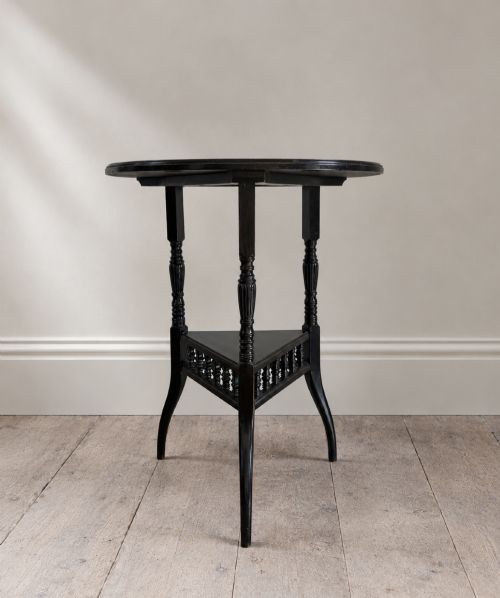
Aesthetic Movement tables reflect late nineteenth-century design principles focusing on craftsmanship and Japanese-inspired simplicity. They frequently utilise ebonised wood finishes and clean geometric lines.
These pieces contrast with heavily carved Victorian furniture, favouring understated structural forms and contrasting surface tones.