
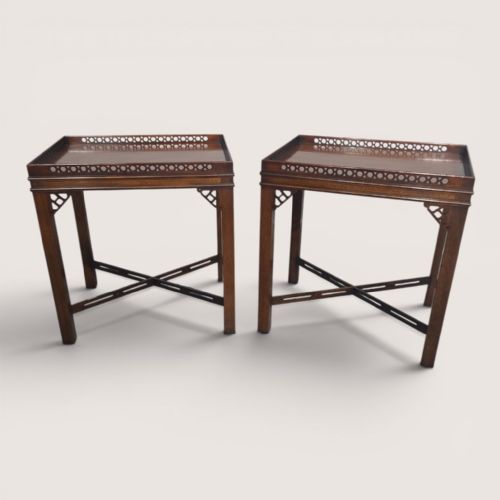
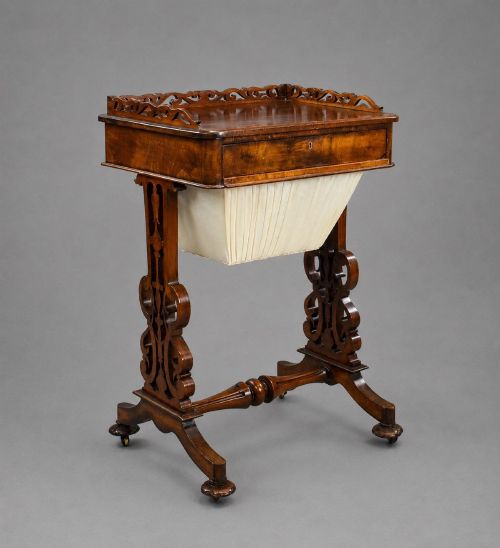
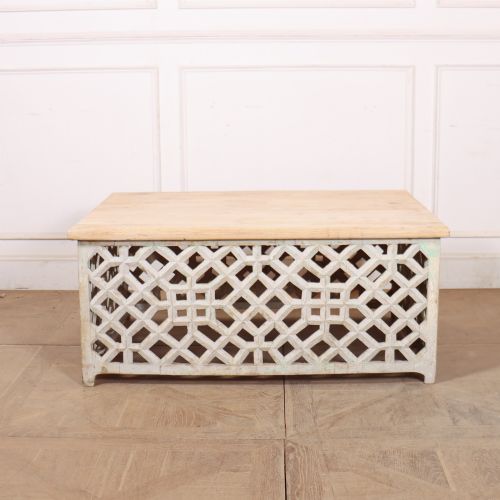
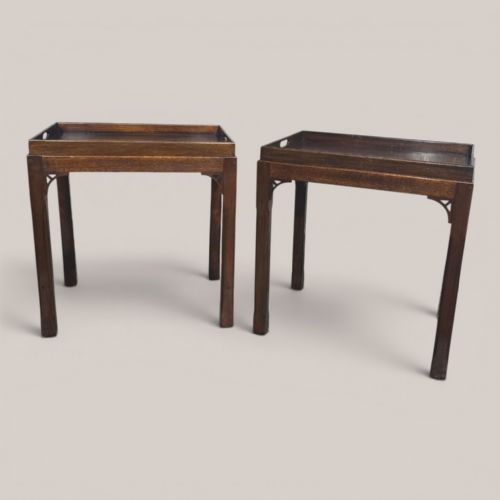


Fretwork Wooden Table
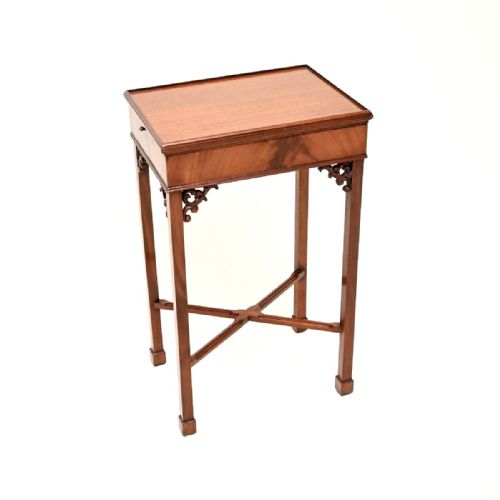
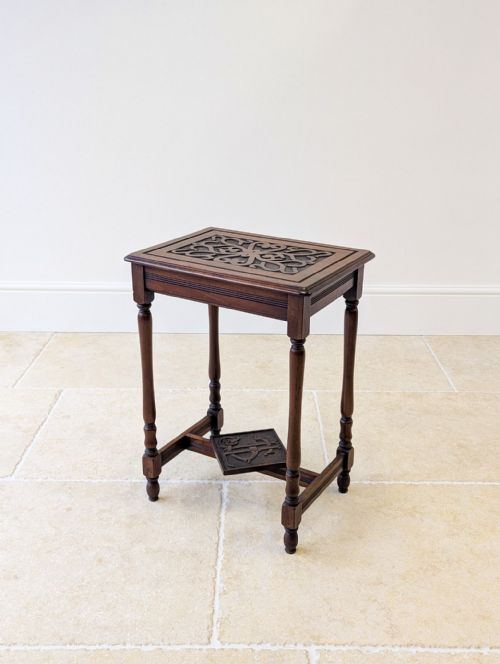
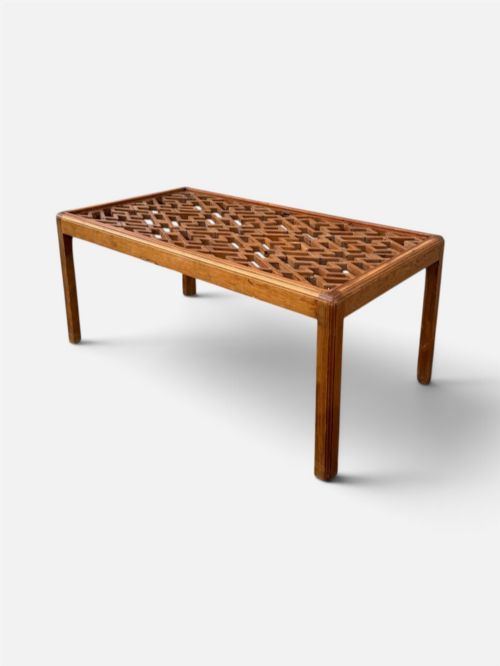
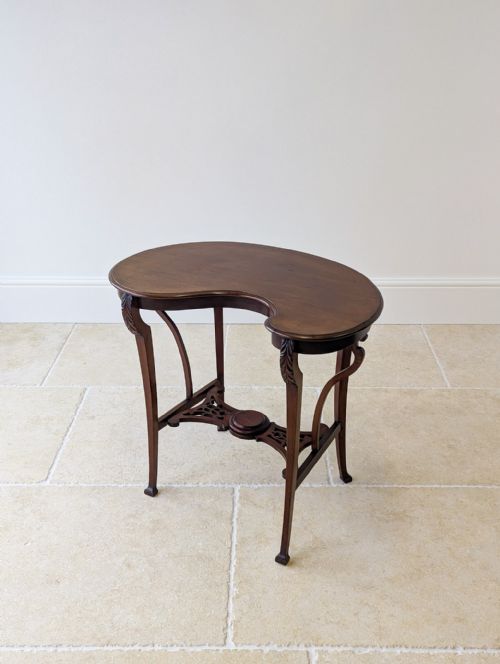
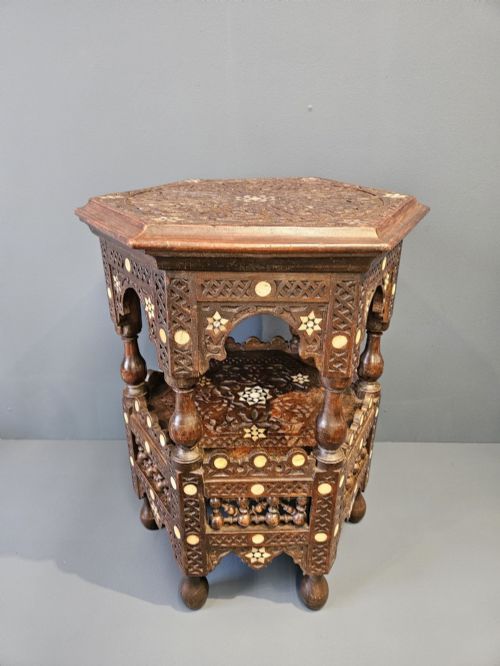
A fretwork wooden table brings intricate pierced detail into a room, serving as an occasional piece or display surface.
Fretwork Wooden Table
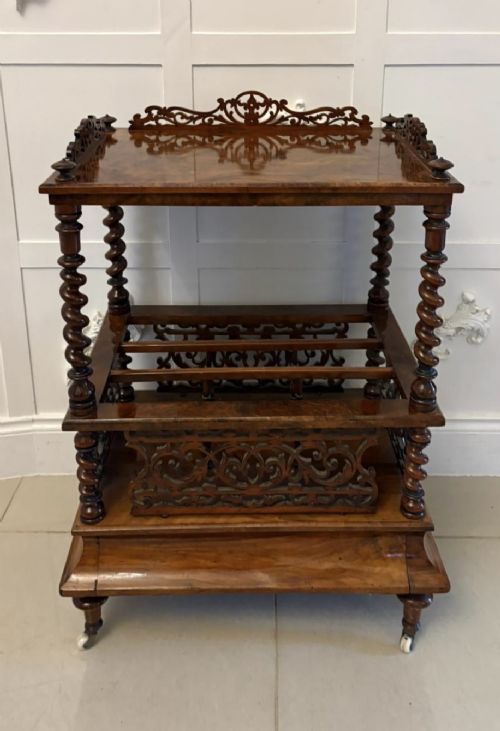
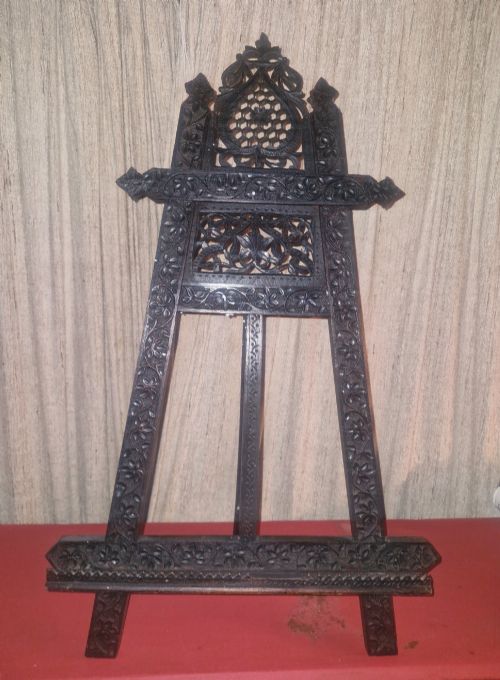
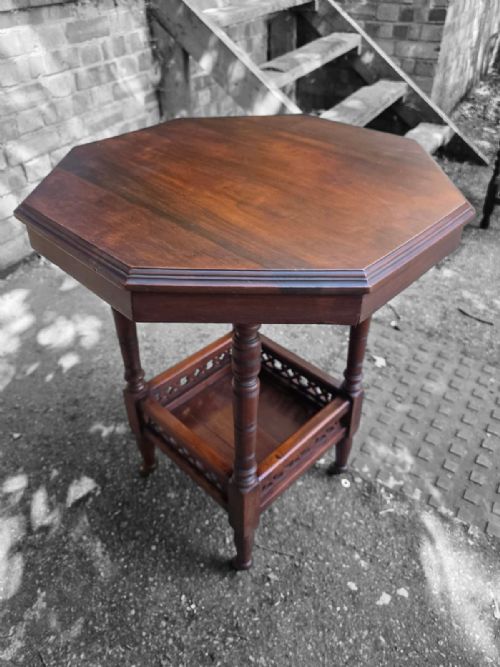
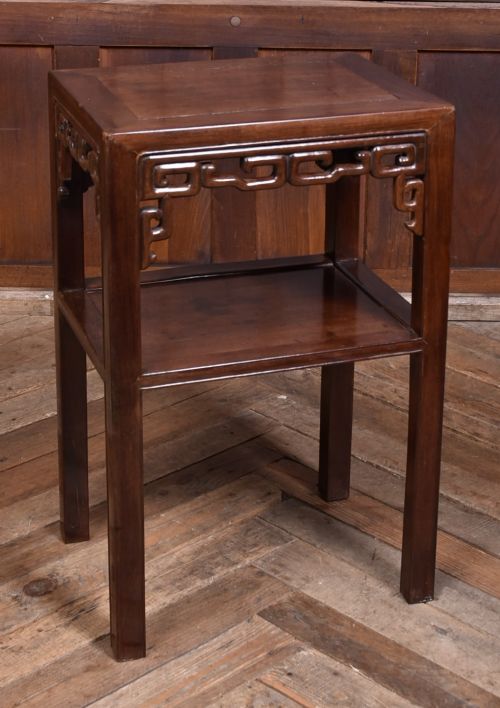
A fretwork wooden table appears in forms such as side tables, lamp tables, and occasional tables, spanning periods from the eighteenth century through to the twentieth century. These pieces incorporate pierced wooden decoration into their design, drawing on styles ranging from Chinese Traditional and Chippendale Revival to Anglo-Indian and Arts and Crafts.
The most common examples on this page date from the Victorian and Edwardian eras, utilising woods like mahogany, walnut, and teak. Alongside standard tables, the selection includes related forms like plant stands, writing tables, and coffee tables featuring antique fretwork panels.
Makers and craftsmen applied these openwork panels to surfaces, aprons, and supports, creating items that function practically while displaying elaborate geometric or floral cut-out patterns.
Materials and construction
Makers constructed these tables from dense timbers including mahogany, walnut, burr walnut, rosewood, oak, and teak, often selecting hardwoods capable of holding fine, pierced detail without splitting. Brass fittings and glass tops appear on specific forms.
The defining characteristic, fretwork, relies on precise piercing and carving techniques. Artisans worked wood by hand or utilised specialised tools to cut intricate patterns through panels, aprons, and brackets, integrating the openwork directly into the structural framework of the table.
Object types include side tables, occasional tables, canterburys, plant stands, writing tables, and console tables.
Judging quality in pierced tables
Quality rests primarily on the crispness and depth of the carved or pierced fretwork. Superior pieces display sharp, clean edges and well-defined patterns without splintering or hasty finishing in the recessed corners.
The choice of timber and figuring also separates standard items from finer examples. Tables utilising burr walnut, figured mahogany, or dense teak with uniform grain demonstrate a higher grade of material selection by the maker.
The Fretwork Wooden Table Glossary
- Fretwork
- Open ornamental work in wood, consisting of patterns cut with a fretsaw or carved directly onto the surface. This technique creates lightweight decorative panels used on aprons and brackets.
- Occasional table
- A small, movable table designed for various secondary uses within a room. These pieces include lamp tables, wine tables, and side tables.
- Canterbury
- A low stand featuring sloped partitions, originally designed for holding sheet music or books. Victorian examples often incorporate drawers and turned supports.
- Lowboy
- A small side table or dressing table featuring one or more rows of drawers beneath the top. Eighteenth-century examples typically stand on slender legs.
- Torchere
- A tall, slender stand designed to hold a lamp, candle, or decorative object. These stands often feature carved pillars and circular tops.
Fretwork Wooden Table: Frequently Asked Questions
What is a fretwork wooden table?
A fretwork wooden table is a small furnishing distinguished by pierced or cut-out wooden patterns on its aprons, legs, or gallery rails. These pieces range from Victorian side tables to Edwardian occasional tables and twenty-first-century coffee tables incorporating antique panels.
They function primarily as decorative surfaces for lamps, plants, or display items while adding architectural texture to a room through their openwork design.
How do I style a fretwork table?
Place a fretwork wooden table beside a sofa or chair as an occasional surface, or use a taller plant stand version to display ceramics. The intricate cut-out patterns pair well with plain walls or simple upholstery where the shadow and detail remain visible.
Keep items placed on top relatively light to avoid obscuring the pierced wooden panels beneath the rim.
How do I identify the period of a table?
Examine the secondary woods, joining methods, and overall style cues to determine the era of a piece. Victorian and Edwardian examples often feature heavy mahogany or walnut with machine-assisted or hand-finished fretwork, while earlier Georgian items show older joinery and hand-carved details.
Consulting the listed date ranges alongside design motifs like Chippendale Revival or Arts and Crafts helps narrow down the decade of manufacture.
Are these tables sturdy enough for daily use?
Most occasional and side tables provide a stable surface for everyday items like books, lamps, or drinks. However, the delicate nature of pierced fretwork means users should handle the aprons and decorative brackets with care to avoid accidental impacts.
Placing the table away from heavy traffic areas protects the intricate openwork sections from structural strain.